


ESOMOOR project focuses on enhancing mooring performance, operational efficiency and technology readiness for offshore wind applications
Alfa Laval has joined the ESOMOOR project, a collaborative initiative focused on advancing shared mooring technologies for large-scale floating offshore wind farms. Bringing together leading industry and research partners, the project aims to overcome key technical challenges associated with floating offshore wind deployment in deeper waters while supporting the development of commercially viable renewable energy solutions.
For floating offshore wind farms, mooring system performance is critical, as marine growth on chains and underwater structures can impact hydrodynamic performance, increase maintenance requirements, and affect long-term operational efficiency. To help address these challenges, the ESOMOOR project, co-funded by the European Union, aims to advance shared mooring technologies for large-scale Floating Offshore Wind Farms (FOWFs) and support their deployment in deeper waters. The project focuses on improving the Levelized Cost of Energy (LCOE), enhancing energy conversion efficiency and increasing Technology Readiness Levels (TRLs) for offshore wind solutions.
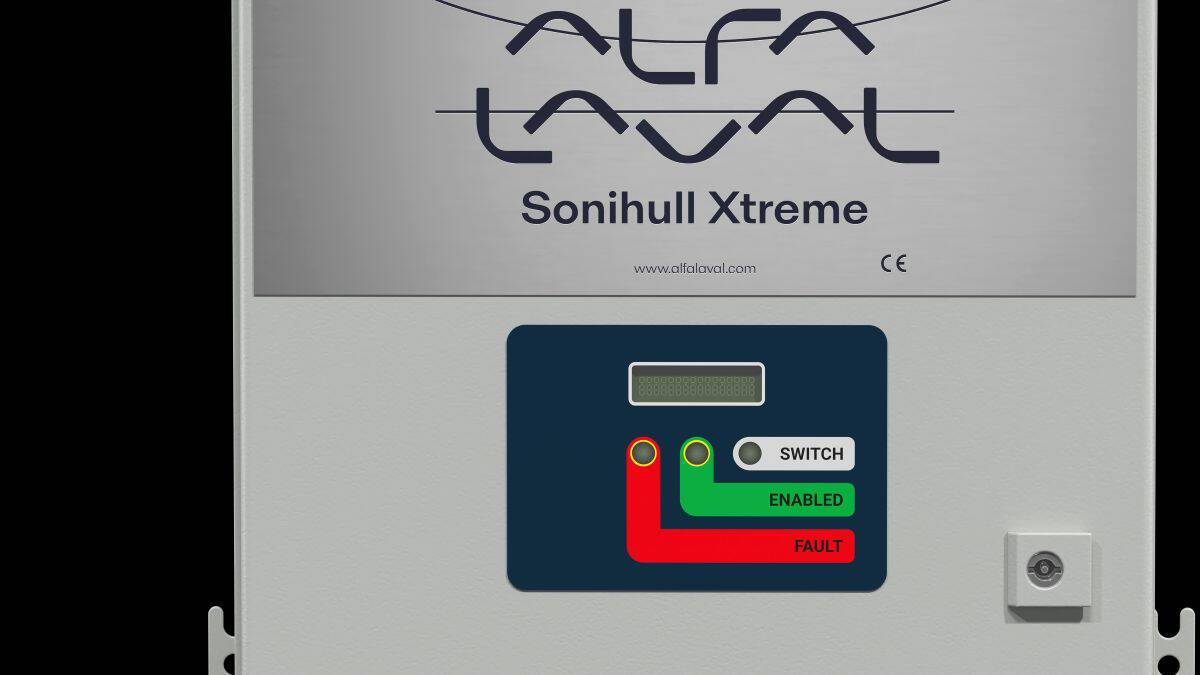
As a partner, Alfa Laval Sonihull will provide its expertise in its ultrasonic biofouling management technology to support the development and validation of next-generation anti-fouling solutions for floating offshore wind infrastructure. Building on established experience in marine growth prevention systems, Sonihull will contribute towards improving operational efficiency, reducing maintenance needs, and enabling more sustainable lifecycle performance in harsh offshore environments.
“Floating offshore wind represents a critical step in scaling renewable energy in deeper waters, but its long-term performance depends on solving complex operational challenges such as biofouling. Through ESOMOOR, we are contributing our ultrasonic technology expertise to help improve system reliability, efficiency, and sustainability across the full lifecycle of offshore assets,” says Peter Nordström, Chief Technology Officer, Alfa Laval Sonihull.
Sonihull’s contribution to the ESOMOOR project will focus on evaluating marine growth prevention systems to assess system performance and efficacy in offshore conditions. The scope also includes optimization of transducer installation and integration concepts for floating platforms and mooring chains. In addition, the project will also investigate underwater radiated noise levels and conduct a third-party environmental impact assessment.
By contributing ultrasonic biofouling prevention expertise, performance evaluation, and environmental assessment capabilities, Sonihull’s work will support the consortium’s broader objective of improving the reliability, efficiency, and commercial readiness of floating offshore wind technologies. This contribution will help strengthen the understanding of how biofouling impacts long-term hydrodynamic performance, mooring system optimization, and lifetime energy production, supporting the development of more sustainable floating offshore wind farm design and operations.