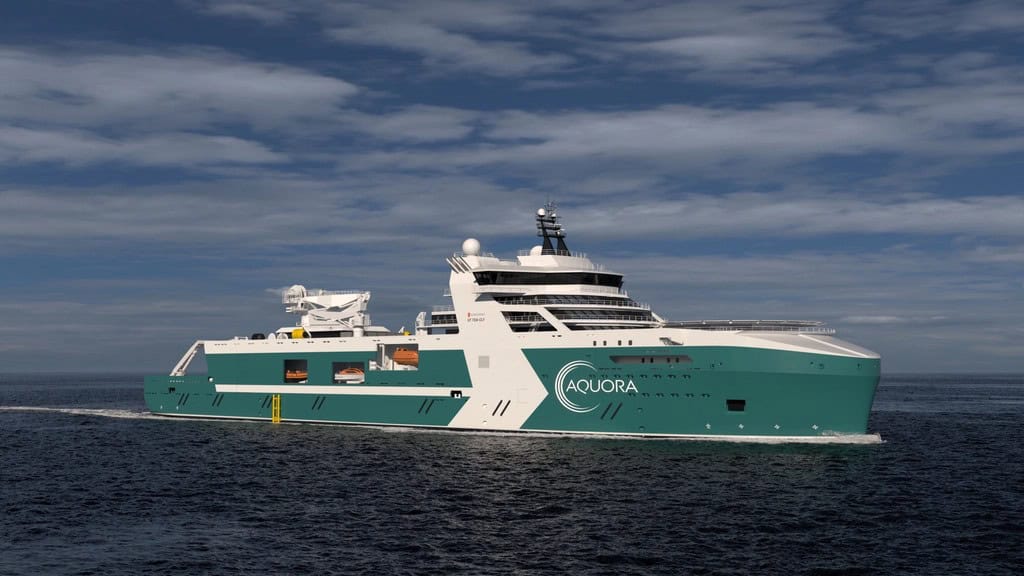
Aquroa Initial cable supply secured via strategic partnership with Orient Cables(NBO), supported by a dedicated new cable-lay vessel.
A new force has entered the European energy infrastructure market with the launch of Aquora. Formerly known as XLCC, the Scotland-based company is positioning itself as an integrated provider of high-voltage subsea cable installation and manufacturing services, aiming to address the critical demand for high-voltage cable supply in the UK and Europe.
Aquora will focus first on installation, a key developer concern, utilising a new cable-lay vessel, and with cable supplied by Orient Cables (NBO). Once established as a market participant with client relationships, Aquora will commence factory construction for a cable manufacturing capacity in Scotland.
Aquora arrives at a pivotal moment for the UK energy industry. With 8.4 GW of offshore wind sanctioned through the AR7 auction, attention is switching to the renewables supply chain and the UK’s structural shortage of cable installation and manufacture. A report for 4C Consulting in 2025, estimate that c.100,000km of high-voltage cables will be needed over the next ten years for European offshore wind and interconnectors. Historically, the region has installed around 3,500km per year.
Aquora will combine:
- A UK-flagged cable-lay vessel (CLV) – the first of its kind – to be in commission within this parliament. In addition, Aquora’s cable-lay vessel will provide maintenance services for critical infrastructure including emergency response for UK high-voltage cables damaged by third parties.
- A Scotland-based cable engineering and delivery capability for wind developers in UK and Europe, employing 150–200 people.
- High-quality cable supply via a strategic partnership with Orient Cables (NBO) – providing wind developers a premium product within a deployment service.
- A high-voltage cable manufacturing facility in Scotland, employing c. 800 people and bringing long-term economic benefit to the Scottish economy.
By first deploying £350m into a client-led, installation business, followed by £650m into manufacturing capacity oriented to customer demand, Aquora brings a de-risked approach to critical UK-based infrastructure. Over the next decade, the company will create approximately 1000 jobs and help restore long-term industrial capability in Scotland.
Ragnhild Katteland, Chief Executive Officer designate said: “Securing the UK’s transition to homegrown, low-carbon power is constrained not by generation, but by lack of infrastructure. Developers need cable installation capacity now – not in a decade’s time. Aquora will meet that market demand, and by delivering at pace create a financeable path to cable manufacturing in Scotland.”
Lewis Gillies, Executive Chairman designate said: “Aquora will protect our energy security and develop industrial capability in the UK. We will unlock a critical constraint, building strategic autonomy in a nationally significant part of the energy supply chain. I am looking forward to leading a new growing enterprise and helping to secure the UK’s clean energy future.”
Lai Wei, Managing Director of Orient Cable (NBO UK) said: “We are proud to work alongside Aquora, combining close teamwork with proven Subsea Cable technology and delivery capability. It is a great honour to be part of this journey turning UK Energy Vision into reality and we wish our partner Aquora every success.”