Transatlantic journey from Romania will take approximately 60 days
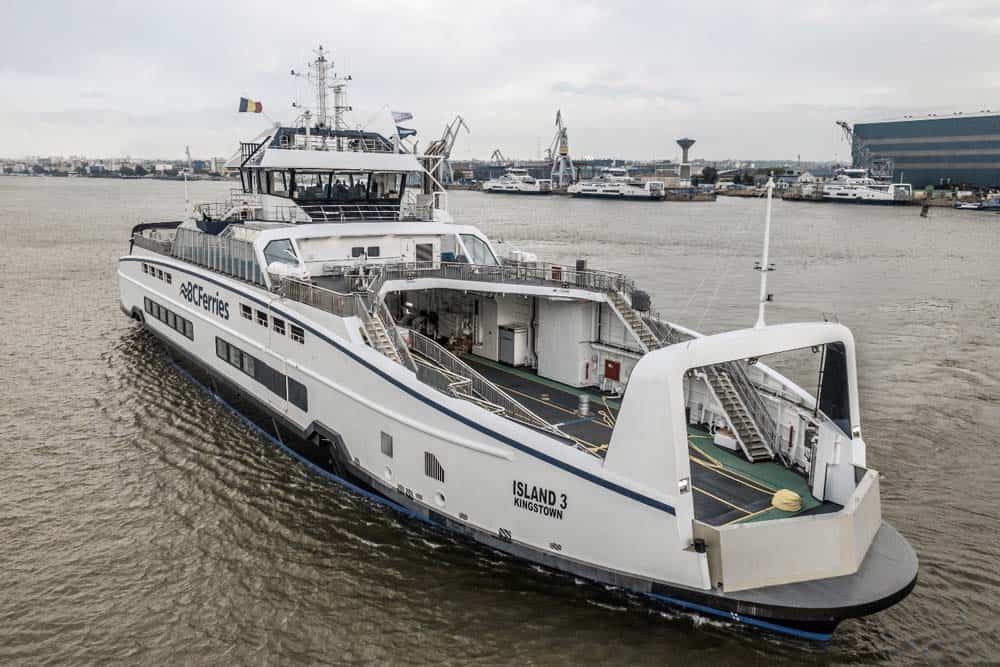
BC Ferries’ third Island Class ferry is now on its way to British Columbia, departing Damen Shipyards Galati in Romania in the early morning of May 19, local time.
The yet-to-be named ferry will make the transatlantic voyage under its own power in approximately 60 days, depending on weather. The approximately 10,700 nautical mile journey will include two stops for refuelling, first in Tenerife, Canary Islands then in Balboa, Panama after transiting the Panama Canal. The vessel will sail up the west coast of North America, arriving at Point Hope Maritime in Victoria, B.C.
This ship is the third in a series of six new Island Class ferries joining the BC Ferries fleet, and the first of four to sail from Romania to British Columbia under its own power. Sailing the vessels under their own power allows the ships to begin the journey once construction is complete and creates a staggered arrival time, which is more manageable for BC Ferries’ operations.
Under contract with BC Ferries, Damen Shipyards is responsible for the safe delivery of the vessels to Victoria and is employing an international professional shipmove company to assist. The first two Island Class ferries transited from Romania to British Columbia on a semi-submersible vessel in 2019, entering service on the Powell River – Texada Island route and the Port McNeill – Alert Bay – Sointula Island route in mid-2020.
The Island Class is a hybrid diesel-electric ferry with a number of key features that support BC Ferries’ Clean Futures Plan and the company’s goal to be efficient and environmentally responsible throughout its system. “Once electric charging technology can be installed at BC Ferries’ terminals, these new ships will be configured to operate as all battery-electric ferries, using clean renewable hydroelectric energy,” said Captain Jamie Marshall, BC Ferries’ Vice President, Shipbuilding & Innovation. Island Class ferries have the capacity to carry at least 47 vehicles and up to 400 passengers and crew, and allow for fleet redeployments and retirements of existing diesel-fuelled vessels.
Video of the departure
To follow the vessel’s journey and track its progress including course, position and speed, visit vesselfinder.com and look for the ship under the temporary name, Island 3. BC Ferries will take ownership of the ship upon final inspection at Point Hope Maritime. The ship will be named and christened before BC Ferries moves on to crew training, ship familiarization and dock fits. Once in operation, this Island Class ferry will be one of two Island Class ferries servicing the Campbell River – Quadra Island Route in 2022.
BC Ferries looks forward to welcoming this new Island Class ferry into service and celebrating with employees and the communities, when the time is right.