



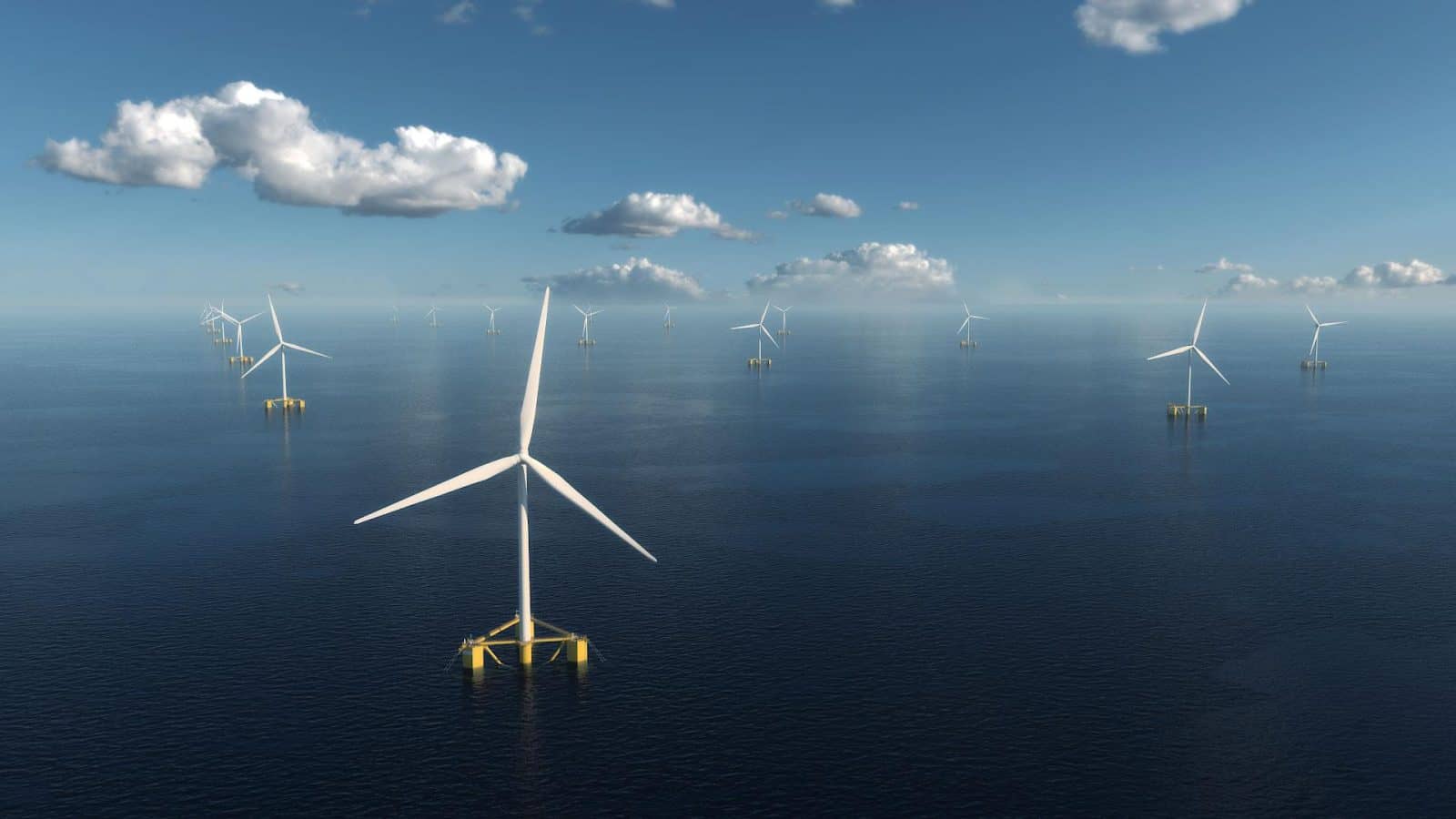
Cerulean Winds has revealed plans to build the North Sea Renewables Grid (NSRG), an offshore integrated green power and transmission system, powered by floating wind, that oil and gas platforms will plug into for clean power.
Cerulean and partner Frontier Power International will develop three 333km2 sites of hundreds of floating turbines, producing multiple GW of electricity, after being offered the lion’s share of seabed leases in the recent Crown Estate Scotland INTOG round.

The scale and location close together in the Central North Sea will enable a new basin-wide offshore transmission system to be constructed which platforms can access, allowing them to remove millions of tonnes of production emissions by trading gas and diesel generation for a flexible, cost effective and cleaner alternative.
With its delivery consortium of partners including NOV, Siemens Gamesa, Siemens Energy, DEME and Worley, they will deliver one of the country’s largest infrastructure investment projects (c£20 billion) and support the sector’s decarbonisation targets.
Phase 1 of the NSRG will focus on oil and gas operators to support their brownfield modifications with future phases exporting green power to the grids in southern UK and Europe.
Dan Jackson, founding director of Cerulean Winds said: “The oil and gas sector is wrestling with the challenges of meeting the North Sea Transition Deal emissions reduction targets whilst supporting UK energy security. We recognise that to achieve meaningful reductions at the pace required, a reliable basin-wide approach is needed that they can plug into when they are ready to for affordable power.
“Early oil and gas electrification supports the country’s energy security, net zero action and delivers huge benefits to the supply chain and economy, creating 10,000 jobs. With our partners we will accelerate access to green power and provide the infrastructure for the next phase of the North Sea’s life.”
Humza Malik, founding partner of Frontier Power said: “Each windfarm site is located within 100km of the others and will be connected together to form the offshore ring main around the Central North Sea. A High Voltage Alternating Current (HVAC) transmission will provide availability and redundancy for maximising generation uptime. The scale allows for offtake to other parts of the North Sea through a new High Voltage Direct Current (HDVC) network. For the oil and gas companies, this diversity of offtake provides robustness to the scheme and added flexibility. For Scotland, the HVDC transmission not only provides clean energy to the National Grid, but provides export of power directly to continental Europe.”
Cerulean has agreed an approach with its industrial partners early to de-risk the project in the same way other large scale infrastructure developments are initiated. In total, the three windfarms will contribute over £12 billion GVA to the UK’s economy.
Mr Jackson added: “We are targeting a build out before ScotWind developments, allowing the supply chain to respond, creating crucial partnering opportunities for the ports and getting the market ready to deliver floating wind at scale.It will make a material impact on Scotland’s emissions, removing millions of tonnes of CO2 a year to support a just transition. Basin-wide scale gives greater flexibility, lower pricing and supply robustness. Work with end users has begun in earnest so that we can aim for first power availability in 2028.”











, an offshore integrated green power and transmission system, powered by floating wind, that oil and gas platforms will plug into for clean power. Cerulean and partner Frontier Power International will develop three 333km2 sites of hundreds of floating turbines, producing multiple GW of electricity, after being offered the lion’s share of seabed leases in the recent Crown Estate Scotland INTOG round. The scale and location close together in the Central North Sea will enable a new basin-wide offshore transmission system to be constructed which platforms can access, allowing them to remove millions of tonnes of production emissions by trading gas and diesel generation for a flexible, cost effective and cleaner alternative. With its delivery consortium of partners including NOV, Siemens Gamesa, Siemens Energy, DEME and Worley, they will deliver one of the country’s largest infrastructure investment projects (c£20 billion) and support the sector’s decarbonisation targets. Phase 1 of the NSRG will focus on oil and gas operators to support their brownfield modifications with future phases exporting green power to the grids in southern UK and Europe.)