



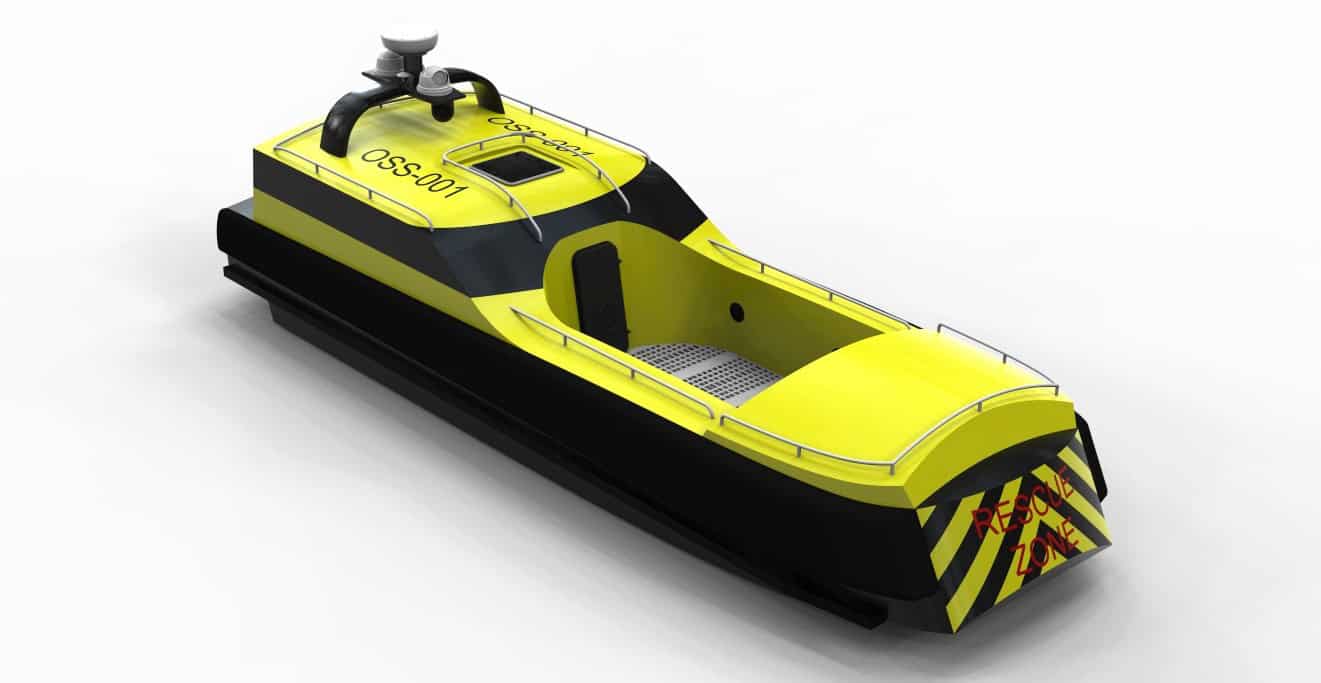
Zelim, a start-up developing a complete lifesaving system for offshore energy, has partnered with pioneering naval architect Chartwell Marine to deliver a first in class remotely operated rescue vessel. The ‘Survivor Class’ vessel will be the cornerstone of Zelim’s wider offshore rescue system, incorporating search technology & remote operations.
Offshore energy sites present a hazardous environment for personnel and vessel crews, where there is always a risk of man overboard (MOB) incidents. However, traditional approaches to search and recovery are unsuitable for many offshore facilities. In an environment where every second counts, the challenges presented by growing offshore industries highlight a crucial need to rethink existing rescue processes.
The increasing distance of projects from shore renders traditional maritime support ineffective. Lifeboats can take several hours to reach the site of the emergency, and even rescue helicopters can take well over an hour. Additionally, offshore windfarms typically lie out of the normal operating zones of such rescue vessels, rendering rescue procedures even more challenging.
Following consultations with key offshore survival organisations to address these critical life-saving issues, Zelim and Chartwell’s ‘Survivor Class’ unmanned rescue vessel introduces an essential new stage in the rescue chain, rapidly recovering MOBs and providing them with an accessible safe haven from the debilitating effects of cold-water immersion, where they can await evacuation to shore.
The vessel has been designed ‘casualty first’, with accessible features to address limited mobility challenges, such as a pioneering rescue conveyor for recovering MOBs from the water, easy-open door handles, an air-conditioned cabin, and a helicopter pick up zone. Meanwhile, as an unmanned, remotely operated vessel, crucial deployment time is reduced, while also limiting collateral risk for rescue personnel.
After contesting a competitive bid process, the consortium secured Innovate UK funding on two separate occasions, accelerating project timelines to complete the preliminary design phase. The last tranche of funding is being used to deliver the full design and shipyard tender, build oversight and testing.
The vessel will be mounted onto offshore structures and deployed into the water via a 25m free fall following MOB or helicopter downing incidents. To maximise safety in severe weather conditions, Chartwell Marine used its hull form expertise to produce a vessel operable in significant wave heights of 4.5m, verified with extensive model testing conducted by independent naval architect Seaspeed Marine Consulting.
Andy Page, Managing Director, Chartwell Marine, said: “Designing the Survivor Class gave us a great opportunity to apply our offshore wind expertise to new challenges, such as free-fall water entry and casualty recovery. For example, the two waterjets will activate prior to contact with the water to stop the vessel drifting backwards into the turbine. Zelim has shown strong leadership in making offshore wind a safer industry, and we are excited to see where the partnership goes next.”
Sam Mayall, Founder, Zelim, said: “As offshore wind continues to scale up to meet the growing global demand for clean energy, ensuring the safety of seafarers and technicians is critical. That’s why we are working with Chartwell Marine and other industry partners to develop a cohesive offshore survival system, beyond the vessel itself, engaging with operators and regulators to make sure it is fit to save lives in some of the most challenging conditions imaginable.”





 incidents. However, traditional approaches to search and recovery are unsuitable for many offshore facilities. In an environment where every second counts, the challenges presented by growing offshore industries highlight a crucial need to rethink existing rescue processes.)