




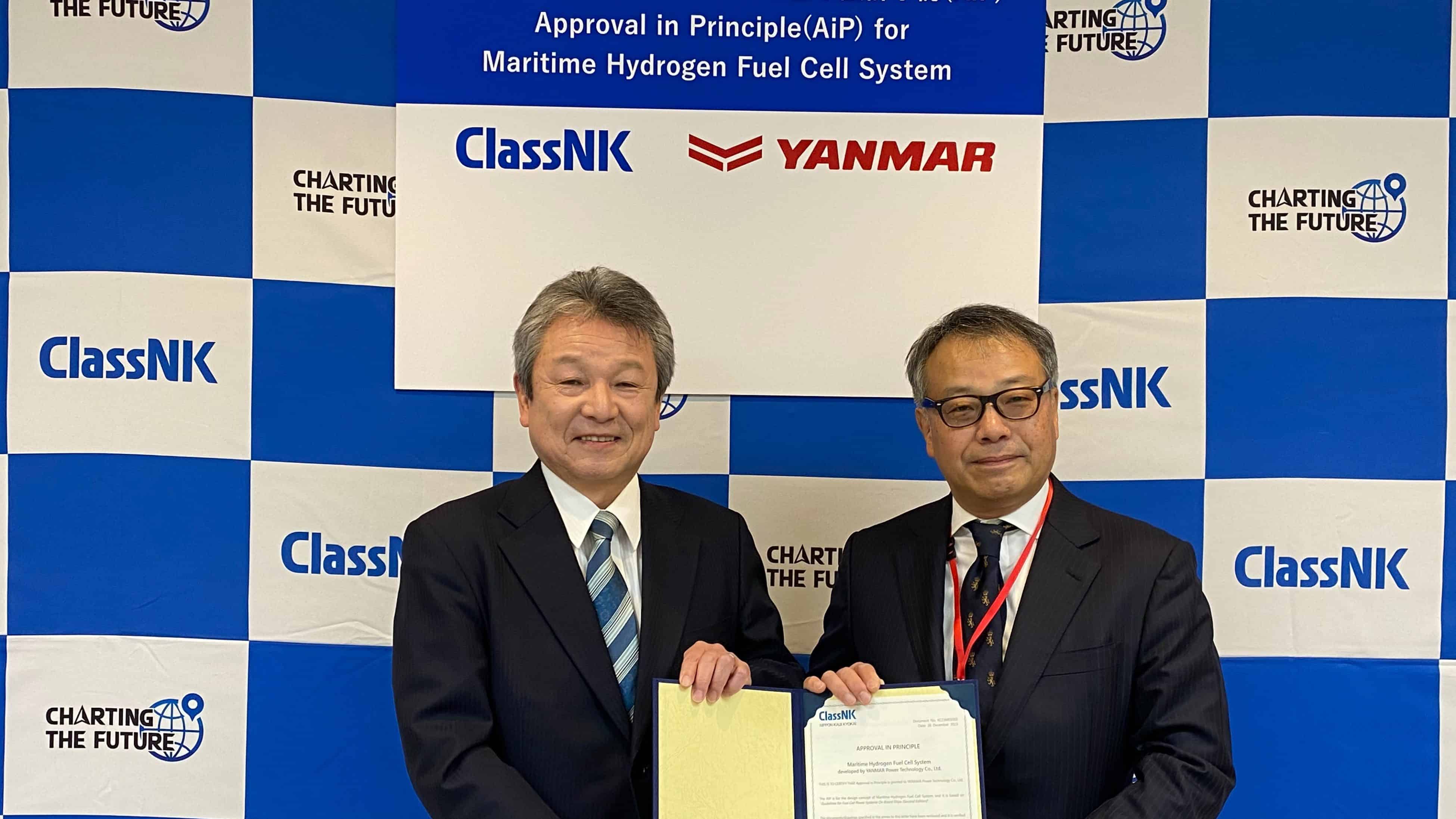
ClassNK has issued an Approval in Principle (AiP) for a maritime hydrogen fuel cell system developed by YANMAR Power Technology Co., Ltd. (YANMAR PT). This is the first AiP certification for a maritime hydrogen fuel cell system developed by a Japanese manufacturer.
Hydrogen fuel cells are gaining attention as a potential means to help reduce GHG emissions from shipping. Meanwhile, due to the unique characteristics of hydrogen, distinct from conventional gas fuels, safety discussions are actively underway at the IMO. Based on IMO’s interim guidelines*1 and relevant IEC standards, ClassNK has issued the “Guidelines for Fuel Cell Power Systems On Board Ships (Second Edition)”*², specifying safety requirements for the design of ships using fuel cell power installations and the systems themselves to promote and expand the utilization of fuel cells in ships,
The maritime hydrogen fuel cell system (300kW) developed by YANMAR PT is designed with key auxiliary components such as gas valve units integrated within the system enclosure, aimed to facilitate easy installation on ships. On top of that, the system allows for parallel connection of multiple units and adjustments to the number of hydrogen fuel cell modules, making it adaptable to various ship power output requirements.
ClassNK carried out a review of the system in line with its guidelines, and examined the result of required tests and risk assessment. Upon confirming it complies with the prescribed requirements, ClassNK issued the AiP.
ClassNK will actively continue to take part in advanced initiatives toward decarbonization and also support the decarbonization of the entire industry by incorporating the knowledge gained through collaboration with front runners into rules and guidelines.

*1 “INTERIM GUIDELINES FOR THE SAFETY OF SHIPS USING FUEL CELL POWER INSTALLATIONS”: MSC.1/Circ. 1647
*2 Issued in September 2023. These guidelines consolidate the IMO’s interim guidelines, the IEC62282 which details requirements for stationary fuel cells on land, the IGF Code, and the IACS UR E10 which stipulates approval criteria for electrical, electronic and programmable equipment intended for control, monitoring, alarm, and protection systems. The guidelines describes safety requirements for the design of ships using fuel cell power installations, covering aspects such as design policy, fire safety, electronic equipment, control and monitoring, and safety devices as well as for the systems themselves.










 for a maritime hydrogen fuel cell system developed by YANMAR Power Technology Co., Ltd. (YANMAR PT). This is the first AiP certification for a maritime hydrogen fuel cell system developed by a Japanese manufacturer.)