



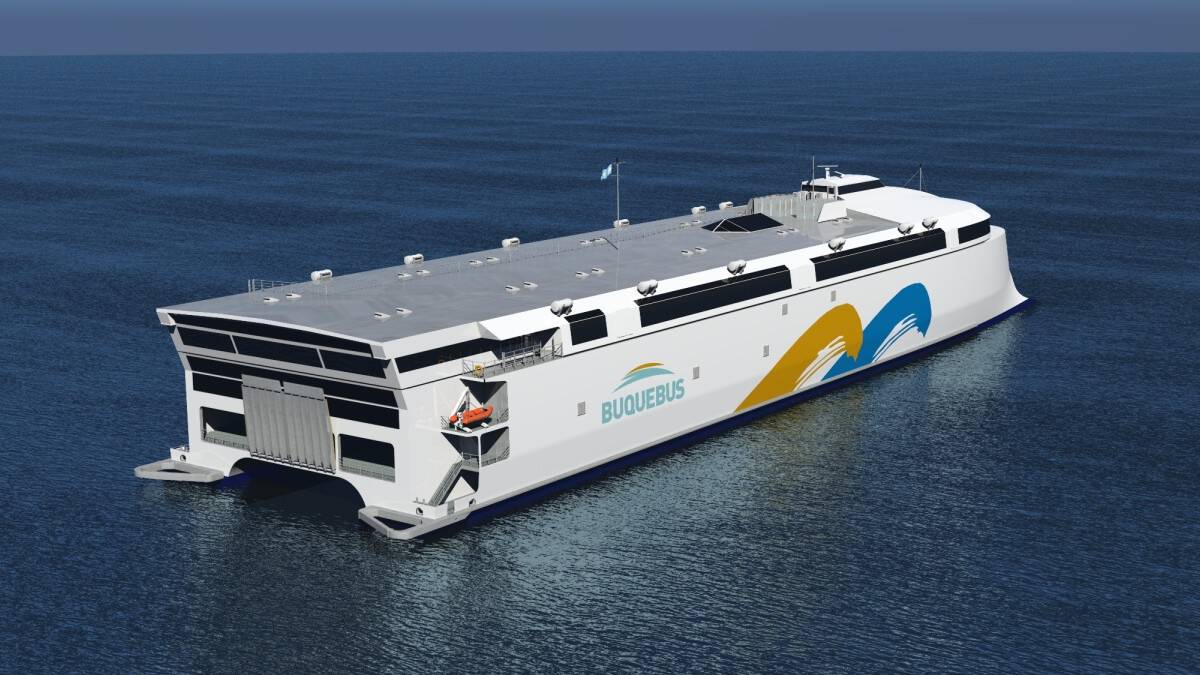
Corvus Energy, the world’s leading provider of zero-emission solutions for the maritime industry, is pleased to announce that the Company has been selected by technology group Wärtsilä to supply the battery systems for the world`s largest 100% electric lightweight Ro-Pax ferry.
With more than 40 MWh of energy storage, it will be the largest battery system installed onboard a ship – four times as big as the current largest installation.
Incat Tasmania will build the aluminum-constructed vessel on behalf of its South American customer, Buquebus. The large ferry, 130m in overall length, will have the capacity for 2100 passengers and crew, 225 cars, and a 2000 square meter Duty-Free Shop, all housed on one level.
A New Era of Green Transportation
“This groundbreaking project marks a turning point in the maritime industry’s effort to transition towards greener means of transportation. Combining cutting-edge technology, environmental consciousness, and innovative design, it redefines the future of ferry operations worldwide and paves the way for other large, zero-emission vessels,” says Halvard Hauso Commercial Director Europe, Corvus Energy. “We are very grateful that Wärtsilä once again chose Corvus Energy as their partner for such an important and advanced project.”
Incat Managing Director Craig Clifford said, “The build of the Buquebus ship is leading the world in this type of ship construction and will have leading edge technology in terms of zero emissions propulsion and storage systems. Once in operation the shore-side charging systems will have 50% more capacity than any current installation world-wide.
This vessel will be the largest of its type with the highest ESS capacity and it will also have the longest zero-emission journey, at the highest speed, and it will be charged with the world’s highest capacity chargers.
Milestone for maritime decarbonization in South America
“The ferry will also be the first fully electric vessel in South America, operating between Argentina and Uruguay. Hauso cites the significance of this milestone as a positive indicator of the increasing adoption of maritime electrification. This project demonstrates that “maritime decarbonization is now happening worldwide, not only in Europe.”
Powered by Advancing Battery Energy Storage Technology
This project is made possible by Corvus` latest technological breakthrough– the lightweight battery, Dolphin NextGen. The design is based on the architecture of the 4-year, multi-million development program for the Corvus Blue Whale ESS. The Blue Whale development included a ground-up redesign that re-evaluated and improved every aspect of battery design, including battery chemistry, mechanical and electrical design, and software building blocks. The Dolphin NextGen ESS is a game changer for marine battery projects due to its low weight and volumetric density, robustness, and unsurpassed flexibility.
The battery systems are scheduled for delivery end of 2024 and the vessel will enter operation in 2025.















