



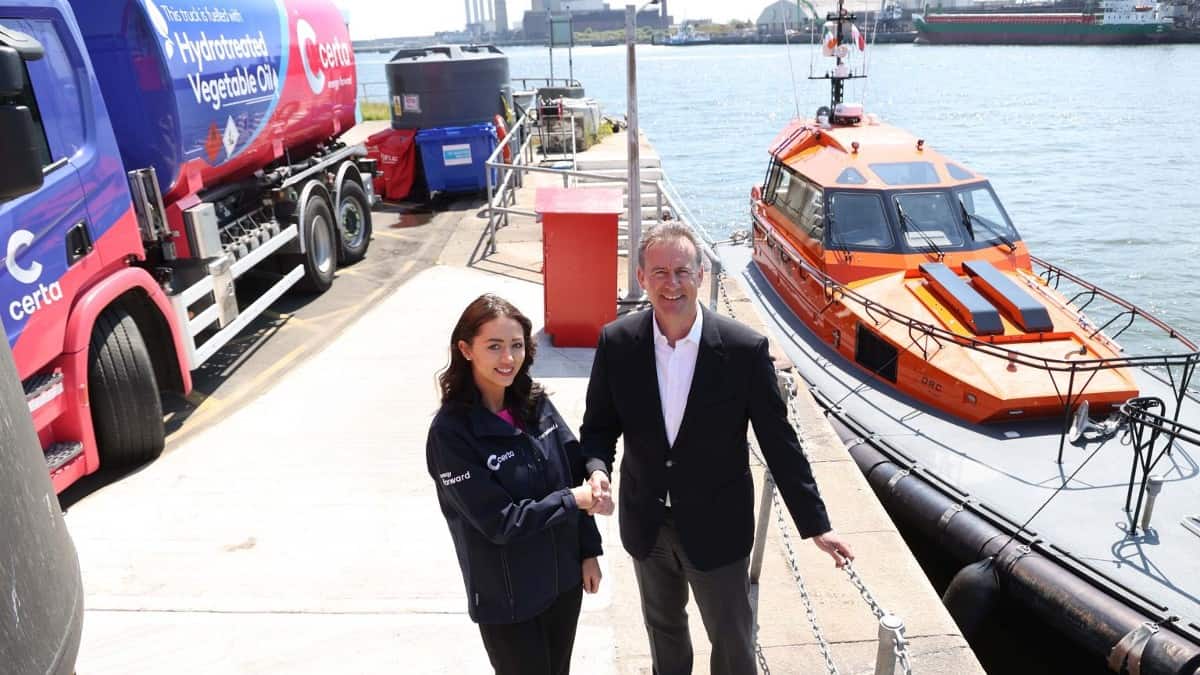
Dublin Port Company (DPC) has completed a successful first round trial using Hydrotreated Vegetable Oil (HVO), a low-carbon biofuel produced from waste material that can be used as a direct replacement for conventional marine diesel, in one of its Pilot Boats.
The Pilotage Service is estimated to contribute up to 20% of Dublin Port Company’s carbon emissions and this is a significant aim for reduction, in line with Ireland’s Public Sector Energy targets which states the public sector must improve its energy efficiency by 50% before 2030.
HVO fuel was supplied by Certa, DPC’s contracted fuel service provider, and a trial commenced in April which saw approximately 200 pilot transfers completed on the DPC Dodder – one of four Dublin Port Pilot Boats – exclusively using 100% HVO.
DPC will now begin phase two of the trial, testing the biofuel in the Liffey and Camac Pilot Boats, which run on older engines to the DPC Dodder and its sister boat the DPC Tolka. The Liffey and Camac are approximately 15 years old and are driven by two Caterpillar C12 engines. The DPC Tolka and the DPC Dodder run on two Scania DI16 engines.
This is the latest example of DPC working towards a more sustainable future. DPC exceeded the 2020 Public Sector Energy Efficiency Targets and is planning to make Port Centre and Terminal 1 near zero-emission buildings by 2030.
The Pilotage Service is a crucial aspect of Dublin Port operations and involves the provision of qualified Pilots with local marine knowledge to assist guiding large ships into the Port along navigable channels.
An exciting solution at the forefront of sustainable energy, HVO is a low-emission diesel alternative fuel. HVO has been demonstrated to significantly reduce fuel-related carbon emissions with no modification required for existing diesel engines.
Initial results from the trial indicate that the use of HVO fuel in the Pilot Boats cuts emissions between 80-90%, which is encouraging news as Dublin Port targets a greener future and is in accordance with the Government’s Climate Action Plan 2023, which aims to halve national emissions by 2030.
If trials using HVO on Pilot Boats Liffey and Camac are successful, moving all four of Dublin Port’s Pilot Boats to HVO will reduce Dublin Port Company’s CO₂ emissions between 10-15% ahead of the 51% CO₂ emission reduction target for 2030.
While HVO fuel can be mixed with diesel, Dublin Port Company is using 100% HVO for the purpose of these trials.
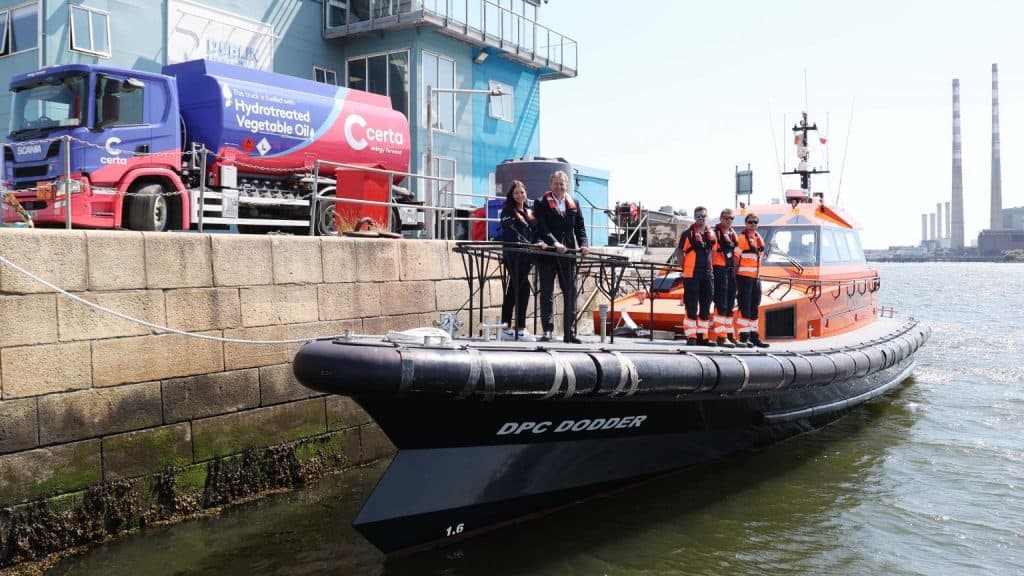
Operators of the Pilot Boats noted that there were no obvious issues in handling or performance of the DPC Dodder while running on HVO and that exhaust fumes had reduced significantly.
The Pilotage Service is vital to Dublin Port’s operations. It is managed 24/7 with a highly skilled team of 21 Marine Operatives, 1 Marine Supervisor, 5 VTS Officers and 12 Pilots. It runs, on average, 10-15 return trips per day and in 2022 there were 3,908 over the year.
Pilot Boats travel up to 10 nautical miles (18.5km) offshore to safely deliver a Dublin Port Pilot to an inbound ship. The job involves transferring a Pilot to or from a ship by driving a Pilot Boat alongside the moving ship as it enters or leaves a Port, which is a high-risk activity. As a result, the Pilot Boats that are used to transfer Pilots are considered safety critical equipment and must have high reliability. The phased approach to this trial allows DPC to robustly check and verify the boats’ performance with this front of mind.
Barry O’Connell, Chief Executive, Dublin Port Company, said: “The use of HVO fuel in our Pilot Boats is a potentially transformative step as we work towards our 2030 Climate Action Plan targets. We are pleased to work alongside our fuel suppliers Certa on this and from the information we have received from the first trial, the initial signs have been highly encouraging. We are now looking forward to seeing the results of phase two. With our Pilotage Service being such a vital part of Port operations, it is important that we run these trials and make sure it is the right fit for what is an extremely important and highly skilled job.”
Laura Byrne, Business Development Manager for Sustainable Fuels, Certa, said: “We are very excited to continue our long-standing relationship with Dublin Port Company. We are pleased to work together to facilitate the Port’s decarbonisation efforts by introducing HVO fuel on their Pilot Boats as they continue to work towards their sustainability goals.”







 has completed a successful first round trial using Hydrotreated Vegetable Oil (HVO), a low-carbon biofuel produced from waste material that can be used as a direct replacement for conventional marine diesel, in one of its Pilot Boats. Laura Byrne, Certa’s Business Development Manager for Sustainable Fuels, pictured with Dublin Port CEO Barry O’Connell and Marine Operatives Mannix Greene, Colin Goggins and Oisín Grey to mark Dublin Port Company’s Hydrotreated Vegetable Oil (HVO) trial in its DPC Dodder Pilot Boat. Switching to HVO, a low-carbon biofuel produced from waste material that can be used as a direct replacement for conventional marine diesel, could cut DPC’s emissions by up to 15%. Pic: Robbie ReynoldsThe Pilotage Service is estimated to contribute up to 20% of Dublin Port Company’s carbon emissions and this is a significant aim for reduction, in line with Ireland’s Public Sector Energy targets which states the public sector must improve its energy efficiency by 50% before 2030.HVO fuel was supplied by Certa, DPC’s contracted fuel service provider, and a trial commenced in April which saw approximately 200 pilot transfers completed on the DPC Dodder – one of four Dublin Port Pilot Boats – exclusively using 100% HVO.DPC will now begin phase two of the trial, testing the biofuel in the Liffey and Camac Pilot Boats, which run on older engines to the DPC Dodder and its sister boat the DPC Tolka. The Liffey and Camac are approximately 15 years old and are driven by two Caterpillar C12 engines. The DPC Tolka and the DPC Dodder run on two Scania DI16 engines.This is the latest example of DPC working towards a more sustainable future. DPC exceeded the 2020 Public Sector Energy Efficiency Targets and is planning to make Port Centre and Terminal 1 near zero-emission buildings by 2030.The Pilotage Service is a crucial aspect of Dublin Port operations and involves the provision of qualified Pilots with local marine knowledge to assist guiding large ships into the Port along navigable channels.An exciting solution at the forefront of sustainable energy, HVO is a low-emission diesel alternative fuel. HVO has been demonstrated to significantly reduce fuel-related carbon emissions with no modification required for existing diesel engines.Initial results from the trial indicate that the use of HVO fuel in the Pilot Boats cuts emissions between 80-90%, which is encouraging news as Dublin Port targets a greener future and is in accordance with the Government’s Climate Action Plan 2023, which aims to halve national emissions by 2030. If trials using HVO on Pilot Boats Liffey and Camac are successful, moving all four of Dublin Port’s Pilot Boats to HVO will reduce Dublin Port Company’s CO₂ emissions between 10-15% ahead of the 51% CO₂ emission reduction target for 2030.While HVO fuel can be mixed with diesel, Dublin Port Company is using 100% HVO for the purpose of these trials.Operators of the Pilot Boats noted that there were no obvious issues in handling or performance of the DPC Dodder while running on HVO and that exhaust fumes had reduced significantly.The Pilotage Service is vital to Dublin Port’s operations. It is managed 24/7 with a highly skilled team of 21 Marine Operatives, 1 Marine Supervisor, 5 VTS Officers and 12 Pilots. It runs, on average, 10-15 return trips per day and in 2022 there were 3,908 over the year. Pilot Boats travel up to 10 nautical miles (18.5km) offshore to safely deliver a Dublin Port Pilot to an inbound ship. The job involves transferring a Pilot to or from a ship by driving a Pilot Boat alongside the moving ship as it enters or leaves a Port, which is a high-risk activity. As a result, the Pilot Boats that are used to transfer Pilots are considered safety critical equipment and must have high reliability. The phased approach to this trial allows DPC to robustly check and verify the boats’ performance with this front of mind.)