First three high-speed Artemis EF-24 electric hydrofoil ferries delivered, marking a major milestone in clean maritime innovation
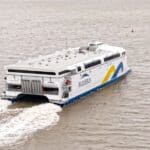
Artemis Technologies, a global innovator in clean maritime solutions, has reached a major milestone in its mission to revolutionise maritime transport with the delivery of the first three Artemis EF-24 Passenger ferries to Belfast.
The Artemis EF-24 Passenger will be the world’s first high-speed electric hydrofoil ferry of its size and scale, representing a significant breakthrough in zero-emission maritime transport. The vessels are powered by the company’s patented Artemis eFoiler® system.
Designed to meet High-Speed Craft (HSC) 2000 regulations and built in accordance with DNV classification standards, the Artemis EF-24 Passenger ferries are among the most advanced vessels of their kind globally. They set new benchmarks for safety, sustainability and passenger comfort, while offering operators a high-performance, future-ready solution for urban and regional routes.
This milestone highlights the scale and ambition of Artemis Technologies’, with three vessels now at this stage of construction:
- Brittany Ferries: owner of Condor Ferries, will be involved in the demonstration of the Artemis EF-24 Passenger ferry providing their operational expertise on the route between Belfast and Bangor during the trial period as part of the Belfast Maritime Consortium. The vessel’s development is supported by UK Research and Innovation through the Strength in Places Fund action.”
- Orkney Ferries: will be the second vessel to launch, funded by the UK Department for Transport and Innovate UK through the Zero Emission Vessels and Infrastructure (ZEVI) programme, serving the Orkney Islands from Kirkwall
- Red Funnel: the third vessel, destined for the Solent to operate between Southampton and Cowes, Isle of Wight
The Artemis EF-24 Passenger showcases the company’s commitment to zero-emission operations, combining advanced composites and electric propulsion for enhanced efficiency, performance and passenger comfort. Beyond sustainability, the Artemis EF-24 Passenger could transform urban and regional transport by offering a faster, more cost-effective alternative to new tunnels, bridges, or aircraft routes. Its ability to link communities quickly and cleanly opens new possibilities for regional mobility and economic growth.
Development of the Artemis EF-24 Passenger has been supported by UK Research and Innovation (UKRI) Strength in Places funding, enabling the Belfast Maritime Consortium to pioneer clean maritime solutions from its Belfast base. This investment has helped return Belfast to its historic position as a global leader in maritime innovation, while catalysing the creation of a world-class marine and offshore technology cluster in Northern Ireland. The program is not only delivering cutting-edge zero-emission vessels but also driving economic growth, skills development, and international recognition for the region as a hub for sustainable maritime technology.
Iain Percy, CEO of Artemis Technologies, said: “The arrival of these three Artemis EF-24 Passenger ferries and progressing to systems integration for these vessels is a huge achievement for our team and partners. These are not just ferries – they represent a step change in transport. Designed to HSC 2000 standards and powered by our Artemis eFoiler® technology, they will be the most advanced ferries in the world.
“While deployment of the first Artemis EF-24 Passenger ferries has been delayed, this is to be expected for a first-in-class vessel of this scale and complexity. We are building something that has never been done before, and that takes time to ensure we get it right.”
With the vessels now delivered, the focus moves to subsystem installation and fit out, before sea trials ahead of entry into service.