Latest NewsPower & PropulsionHow passenger ferry Burö cut fuel use and emission with iHelm by...

How passenger ferry Burö cut fuel use and emission with iHelm by Cetasol

Competing against yourself to keep improving. Teaching new staff to drive more economically from the start. Offering passengers a smoother and more comfortable ferry ride. Those are some of the benefits of using the marine sustainability platform iHelm by Cetasol, according to pilot customer Öckerö Båttrafik.

”I have worked here for over 14 years. The best thing about this job is meeting all the passengers that live out here,” says Peter, skipper at the Burö passenger ferry outside of Gothenburg, Sweden. He explains some of the benefits he has seen, while using the iHelm by Cetasol for almost two years as a pilot customer:

”Getting up to our optimal speed at 8 knots is easy, but then going up to 9 knots is almost double the fuel consumption. A couple of knots above that, it increases four-fold. These things become very evident when you see them on the display like this. Now we consume less than half the fuel we did before we started using the iHelm,” he explains.
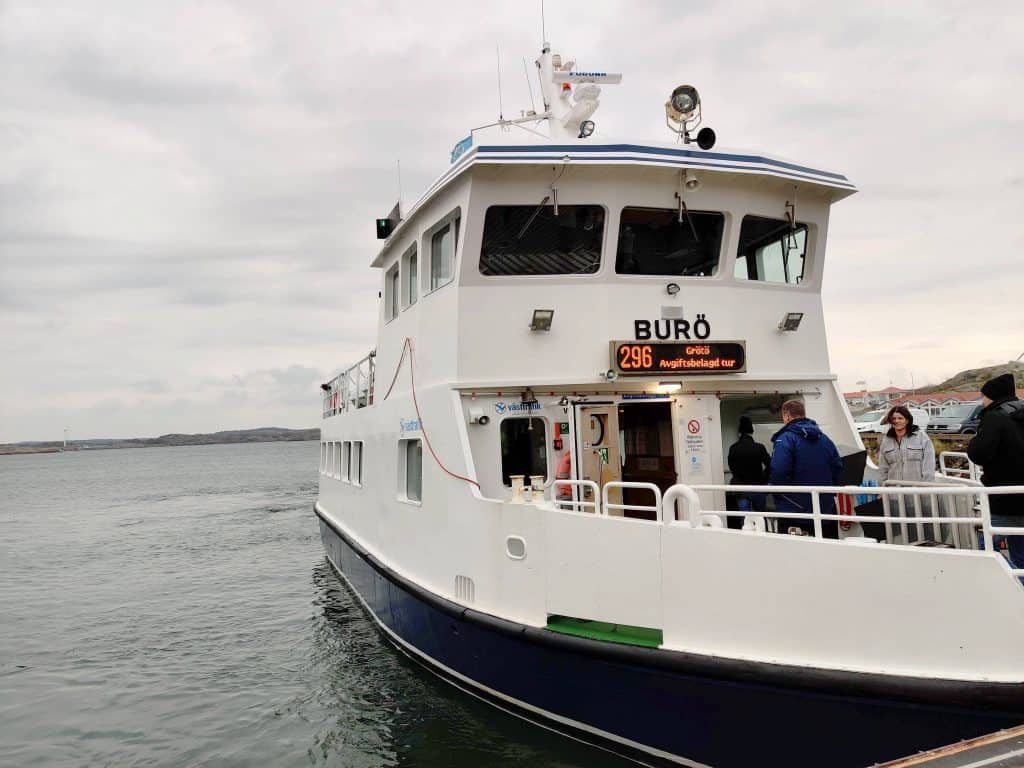
photo credit: Lina Bodestad at Cetasol

Another benefit he has noticed is that it’s easier than before to teach new crew to drive more efficiently. ”They follow alongside me or some other experienced captain, and we basically tell them to drive as the system suggests. They learn an economical way of driving, right from the beginning,” says Peter.

Öckerö manager: ”People out here depend on us”

Camilla Rydenskog is the operational manager at Öckerö Båttrafik. ”Our challenge is keeping the fuel consumption down, without jeopardizing the service level. The people who live out here depend heavily on us. We can’t afford long stops in our operation,” she explains.

”Now that we have the iHelm from Cetasol, I get much more detailed statistics about our fuel use and emissions. I have also noticed how the captains have started to compete internally to reduce fuel use. This is also positive because a smoother driving means less wear and tear on the vessel. We can see that the engine is in good shape when we do our regular service. And on top of this we arrive at the docks at precisely the right time.”

Cetasol is a Swedish company with Volvo Penta and Qamcom as co-owners. The iHelm is their first solution for the marine sustainability market.

Latest News

YANMAR Marine International has launched its new YF12e Hybrid system, an integrated propulsion and onboard power solution designed to support more sustainable operations across the 40–50ft displacement vessel market.

YANMAR Unveils New Hybrid Propulsion Package

YANMAR's latest hybrid solution features integrated power management and up to 12.1kWe of electric propulsion YANMAR Marine International has launched its new YF12e Hybrid system,...
DEME has awarded DEMCON unmanned systems a contract for the construction of two offshore unmanned surface vessels (USVs), based on the company’s DUS OV platform, as it expands its capabilities in remote and autonomous offshore survey operations.

DEMCON Secures DEME Order for Two USVs

Based on DEMCON’s DUS OV platform, the two USVs will feature integrated mission management, collision avoidance and remote operations capabilities DEME has awarded DEMCON unmanned...
BOURBON has taken delivery of the first of two new-generation Surfer 341 crewboats following successful sea trials, with Grandweld Shipyards officially handing over the 34-metre vessel at its Dubai shipyard on 3 November 2026. Designed by French naval architecture firm MAURIC, the Surfer 341 represents the latest development in BOURBON’s high-speed offshore personnel transportation fleet and continues a partnership between the two companies that spans more than 26 years.

Grandweld Delivers First Surfer 341 to BOURBON

The 34-metre Surfer 341 Crewboats, designed by MAURIC and built by Grandweld Shipyards, accommodates up to 60 offshore personnel and delivers service speeds exceeding...
The Marine Nuclear Propulsion System (MarNuPS) Pilot project has secured NOK 20 million (approximately USD 2 million) in initial funding from the Research Council of Norway, supporting the next phase of development as the consortium moves towards the physical integration and testing of a maritime nuclear propulsion system.

Nuclear Marine Propulsion Project Gains Norwegian Funding

VARD Group, Vard Electro and Island Offshore are among the partners collaborating to develop and demonstrate a new generation of nuclear-powered marine propulsion technology The...

Related news