Latest NewsCoastal Works & dredgingIIMS, IMCA and Workboat Association Launch International Workboat Code of Practice

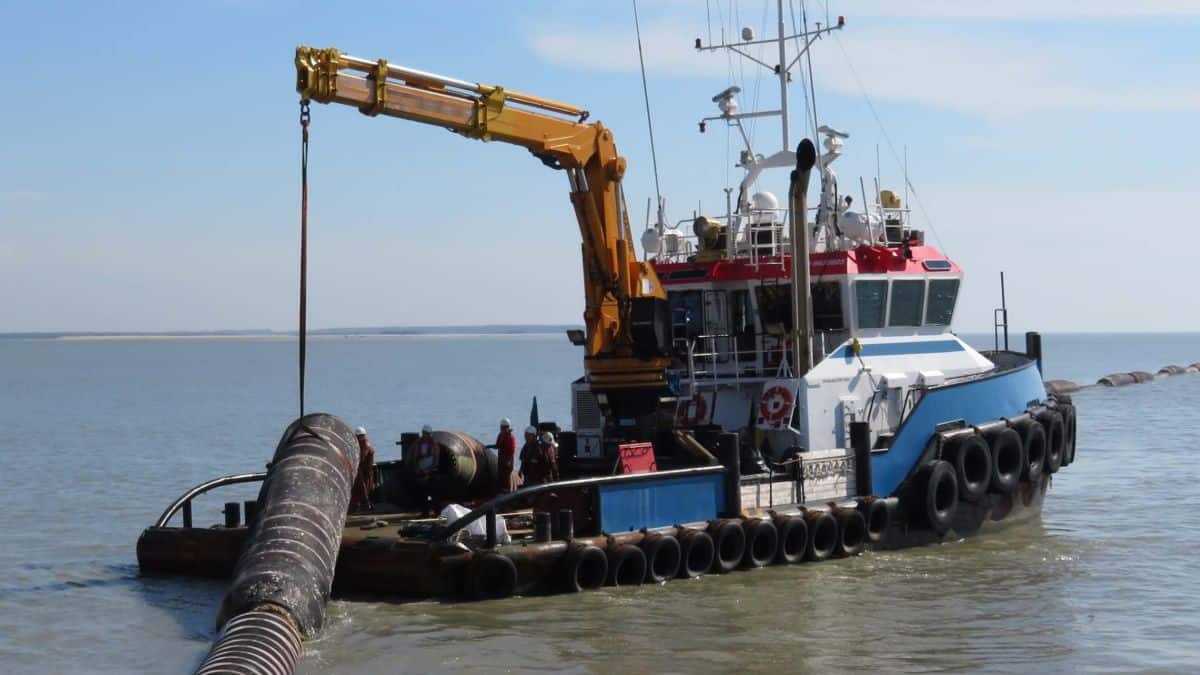
IIMS, IMCA and Workboat Association Launch International Workboat Code of Practice

IIMS, IMCA and the Workboat Association collaborate on a 122-page guide covering vessel safety, operational standards and crew competency for commercial workboats worldwide

The International Institute of Marine Surveying (IIMS), working in collaboration with the International Marine Contractors Association (IMCA) and the Workboat Association, has announced the publication of the International Workboat Code of Practice, a 122-page guide providing best-practice guidance for the construction, operation and surveying of commercial workboats.

The International Workboat Code of Practice is a Good Practice Guide is intended to establish a comprehensive safety and operational framework and guidance for commercially operated workboats at sea and in regional waters. It covers crewed vessels as well as remotely operated unmanned vessels (ROUVs), while excluding underwater vessels and craft used for sport or pleasure. Its stated objective is to provide a benchmark level of safety and environmental protection appropriate to modern commercial workboat operations globally.

The Code places primary accountability on the vessel owner/operator and Master. Owners/operators are responsible for ensuring vessels are appropriately designed, constructed, maintained, inspected, certified and manned, and for conducting risk assessments that address the intended operation, local conditions, equipment and the vulnerability of asset, environment, public, and persons on board.

The Code places considerable emphasis on people and organisational controls, not only design and construction. It addresses PPE, safe work practices, personnel competency and familiarisation, emergency drills, preparedness and medical provision, training and formal safety-management arrangements. Industrial personnel must meet defined medical, training, familiarisation and PPE expectations before undertaking offshore voyages.

IIMS CEO, Mike Schwarz, said, “Whilst standards and regulations surrounding workboats and their safe operation are plentiful and extensive in some parts of the world, this is by no means the case in certain countries. Working in close collaboration with our friends and partners, IMCA and the Workboat Association, we have produced the detailed International Workboat Code of Practice guidance to support those engaged in a growing industry sector where only limited regulations and advice may exist in many territories.”


Latest News

The world’s largest battery-electric ship has officially entered commercial passenger service, marking a major milestone for maritime electrification and zero-emission vessel operations. Built by Incat Tasmania for long-standing customer Buquebus, the 130-metre China Zorrilla has completed its maiden commercial voyage between Buenos Aires, Argentina, and Colonia, Uruguay, across the River Plate.

China Zorrilla Begins Electric Ferry Operations

Built for Buquebus to connect Argentina and Uruguay, the China Zorrilla, the world’s largest battery-electric ferry, marks a major milestone in large-scale marine electrification...
Boluda Towage has expanded its Norwegian fleet with the addition of VB NORWEGIAN FALCON, a new tug built by Sanmar Shipyards to support towing, vessel assistance and offshore operations in demanding maritime environments.

Boluda Towage Takes Delivery of VB NORWEGIAN FALCON

Sanmar-built VB NORWEGIAN FALCON features RAstar 3200 SX design, ASD propulsion and more than 6,700 hp Boluda Towage has expanded its Norwegian fleet with the...
SWITCH Maritime has secured a Design Basis Agreement (DBA) from the United States Coast Guard (USCG) for its SWITCH-150 hydrogen fuel cell-electric ferry, marking a key milestone in the development of the 150-passenger vessel. Designed by naval architecture firm Incat Crowther, the SWITCH-150 combines hydrogen fuel cell-electric propulsion with onboard hydrogen storage to support high-frequency ferry operations without compromising service schedules or requiring shoreside charging infrastructure.

SWITCH Hydrogen Ferry Clears Key US Coast Guard Milestone

The US Coast Guard agreement establishes a regulatory framework to guide construction, commissioning and future commercial operation of the hydrogen-powered ferry SWITCH Maritime has secured...
Norwegian ocean surface measurement specialist Miros has introduced a new 3D vessel view for its WaveSystem wave monitoring platform, giving crews and offshore operators a consolidated view of measured sea conditions around their vessel.

Miros Introduces 3D Vessel View for Real-Time Wave Monitoring

Miros introduces a vessel-specific 3D visualisation to help operators interpret real-time wave measurements at critical offshore working locations Norwegian ocean surface measurement specialist Miros has...

Related news