


Incat Tasmania is currently in discussions to deliver the world’s first large, lightweight, zero emissions ferry.
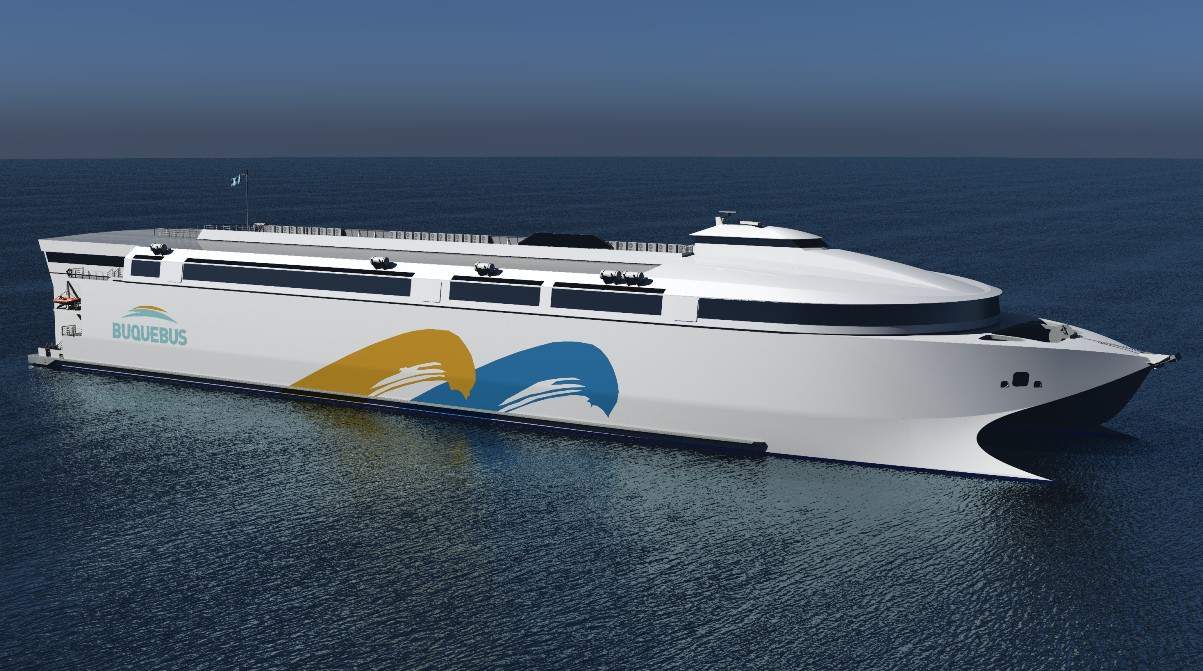
Amongst vessels under construction at the shipyard is a 130 metre lightweight ferry, originally intended to be powered by LNG, that will carry 2100 passengers and 226 vehicles for Incat’s long term South American customer, Buquebús. Following close consultation with the customer, Incat was recently asked to investigate the possibility of replacing the LNG powerplant with a battery-electric solution.
Whilst there are challenges to overcome, the ship which is to be delivered in 2025, when battery electric, would be the world’s largest, lightweight, zero emissions ferry operating on any route in the world.
Incat Tasmania has always been an innovator, ahead of the technology curve and the delivery of an electric zero emissions ferry will cement Incat as the world leader in zero emissions, lightweight shipping.
“the customer wants this to happen, Incat wants this to happen, and whilst there are matters to be finalised, I am extremely confident that Incat can deliver this ground-breaking ship. In my experience unless we see something come in from left field, this is a ‘done deal’.
“Obviously, there needs to be sufficient energy supply in the ports that the ship would visit but we understand that this is progressing positively. The batteries and electric motors are being worked through with our suppliers, to ensure they can deliver the technology required in the timeframe we need them.
“Zero emissions shipping is the future and Incat based in Tasmania, one of the few places on the planet which has already delivered net zero, is now poised to revolutionise the world’s shipping fleet by delivering the world’s first zero emissions, lightweight ship,” he says.
Incat Group Chairman and Founder Robert Clifford
Incat Managing Director Craig Clifford says this is a unique opportunity for Incat. Whilst there are always challenges if you change any aspect of the design of a ship part way through build, in simple terms, this is just swapping one method of propulsion for another: it will however have significant environmental benefits, and open up a whole new market for these types of vessels.
“delivering the world’s first large battery electric ferry for Buquebus would lead to exponential growth in the international market for large lightweight electric ships.
“The world wants large, lightweight zero emission ships and we are already scaling up our workforce and production facility in readiness for what will be a significant expansion.
“It will be a win- win for both the environment and for investment in long-term skilled jobs in Tasmania,” he said.
Former Tasmanian Premier and Incat’s Strategic Adviser Peter Gutwein