Renewable EnergyOffshore WindJan De Nul Commissions Simulator for Wind Farm Installation

Jan De Nul Commissions Simulator for Wind Farm Installation

This December, Jan De Nul will commission two cutting-edge training simulators at its Aalst office, reinforcing the company’s commitment to innovation and operational excellence. The highlight is a next-generation crane simulator developed specifically for the installation of offshore wind farms.

With modern wind turbines now reaching tip heights of 300 metres and higher, installation has evolved into an exceptionally complex operation. The new simulator will provide a highly realistic training environment, enabling all project partners to prepare thoroughly for these critical offshore activities.

The simulator is a digital twin of Jan De Nul’s newest vessels, Les Alizés and Voltaire, which install the latest generation of wind turbines and their foundations at sea. These foundations are the size of a football field and can weigh up to two thousand tonnes, the equivalent of five Boeing 747s combined. Installing such giants at sea requires extensive experience, and this simulator allows teams to practice every step of the process in a safe, realistic environment.

Stefan Bruggeman, responsible for the simulators at Jan De Nul said, “the crane simulator features a seven-metre-wide dome that provides a full 360-degree view, immersing operators as if they were truly at sea. We also train in all possible conditions: changing weather, high waves, seabed subsidence, you name it.“

“Alongside technical skills, we focus heavily on teamwork and communication. In the crane simulator, up to four roles that work closely with the crane operator can train simultaneously. Just like on board, they operate from separate rooms, allowing potential bottlenecks in communication or coordination to surface early. This not only saves time during project execution, but also boosts efficiency and safety on our vessels and worksites.”

With these new simulators, Jan De Nul is investing not only in technical training, but also in safety, collaboration and thorough project preparation. Employees, clients and partners will all train in the simulators. The goal is to minimise risks in advance and further increase the efficiency of offshore operations.

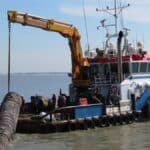
Alongside the crane simulator, Jan De Nul is also introducing a new state-of-the-art simulator for its cutter suction dredgers, vessels that cut and remove hard seabed material. This simulator is based on the Willem van Rubroeck, the most powerful cutter suction dredger in our fleet. Teams can simulate an entire project with this type of vessel, gaining valuable experience before heading offshore.


Alongside the crane simulator, Jan De Nul is also introducing a new state-of-the-art simulator for its cutter suction dredgers, vessels that cut and remove hard seabed material. This simulator is based on the Willem van Rubroeck,

Latest News

The International Institute of Marine Surveying (IIMS), working in collaboration with the International Marine Contractors Association (IMCA) and the Workboat Association, has announced the publication of the International Workboat Code of Practice, a 122-page guide providing best-practice guidance for the construction, operation and surveying of commercial workboats.

IIMS, IMCA and Workboat Association Launch International Workboat Code of Practice

IIMS, IMCA and the Workboat Association collaborate on a 122-page guide covering vessel safety, operational standards and crew competency for commercial workboats worldwide The International...
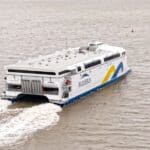
The world’s largest battery-electric ship has officially entered commercial passenger service, marking a major milestone for maritime electrification and zero-emission vessel operations. Built by Incat Tasmania for long-standing customer Buquebus, the 130-metre China Zorrilla has completed its maiden commercial voyage between Buenos Aires, Argentina, and Colonia, Uruguay, across the River Plate.

China Zorrilla Begins Electric Ferry Operations

Built for Buquebus to connect Argentina and Uruguay, the China Zorrilla, the world’s largest battery-electric ferry, marks a major milestone in large-scale marine electrification...
Boluda Towage has expanded its Norwegian fleet with the addition of VB NORWEGIAN FALCON, a new tug built by Sanmar Shipyards to support towing, vessel assistance and offshore operations in demanding maritime environments.

Boluda Towage Takes Delivery of VB NORWEGIAN FALCON

Sanmar-built VB NORWEGIAN FALCON features RAstar 3200 SX design, ASD propulsion and more than 6,700 hp Boluda Towage has expanded its Norwegian fleet with the...
SWITCH Maritime has secured a Design Basis Agreement (DBA) from the United States Coast Guard (USCG) for its SWITCH-150 hydrogen fuel cell-electric ferry, marking a key milestone in the development of the 150-passenger vessel. Designed by naval architecture firm Incat Crowther, the SWITCH-150 combines hydrogen fuel cell-electric propulsion with onboard hydrogen storage to support high-frequency ferry operations without compromising service schedules or requiring shoreside charging infrastructure.

SWITCH Hydrogen Ferry Clears Key US Coast Guard Milestone

The US Coast Guard agreement establishes a regulatory framework to guide construction, commissioning and future commercial operation of the hydrogen-powered ferry SWITCH Maritime has secured...

Related news