


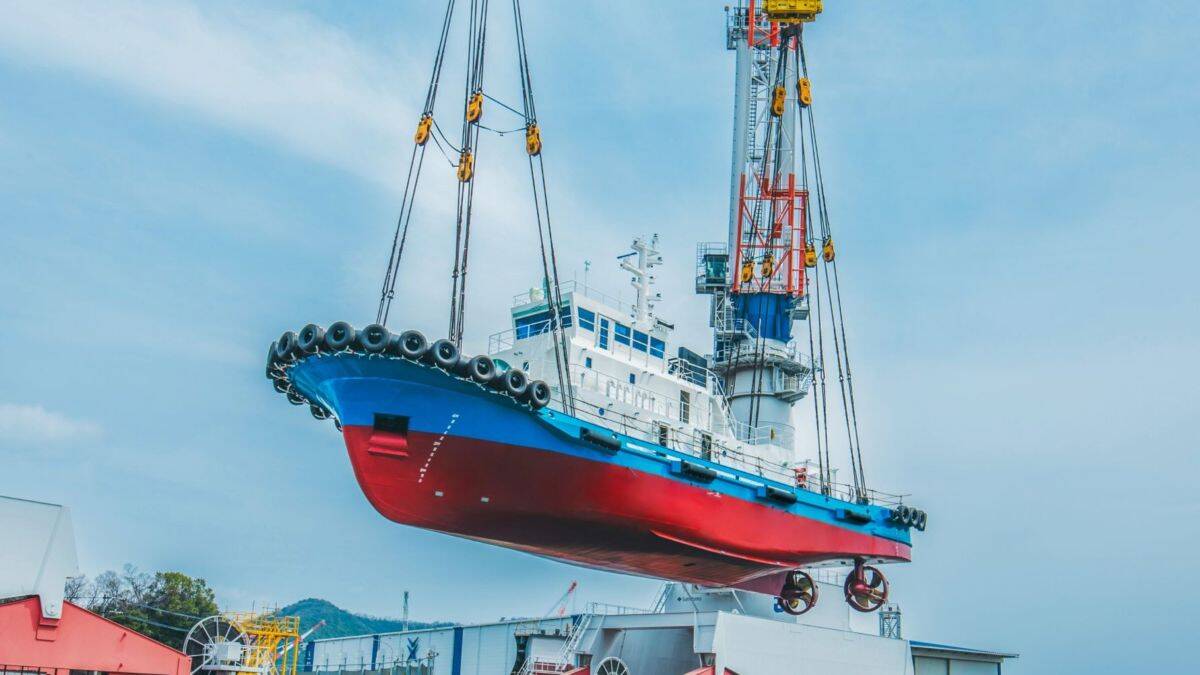
Tsuneishi Shipbuilding has made maritime history with the launch of Japan’s first tug powered by a hydrogen fuelled internal combustion engine (ICE) at its shipyard. This ground breaking vessel integrates three cutting-edge sustainable technologies: a high-power hydrogen dual-fuel ICE, a high-pressure hydrogen storage system, and 100% JGreeX green steel from JFE Steel Corporation, marking a transformative leap toward zero-emission port operations.
This vessel was developed and built as part of the The Nippon Foundation’s “Zero Emission Ships Project”, which aims to develop vessels with zero CO₂ emissions. Hydrogen fuel is a clean fuel that does not emit carbon dioxide when burned and is expected to contribute to the realisation of carbon neutrality.
Large vessels have difficulty controlling their steering when they are operating at low speeds, making it difficult to manoeuvre them smoothly. For this reason, tugboats are used to assist with the steering and propulsion of large vessels when they are leaving or arriving at ports safely and quickly. Therefore, tugboats need to be highly manoeuvrable and have high engine output. This tugboat is installed with twin 12-cylinder hydrogen-blended engines (4,400 horsepower class), and by hydrogen in combination with traditional marine fuels, with the target of reducing carbon dioxide emissions by approximately 60% compared to conventional tugboats that use traditional marine fuels. Furthermore, by having facilities to store approximately 250kg of high-pressure hydrogen gas, it is possible to maintain the same operational performance as when using conventional fuel while also making use of hydrogen fuel. In the unlikely event of failure of the hydrogen fuel system, the vessel can operate with only traditional marine fuels, thus ensuring the same level of safety as conventional vessels.
In addition, “JGreeX“, which are used for all of the vessel’s hull, is a green steel material that has significantly reduced CO2 emissions by crediting the steel material with the amount of CO2 emissions reduced in the steel production process. With the use of “JGreeX”, it contributes to a 100% reduction in CO₂ emissions caused by steel plates.
TSUNEISHI SHIPBUILDING will continue to contribute to the realisation of a decarbonised society. We are doing this by taking various approaches to reducing greenhouse gases. These include the development and construction of next-generation fuel vessels and the procurement of green steel materials.
Mr. NISHIJIMA Takanori, from General Manager of the Design Division and Managing Executive Officer of TSUNEISHI SHIPBUILDING Co., Ltd. commented: ‘We have successfully launched our first hydrogen-fuelled tug. We will utilise the know-how and design processes we have developed in the construction of hydrogen-fuelled tugboats, which require high power, in the construction of further new fuel vessels. Our company is working to achieve carbon neutrality by developing and constructing new fuel vessels such as methanol-fuelled, LNG-fuelled and hydrogen-fuelled vessels, making use of group synergies. TSUNEISHI SHIPBUILDING will continue to contribute to the decarbonisation of the maritime industry through a multifaceted approach to the development and construction of new fuel vessels, an the utilisation of green steel materials.’
Specification of the hydrogen fuel tugboat
- LOA: 38.0m
- Breadth: 9.6m
- Draft: 4.2m
- Gross Tonnage: less than 300
- Main Engine: Twin 12-cylinder hydrogen dual-fuelled ICE (4,400-horsepower class)
- Fuel Used: hydrogen and traditional marine fuels