



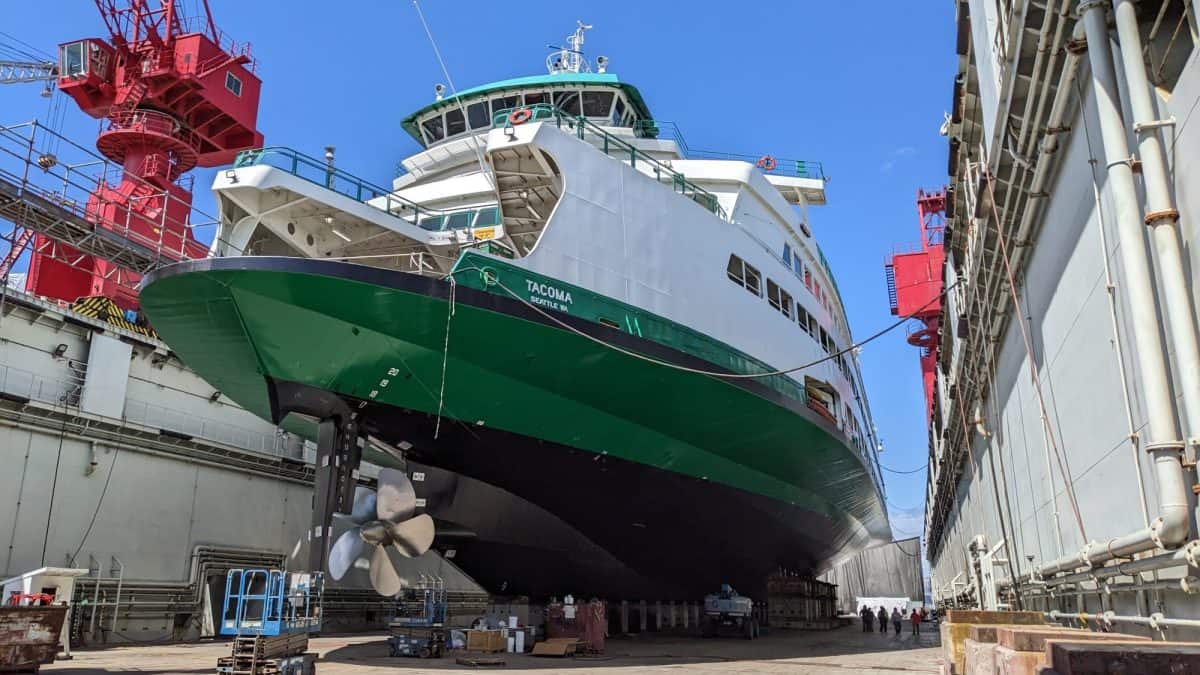
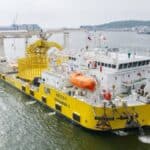
Washington State Ferries (WSF) is taking steps towards reducing fleet emissions to zero with the conversion their largest ferry class, the Jumbo Mark IIs, to plug-in hybrid-electric power. Now roughly 25 years into their service lives, the ferries are also due for a propulsion control systems overhaul.
WSF selected Siemens Energy Marine Solutions to design and integrate the new propulsion controls and battery-hybrid system, and Siemens hired Glosten to provide the preliminary, contract, and production design integration of the propulsion controls and plug-in hybrid system. Glosten and Siemens are working closely with WSF’s internal engineering team on the mechanical and structural design modifications that will be required to accommodate the 40 tons of batteries powering the vessels, and their auxiliary systems.

PLANNING AHEAD.
Glosten performed a number of design studies to identify an appropriate rapid shore-charging system which could accommodate the Jumbo Mark II ferries and their associated terminals, as well as the soon to be constructed Hybrid-Electric Olympic-Class ferries.
Vigor was awarded the contract for the conversion in August of 2023 and will begin modification work on the M/V Wenatchee in September. The M/V Tacoma, Puyallup, and Wenatchee are the biggest emitters of greenhouse gases in the WSF fleet, but once these ferries and their terminals are electrified, emissions are expected to drop by 95%.
Glosten has been an essential partner in the implementation of Washington State Ferries System Electrification Plan. Their work to develop detailed construction drawings and specifications for the Siemens system upgrades greatly reduces the cost and schedule risk of this complex project. They have also laid the groundwork for a vessel charging system that will support multiple vessels classes and terminals throughout Central Puget Sound.”
– MATT VON RUDEN, System Electrification Program Administrator, Washington State Ferries





 is taking steps towards reducing fleet emissions to zero with the conversion their largest ferry class, the Jumbo Mark IIs, to plug-in hybrid-electric power. Now roughly 25 years into their service lives, the ferries are also due for a propulsion control systems overhaul.)