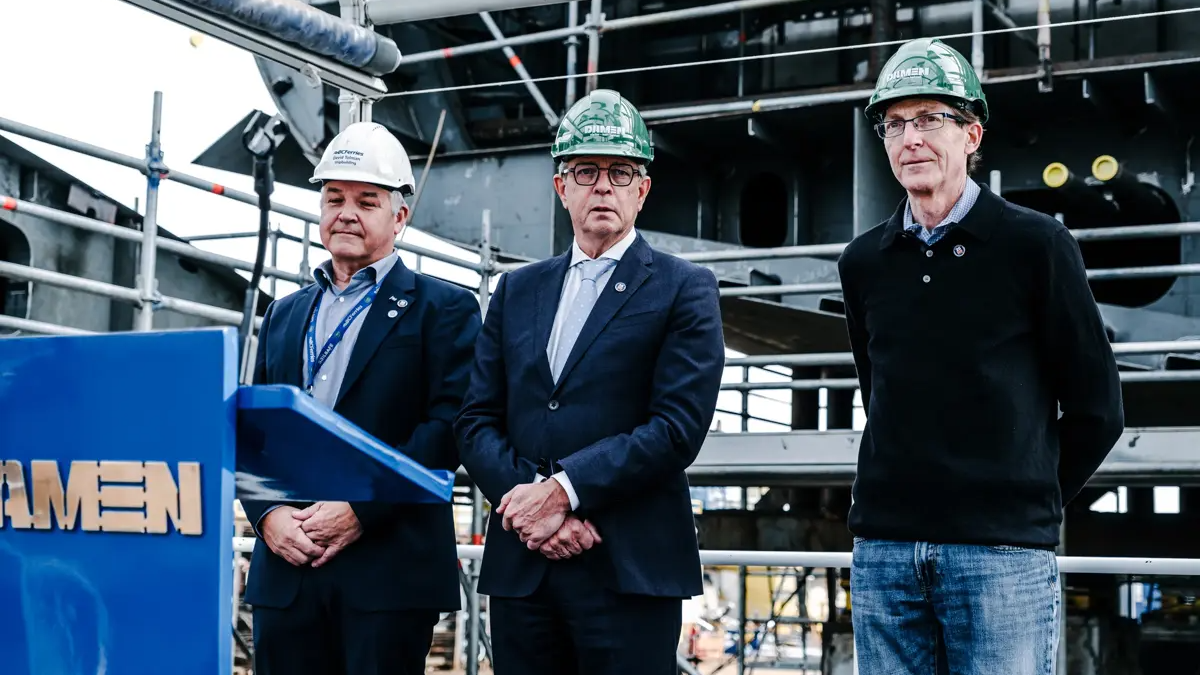
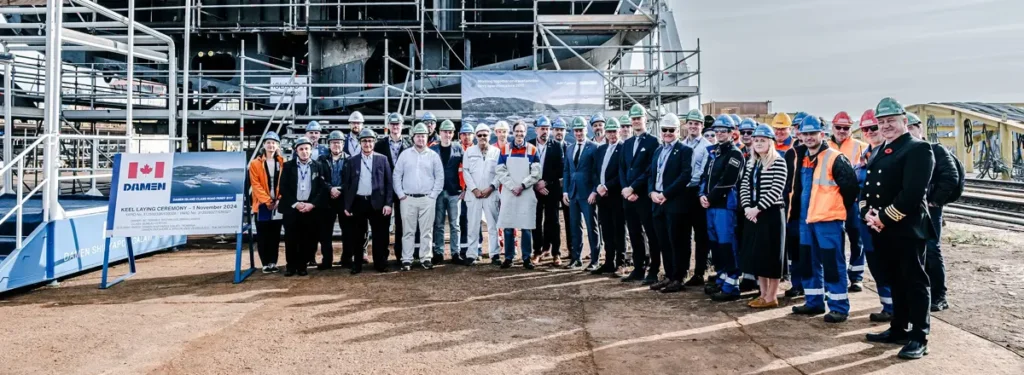
Keel Laying Ceremony On November 1st, Damen Shipyards Galati in Romania laid the keel for the first two of four fully electric ferries for BC Ferries. The keel laying ceremony marked an important milestone in the third phase of construction of the Island Class Ferries, which will bring the total number of Damen vessels in the BC Ferries fleet to ten.
During the recent second phase of the programme, Damen delivered four hybrid diesel-electric ferries. These reduced emissions vessels were intended to pave the way to the development of fully electric vessels.
Now, with availability of renewable shore power to charge the vessels, the four fully electric vessels will be able to conduct their services with zero emissions. As such, the ferries are making an important contribution to BC Ferries’ goal to reduce emissions by 10,000 tons of CO2 equivalent by 2030.
During the event, the traditions of shipbuilding were honoured when BC Ferries CEO Nicolas Jimenez laid a silver Canadian Dollar on the two keels. The 1 oz pure silver coin, depicts five orcas, reflecting the beauty of Canada’s west coast waters where the ferries will sail.
The ceremony was made particularly poignant by the fact that Damen constructed the second phase of Island Class Ferries during the Coronavirus pandemic. As such, any construction milestones were marked only by local, and low-key celebrations.
Speaking at the keel laying event, Mr Jimenez said, “Reaching the keel laying stage brings us one step closer to putting these vessels into service. It’s exciting to see our vision for fully electric ferries coming to life. These ferries will not only reduce our environmental impact, but also increase capacity, improve service reliability and provide a quieter, more efficient travel experience for our customers.”
The vessels are based on the Damen RoRo 8117 E3 design. They will transport up to 390 passengers, together with up to 47 vehicles between Nanaimo and Gabriola Island, and Campbell River and Quadra Island.
In addition to the vessels, Damen will also supply BC Ferries with the charging facilities required to recharge the ferries’ batteries during (dis)embarkation. To ensure the success of the charging infrastructure, Damen will be conducting tests on a charging tower installed at the Galati yard.
Damen Area Sales Director Americas Leo Postma said, “Today’s keel laying marks an exciting milestone in the development of the Island Class. Together, Damen and BC Ferries have been developing these ferries since 2016. We are very proud to have collaborated on such a large series of vessels, an achievement that is perhaps unique in the world of waterborne public transport. This is a testament to the excellent and long-standing relationship that exists between our two organisations. The result is a series of vessels suited to the specific requirements of BC Ferries and British Columbia, and offering a considerable amount of commonality across the fleet.”
At the present time, Damen has six fully electric ferries under contract to be constructed at the Galati yard. This includes the four Island Class Ferries, which are scheduled to be operational in Canada during 2027, as well as two ferries for the City of Toronto.