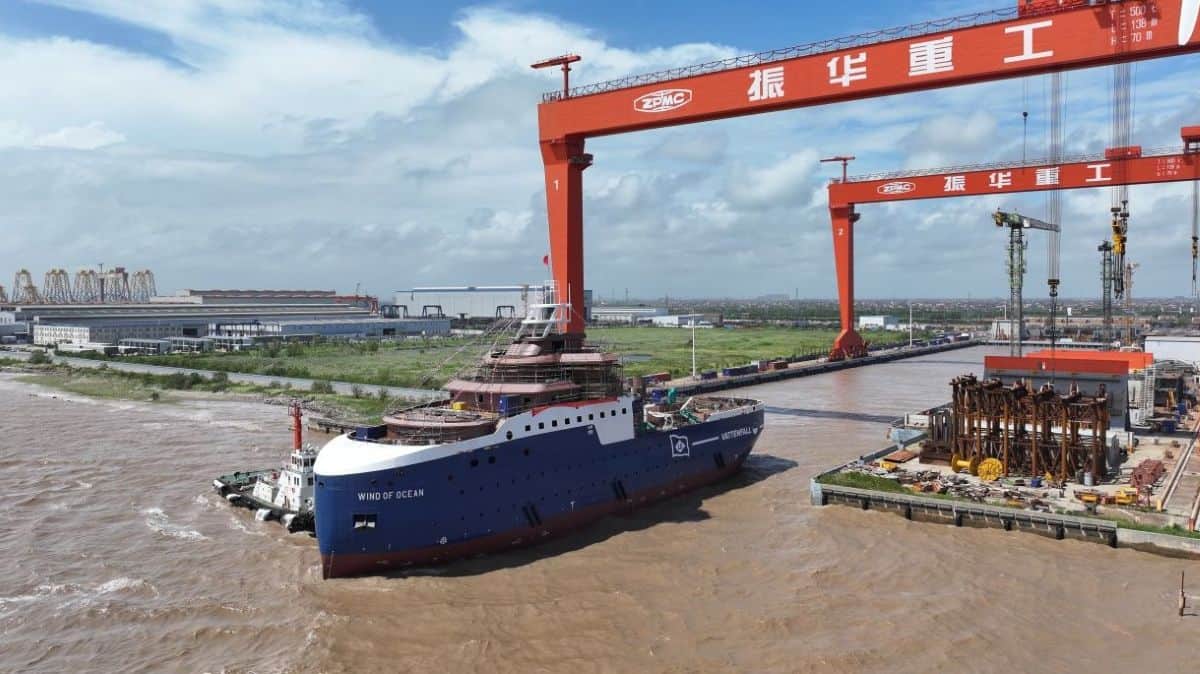
Wind of Ocean will support operations and maintenance activities across Vattenfall’s North Sea wind farms
LD Armateurs has launched Wind of Ocean, the first of two next-generation Service Operation Vessels (SOVs) being built for Vattenfall.
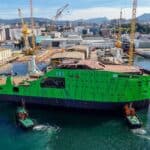
The vessel was launched on August 30 at ZPMC shipyard in China, following the keel-laying ceremony earlier this year. The launch moves Wind of Ocean into the next stage of construction, with outfitting, systems integration and sea trials now planned ahead of scheduled delivery in 2027.
LD Armateurs has reached another major milestone in the development of its offshore wind fleet with the successful launch of Wind of Ocean, the first of two next-generation Service Operation Vessels (SOVs) being built for Vattenfall. Launched on August 30th at ZPMC shipyard in China, the vessel now enters the next phase of construction, including outfitting, systems integration and sea trials ahead of her scheduled delivery in 2027.
Following the keel laying ceremony earlier this year, the launch marks a significant step forward in the construction programme. Once delivered, Wind of Ocean will operate on the DanTysk and Sandbank offshore wind farms in the North Sea, providing accommodation for technicians as well as the safe and efficient transfer of personnel and equipment to offshore wind turbines.
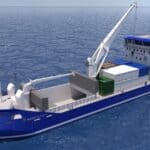
With an overall length of 90 metres and a beam of 19.60 metres, the vessel will accommodate up to 96 people on board, including crew members and offshore technicians. Designed as a true offshore base, Wind of Ocean combines comfortable living spaces with dedicated operational areas, enabling maintenance teams to remain on site for extended periods while ensuring high standards of safety and efficiency.
Developed in partnership with SALT Ship design of Norway, Wind of Ocean incorporates several innovations designed to enhance operational performance while reducing environmental impact.
The vessel features a hybrid-electric propulsion system combining diesel generators with a significantly enhanced battery energy storage system. Compared with LD Armateurs’ previous SOV generation, this new architecture improves energy efficiency, reduces fuel consumption and lowers both emissions and onboard noise levels.
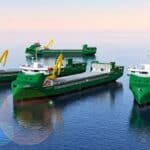
One of the vessel’s most distinctive features is its double-ended design, a first for LD Armateurs on this type of vessel. Thanks to a simpler and more flexible architecture consisting in a symmetrical hull form and four identical azimuth thrusters, the vessel delivers enhanced dynamic positioning (DP) performance, greater manoeuvrability and simplified maintenance, while improving efficiency during offshore operations and noise and vibration reduction in the accommodation areas.
Wind of Ocean is also equipped with a next-generation motion-compensated gangway, enabling the safe transfer of technicians and equipment to offshore wind turbines even in challenging sea conditions. This transfer system is the core operational feature of the vessel and plays a key role in ensuring safe and efficient maintenance activities offshore.
Following her launch, Wind of Ocean will undergo the next stages of construction, including the installation of propulsion equipment, electrical systems, accommodation areas and mission-critical onboard technologies before entering sea trials.