Ship & Boat Buildingcargo transfer vesselMOL and Petrobras signed a CTV Charter and MoU to Start...

MOL and Petrobras signed a CTV Charter and MoU to Start Negotiations on Newbuilding CTV

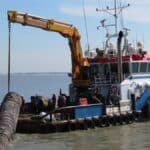
Mitsui O.S.K. Lines, Ltd. announce that its wholly owned subsidiary, SeaLoading Holding AS, which owns and operates cargo transfer vessels (CTVs), has signed a charter contract for the CTV SeaLoader 2 with Petroleo Brasileiro S.A. (Petrobras), a Brazilian state-owned oil company. The two companies have also decided to enter into negotiations for a new CTV shipbuilding contract by the end of 2024.

SeaLoading started a CTV agreement with Petrobras for SeaLoader 2 on a trial period in January 2022, and successfully completed more than 30 crude oil offloading operations from Petrobras’ FPSOs located in the Santos Basin, Brazil, transferring the cargo to tankers – the trials involved vessels up to VLCC size. After the successful conclusion of the trial agreement, proving the CTV technology efficiency and reliability, the vessel was placed on a time charter contract in 2023 with Petrobras. Now SeaLoading has signed a memorandum of understanding (MoU) with Petrobras to start the negotiations for a newbuilding CTV by the end of 2024.

The crude oil produced from offshore fields by a floating production, storage & offloading system (FPSO) is usually transported to the demand area via crude oil tankers, which, in most cases, requires DP shuttle tankers with special cargo handling equipment firstly receive the crude oil and transport it to an oil storage terminal or calm waters where it can be offloaded (or transshipped), and then reloaded onto a crude oil tanker. In the case of CTV, the crude oil can be directly loaded from the FPSO to the crude oil tanker by connecting a CTV between an FPSO and the crude oil tanker. This dramatically increases the efficiency of crude oil logistics.

Currently, there are only 2 two CTVs in the world, all owned by SeaLoading, which holds the patent for the CTV technology.


Latest News

The International Institute of Marine Surveying (IIMS), working in collaboration with the International Marine Contractors Association (IMCA) and the Workboat Association, has announced the publication of the International Workboat Code of Practice, a 122-page guide providing best-practice guidance for the construction, operation and surveying of commercial workboats.

IIMS, IMCA and Workboat Association Launch International Workboat Code of Practice

IIMS, IMCA and the Workboat Association collaborate on a 122-page guide covering vessel safety, operational standards and crew competency for commercial workboats worldwide The International...
The world’s largest battery-electric ship has officially entered commercial passenger service, marking a major milestone for maritime electrification and zero-emission vessel operations. Built by Incat Tasmania for long-standing customer Buquebus, the 130-metre China Zorrilla has completed its maiden commercial voyage between Buenos Aires, Argentina, and Colonia, Uruguay, across the River Plate.

China Zorrilla Begins Electric Ferry Operations

Built for Buquebus to connect Argentina and Uruguay, the China Zorrilla, the world’s largest battery-electric ferry, marks a major milestone in large-scale marine electrification...
Boluda Towage has expanded its Norwegian fleet with the addition of VB NORWEGIAN FALCON, a new tug built by Sanmar Shipyards to support towing, vessel assistance and offshore operations in demanding maritime environments.

Boluda Towage Takes Delivery of VB NORWEGIAN FALCON

Sanmar-built VB NORWEGIAN FALCON features RAstar 3200 SX design, ASD propulsion and more than 6,700 hp Boluda Towage has expanded its Norwegian fleet with the...
SWITCH Maritime has secured a Design Basis Agreement (DBA) from the United States Coast Guard (USCG) for its SWITCH-150 hydrogen fuel cell-electric ferry, marking a key milestone in the development of the 150-passenger vessel. Designed by naval architecture firm Incat Crowther, the SWITCH-150 combines hydrogen fuel cell-electric propulsion with onboard hydrogen storage to support high-frequency ferry operations without compromising service schedules or requiring shoreside charging infrastructure.

SWITCH Hydrogen Ferry Clears Key US Coast Guard Milestone

The US Coast Guard agreement establishes a regulatory framework to guide construction, commissioning and future commercial operation of the hydrogen-powered ferry SWITCH Maritime has secured...

Related news