Ship & Boat BuildingRoRo vesselsMV Ocean Explorer Joins Sallaum Lines’ Ocean Class Fleet

MV Ocean Explorer Joins Sallaum Lines’ Ocean Class Fleet

MV Ocean Explorer combines modern design with eco-friendly shipping technologies.

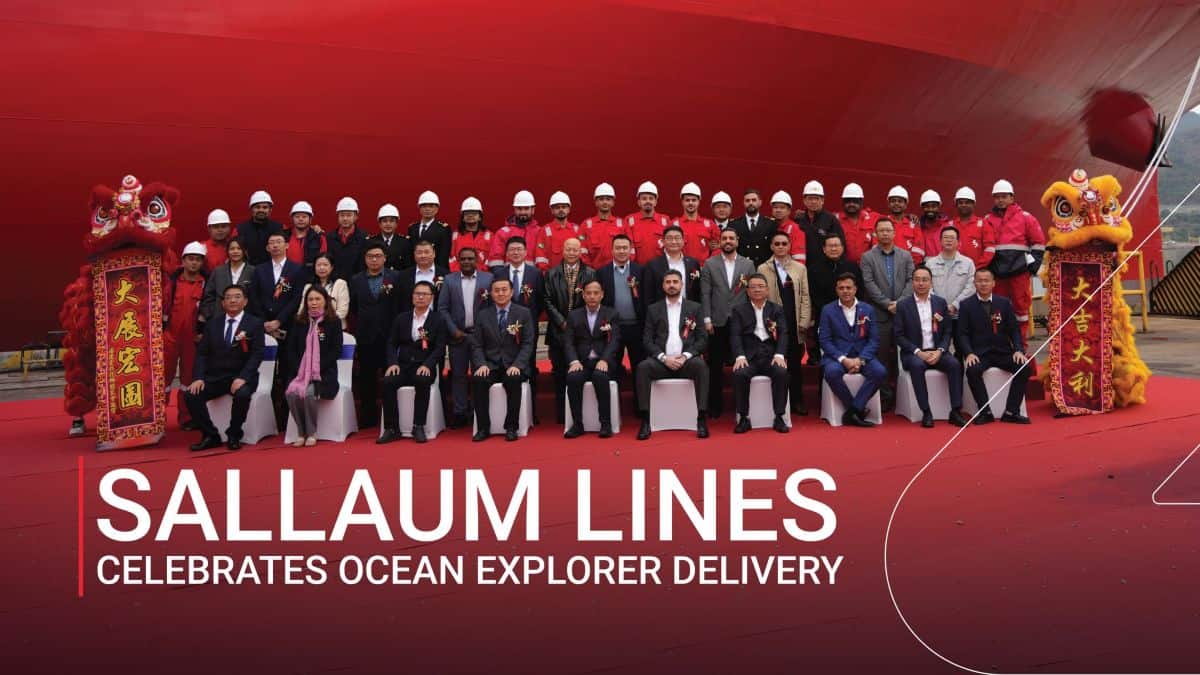
Sallaum Lines, a leading global RORO carrier, proudly announces the successful delivery of its latest Pure Car and Truck Carrier (PCTC), MV Ocean Explorer, further strengthening its Ocean Class fleet.

The arrival of the MV Ocean Explorer marks a major milestone in Sallaum Lines’ strategic fleet expansion, enhancing its capacity to serve global markets with efficiency and reliability. Designed with sustainability and energy efficiency in mind, the vessel reflects the company’s commitment to advancing environmentally responsible maritime operations.

The vessel is designed to meet the highest international standards of environmental performance and operational efficiency, featuring cutting-edge LNG dual-fuel propulsion systems that significantly reduce CO₂, NOx, SOx, and particulate emissions. This technological advancement aligns with Sallaum Lines’ vision of driving the decarbonization of the RoRo shipping sector.

MV Ocean Explorer, was constructed by Fujian Mawei Shipbuilding Ltd. and shares an overall length of 199.90 meters with a wide breadth measuring 38 meters. Designed to accommodate up to 7,500 car equivalent units (CEU) across 13 decks, it is powered by an LNG fuel system with a total capacity of 3,536.21 cubic meters.

“With the delivery of MV Ocean Explorer, we are proud to take another bold step toward a more sustainable future for maritime transport,” said Mr. Hasan Sallaum – Sallaum Lines Managing Director. “This vessel reflects our ongoing investment in cleaner technologies and our dedication to providing reliable, efficient, and environmentally responsible shipping solutions to our global partners.”

The delivery of the second LNG-powered vessel following MV Ocean Breeze reinforces Sallaum Lines’ position as a forward-looking carrier in sustainable RoRo shipping. It also demonstrates the company’s continued alignment with the International Maritime Organization’s decarbonization objectives, as part of its long-term strategy to operate one of the most modern and environmentally efficient fleets in industry.


Latest News

The International Institute of Marine Surveying (IIMS), working in collaboration with the International Marine Contractors Association (IMCA) and the Workboat Association, has announced the publication of the International Workboat Code of Practice, a 122-page guide providing best-practice guidance for the construction, operation and surveying of commercial workboats.

IIMS, IMCA and Workboat Association Launch International Workboat Code of Practice

IIMS, IMCA and the Workboat Association collaborate on a 122-page guide covering vessel safety, operational standards and crew competency for commercial workboats worldwide The International...
The world’s largest battery-electric ship has officially entered commercial passenger service, marking a major milestone for maritime electrification and zero-emission vessel operations. Built by Incat Tasmania for long-standing customer Buquebus, the 130-metre China Zorrilla has completed its maiden commercial voyage between Buenos Aires, Argentina, and Colonia, Uruguay, across the River Plate.

China Zorrilla Begins Electric Ferry Operations

Built for Buquebus to connect Argentina and Uruguay, the China Zorrilla, the world’s largest battery-electric ferry, marks a major milestone in large-scale marine electrification...
Boluda Towage has expanded its Norwegian fleet with the addition of VB NORWEGIAN FALCON, a new tug built by Sanmar Shipyards to support towing, vessel assistance and offshore operations in demanding maritime environments.

Boluda Towage Takes Delivery of VB NORWEGIAN FALCON

Sanmar-built VB NORWEGIAN FALCON features RAstar 3200 SX design, ASD propulsion and more than 6,700 hp Boluda Towage has expanded its Norwegian fleet with the...
SWITCH Maritime has secured a Design Basis Agreement (DBA) from the United States Coast Guard (USCG) for its SWITCH-150 hydrogen fuel cell-electric ferry, marking a key milestone in the development of the 150-passenger vessel. Designed by naval architecture firm Incat Crowther, the SWITCH-150 combines hydrogen fuel cell-electric propulsion with onboard hydrogen storage to support high-frequency ferry operations without compromising service schedules or requiring shoreside charging infrastructure.

SWITCH Hydrogen Ferry Clears Key US Coast Guard Milestone

The US Coast Guard agreement establishes a regulatory framework to guide construction, commissioning and future commercial operation of the hydrogen-powered ferry SWITCH Maritime has secured...

Related news