



Technology group Wärtsilä has introduced a new ultra-low emissions version of its already efficient Wärtsilä 31DF engine. Whilst operating on LNG, this new version can further reduce methane emissions on a 50 percent load point by up to 56 percent and nitrogen oxide (NOx) by up to 86 percent. On a weighted average, this new technology can reduce methane emissions by 41 percent more than the standard Wärtsilä 31DF engine, which has already the lowest emission levels on the market.
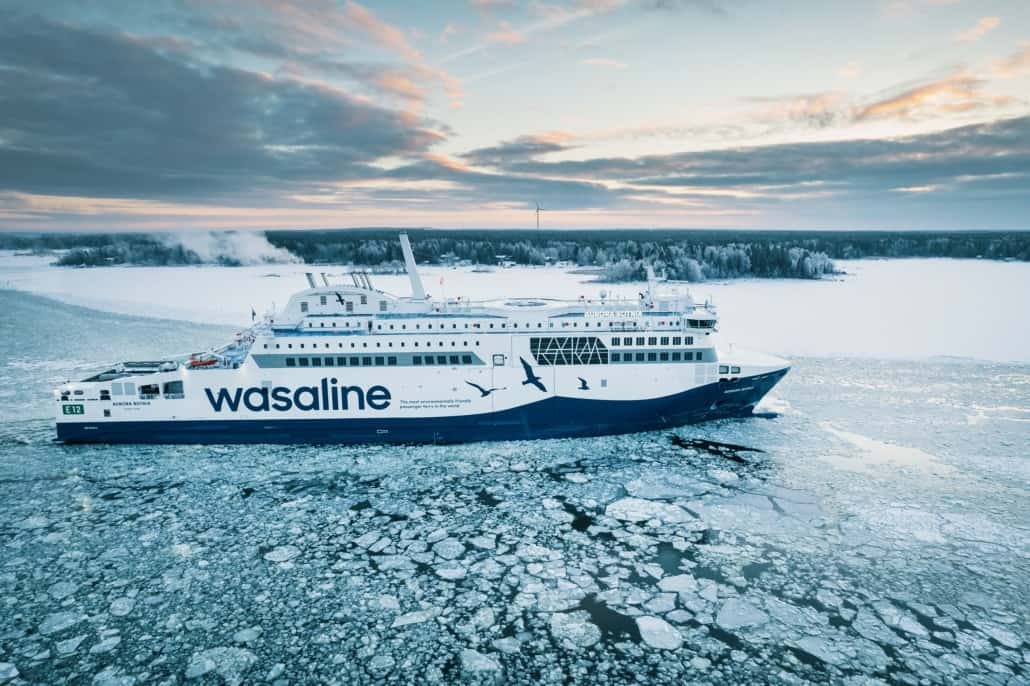
The new version, which is applied on one of the four engines on board Wasaline’s Aurora Botnia ferry, has already helped the Finnish-Swedish ferry operator further reduce the Aurora Botnia’s methane emissions by 10 percent. As part of the EU co-funded Green Ray and SeaTech projects, Wärtsilä piloted the ultra-low emissions concept onboard the Aurora Botnia with exceptional results verified through an independent study conducted in December 2022 by VTT, the Technical Research Centre of Finland. Encouraged by the positive results, Wärtsilä has now launched the new ultra-low emissions version of the Wärtsilä 31DF engine to the commercial market.
This latest collaboration forms part of a long-term partnership between Wärtsilä and Wasaline to reduce emissions onboard the Aurora Botnia, the world’s most environmentally friendly RoPax ferry today.
“We are very committed to decarbonisation, and we have worked closely with Wärtsilä to make sustainable shipping a reality. It is a goal-oriented partnership that benefits both companies, as well as the industry as a whole. We have been pleased to allow the ‘Aurora Botnia’ to be utilised as a floating laboratory, and we are excited to see the success of this latest Wärtsilä technology breakthrough,” commented Peter Ståhlberg, Managing Director of Wasaline.
Launched in 2015, the Wärtsilä 31DF engine platform is widely recognised for its exceptional fuel economy, high performance, and minimal GHG impact. The engine, as a standard version, already meets today’s regulatory requirements. The new version will enable operators to go even further in reducing methane emissions, helping to futureproof their vessels in the longer term against potentially tightening global requirements. What’s more, improving dual fuel technology to enable methane emissions reduction will have a major impact on the long-term viability of LNG as a marine fuel.
“Our work around reducing methane slip and GHG emissions is part of Wärtsilä’s effort to continuously improve efficiency and reduce emissions of our products, and this new innovation is one more very important step along the road to decarbonisation,” commented Stefan Nysjö, Vice President of Power Supply, Wärtsilä Marine Power.
Nysjö continued: “The building of an LNG fuel infrastructure has been an important factor in shipping’s transition towards cleaner operations, and Wärtsilä continues to create solutions that support this journey. Our focus has always been to improve and optimise existing solutions, and to develop exciting new ones. With this latest introduction, we are clearly delivering on this commitment.”
Although methane slip from engines is a relatively small amount, from a percentage standpoint, it is significantly more potent than CO2 – up to 28 times greater. Across the shipping industry, cutting methane emissions is one of the most effective ways to decrease overall GHG emissions from engines over the next 10 years, complementing other efforts to reduce CO2 emissions.
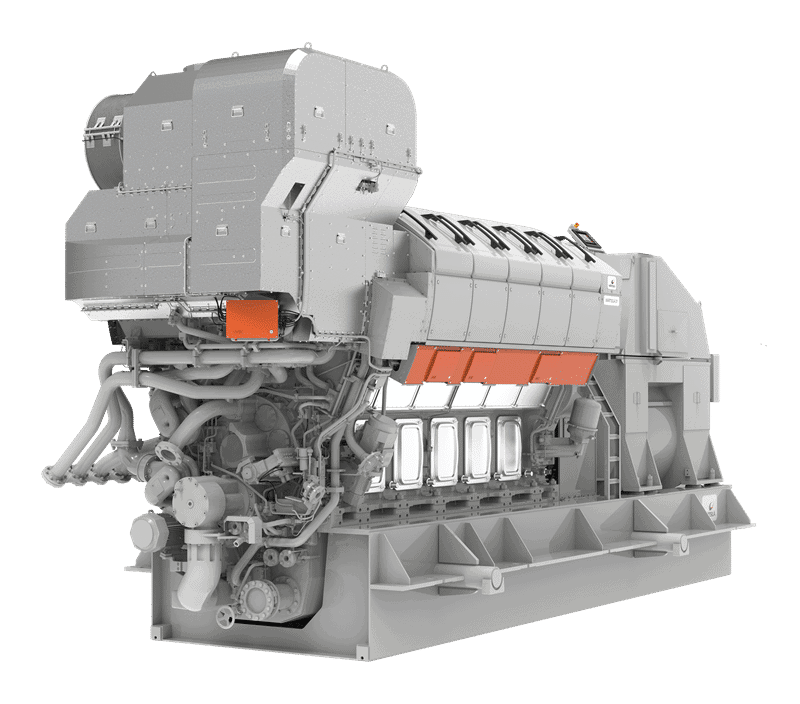
Wärtsilä’s new ultra-low emissions version of the Wärtsilä 31DF engine
© Wärtsilä





 by up to 86 percent. On a weighted average, this new technology can reduce methane emissions by 41 percent more than the standard Wärtsilä 31DF engine, which has already the lowest emission levels on the market.)