


A groundbreaking £4.6 million project has successfully retrofitted Newcastle University’s research vessel, The Princess Royal, with an advanced zero-emission propulsion system. Spearheaded by renewable electrification leader AceOn, in collaboration with Newcastle University’s marine engineering experts, the project developed battery and hydrogen technology to power the marine vessels used for servicing offshore wind turbines
Funded by Innovate UK under the CMDC 3 call, the aim of Retrofittable Propulsion System for Electric Vessels with Hydrogen Range Extender (RESTORE) was to retrofit The Princess Royal with a battery-electric propulsion system and hydrogen powered generator to charge the battery extending the range of operation.
This innovative propulsion system, which is not for permanent installation, provided The Princess Royal with transformative solutions to run on zero emissions in line with addressing decarbonisation challenges in the maritime sector.
The RESTORE project brought together a consortium of leading businesses and academic institutions, including AceOn Group, Offshore Renewable Energy Catapult, Engas Global, Newcastle University, Liverpool John Moores University, the University of Liverpool, Taurus Engineering, and CAGE — each contributing specialist expertise to advance clean maritime innovation.
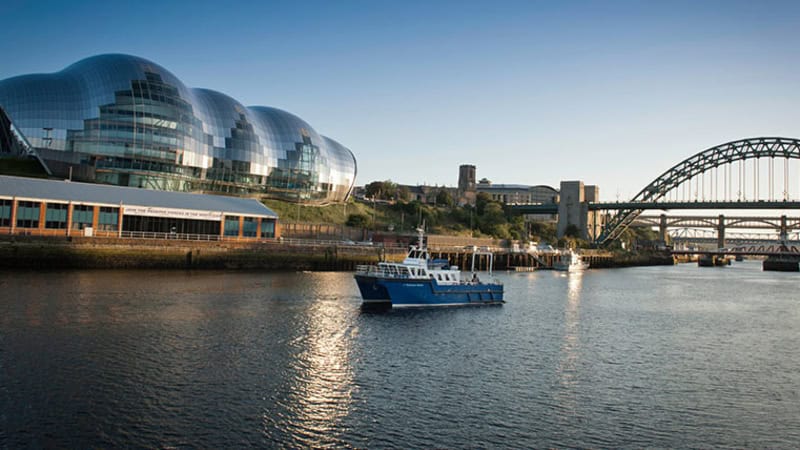
The Newcastle University team (Dr Serkan Turkmen, Dr Rose Norman, Dr Kayvan Pazouki, Dr Yi Zhou and supported by PhD researcher Gabriela Grasu), hosted the MP for Newcastle Central, Chi Onwurah, at Newcastle City marina. Ms Onwurah boarded the vessel for a zero-emission operation on the River Tyne.
Dr Kayvan Pazouki, Senior Lecturer at Newcastle University’s School of Engineering, said: “It was a great pleasure being involved in such a fantastic research project designing a hybrid hydrogen-battery propulsion system for The Princess Royal. The new innovative power arrangement and subsequent trials proved zero-emission operation for short-sea shipping in line with decarbonisation strategy. This project paves the way for future green maritime operation.”
Mark Thompson, CEO of AceOn Group, said: “AceOn was proud to lead a multidisciplinary team of industry and academic experts at the forefront of maritime innovation in delivering this groundbreaking project as part of the Clean Maritime Demonstration Competition Round 3 (CMDC3). Funded by the UK Department for Transport and delivered by Innovate UK, CMDC3 forms a key part of the UK Shipping Office for Reducing Emissions (UK SHORE) programme — a £206 million government initiative focused on accelerating the development of innovative technologies to decarbonise the UK’s domestic maritime sector. Collaborating with such high-calibre organisations was instrumental to the project’s success, and we’re honoured to help drive forward the UK’s clean maritime ambitions.”
This project was part of the CMDC3, funded by the UK Department for Transport (DfT) and delivered by Innovate UK. CMDC3 is part of the Department’s UK Shipping Office for Reducing Emissions (UK SHORE) programme, a £206m initiative focused on developing the technology necessary to decarbonise the UK domestic maritime sector.
Find out more about the Blyth Marine Station and Research Vessel, The Princess Royal.