The Offshore Renewable Energy (ORE) Catapult, in partnership with the National Shipbuilding Office and The Crown Estate, has announced the appointment of leading shipbuilder APCL Cammell Laird to conduct a detailed analysis of the future market opportunity for UK-built ships in the offshore wind sector. This initiative aims to identify opportunities for the UK shipbuilding industry to support the growing global offshore wind market, which is expected to reach over 850 GW of installed capacity by 2050.
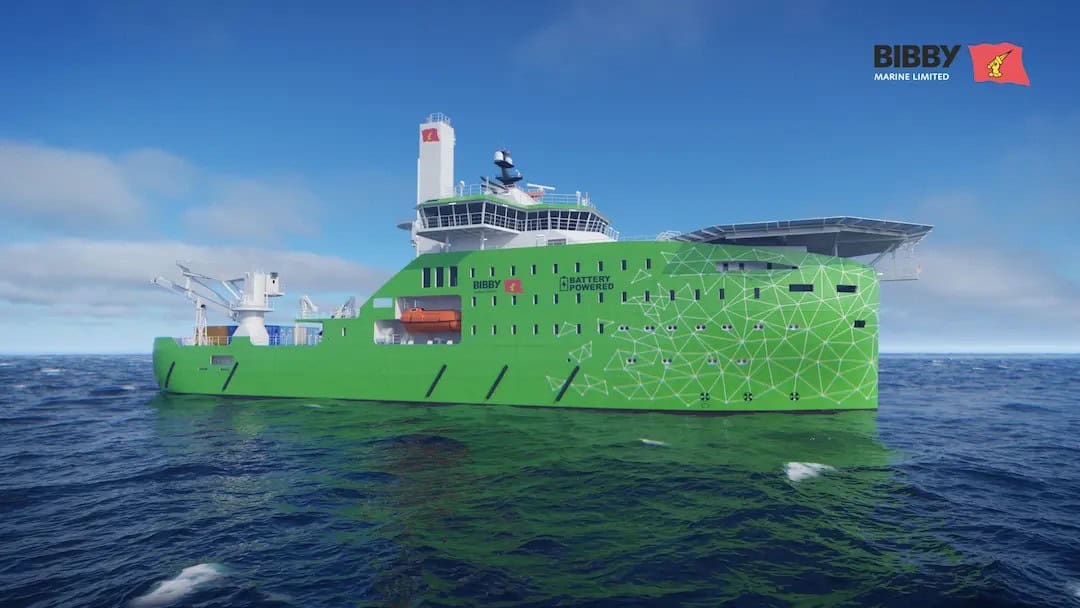
There is a need for major growth in the production of Service Operation Vessels (SOVs) to support this expansion. SOVs are designed to provide efficient servicing and maintenance of offshore wind farms by, in effect, becoming mobile offshore operations & maintenance bases. They are a crucial part of supporting the growth of offshore wind.
Analysis carried out by ORE Catapult shows that hundreds of these ships are likely to be in operation around the world in the years to come, with an associated global market of nearly £35bn between now and 2050.
The UK has a proud shipbuilding heritage, but pathways must be found for how the country can transfer this to industries that are set to play crucial roles in the future Net Zero economy, like offshore wind. This work will help to develop knowledge of how the UK can provide vessel manufacturing to support offshore wind, delivering jobs and economic investment to communities around the country.
Lauren Hadnum, Clean Maritime Manager at ORE Catapult, said: “We know that for the UK to tap into the full potential offered by offshore wind, we’re going to need to dramatically increase the number of vessels that are able to maintain the turbines of the future. It’s vital, therefore, that we work to ensure as many of those vessels as possible can be manufactured in British shipyards.
“This work will help us to better understand what needs done to make this a reality, and outline ways in which industry and government can work together to develop a successful and joined up approach to UK shipbuilding for offshore wind.”
Linton Roberts, APCL Group Chief Technology Officer, said: “APCL Cammell Laird is delighted to have been selected to lead the UK SOV Manufacturing Business Case Development study. This project represents a significant step forward in strengthening the UK’s position in offshore renewable vessel manufacturing.
“As one of the UK’s largest and most established shipbuilders, we are committed to delivering a robust, evidence-based business case that will shape the future of sustainable shipbuilding and reinforce the UK’s role in the global offshore wind supply chain.
“We look forward to working closely with ORE Catapult, The Crown Estate, and the National Shipbuilding Office to drive this vital initiative forward.”
Rod Paterson, Chief Executive Officer of the National Shipbuilding Office, said: “I am delighted that the National Shipbuilding Office has worked in partnership with ORE Catapult and The Crown Estate to launch this important study into the future market opportunity for UK built ships in the offshore wind industry. Following a fantastic response, I am really pleased that APCL Cammell Laird has been appointed to lead this work. There is significant predicted domestic and global demand for Service Operation and Crew Transfer vessels over the coming decades which I believe the UK shipbuilding sector is well placed to compete for and win market share.”
Will Apps, Offshore Wind Strategy Director at The Crown Estate, said: “The UK is one of the world’s leading offshore wind energy producers, second only to China, and will rapidly increase the scale of offshore deployment to deliver the Government’s 2030 clean power targets. Developing the domestic supply chain will be an essential factor in our continued success and we expect a significant uplift in demand for SOVs in the coming years, with the potential to create jobs and economic growth within communities around the UK.
“One particularly interesting output from the study will be the feasibility assessment of low or no emission SOVs operating in the UK, acknowledging the importance of decarbonising the offshore wind sector itself and of the operation and maintenance of windfarms.”