
Power & PropulsionExhaustRolls-Royce unveils Tier III emissions solution for mtu Series 2000

Rolls-Royce unveils Tier III emissions solution for mtu Series 2000

New integrated SCR system enables mtu Series 2000-powered vessels to meet IMO Tier III emissions requirements

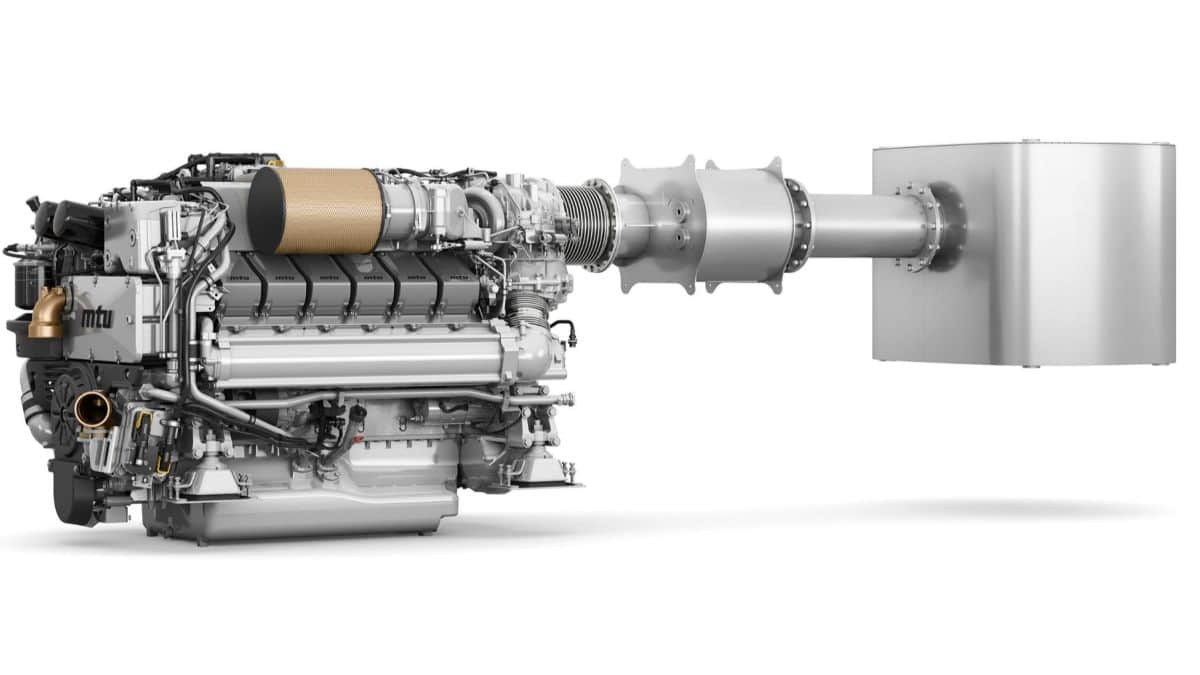
Rolls-Royce Power Systems is expanding its mtu marine propulsion portfolio with a new exhaust gas after-treatment system for Series 2000 engines, designed to meet stringent IMO Tier III emission requirements. The new system is being certified in collaboration with exhaust gas after-treatment specialist Eminox for Series 2000 mtu engines.

Exhaust gas after-treatment using selective catalytic reduction (SCR) enables offshore supply vessels, ferries and patrol boats fitted with engines from the mtu Series 2000 to operate in emission-regulated maritime areas. These include, amongst others, the North Sea and the Baltic Sea.

“With this new offering, all models in the mtu Series 2000 are now available with integrated SCR systems. We have already launched a new, flexible and compact solution for the more powerful mtu Series 4000. This enables us to equip our customers with future-proof propulsion systems to meet the challenges of modern shipping,” said Dr Lukas Köhler, Senior Vice President Global Marine & Mining at Rolls-Royce Power Systems.

The new integrated solution offers ship operators several advantages: it is designed for a service life of up to 16,000 operating hours, depending on the load profile. It requires no compressed air for dosing and can be flexibly integrated into various ship designs.

As with vehicle powertrains, an aqueous urea solution reacts with the nitrogen oxides in the exhaust gases and converts them into harmless substances. The SCR system reduces nitrogen oxide emissions by 75 per cent compared with the IMO II limits. 

Latest News

LD Armateurs has reached another milestone in the development of its offshore wind service fleet with the launch of Wind of Ocean, the first of two next-generation Service Operation Vessels (SOVs) being built for Vattenfall. The vessel was launched on August 30 at ZPMC shipyard in China, following the keel-laying ceremony earlier this year. The launch moves Wind of Ocean into the next stage of construction, with outfitting, systems integration and sea trials now planned ahead of scheduled delivery in 2027.

LD Armateurs Launches Wind of Ocean SOV

Wind of Ocean will support operations and maintenance activities across Vattenfall’s North Sea wind farms LD Armateurs has launched Wind of Ocean, the first of...
ZF is using SMM to showcase its latest marine propulsion technologies, including new higher-power transmission and thruster solutions designed for larger, more complex and increasingly hybridised commercial vessels.

ZF Unveils Higher-Power Transmission and Thruster

New ZF 9200 A/V PTI transmission and AT 110 thruster extend the company’s marine portfolio into higher power classes ZF is using SMM to showcase...
Wescom Group will showcase a range of new products at this year’s SMM, alongside its established portfolio of SOLAS pyrotechnics, marine safety electronics and pharmaceutical solutions.

Wescom Reveals Next-Gen Marine Safety Tech

New PLB and EPIRB solutions extend Wescom’s portfolio of connected marine safety and survival technology Wescom Group will use this year’s SMM to showcase a...
Bencros Marine Fenders, the Slovakia-based manufacturer of rubber fenders for ports, tugs and workboats, has announced that the CO₂ savings associated with its recycled-rubber fenders have been independently verified and can now be transferred to customers as certified emission reductions. The first certificates are scheduled to go live on 2 September 2026 through the Proba carbon standard registry.

Bencros Fenders Gain Independently Verified CO₂ Savings

World’s first: Bencros Marine Fenders, issues emission reduction certificates for reprocessed rubber fenders 13,112 tonnes of CO₂e savings independently verified by Bureau Veritas for...

Related news