


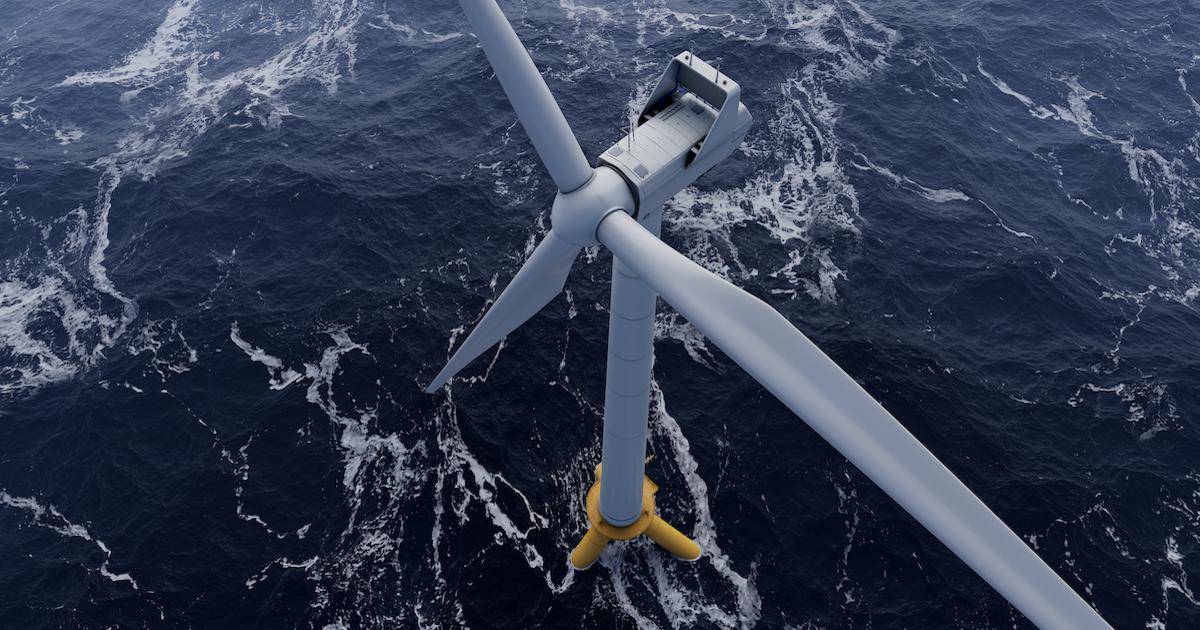
Initial findings from a supply chain study by RWE and Marine Power Systems are helping identify where Wales and the region can benefit from the forthcoming Celtic Sea floating wind technology boom.
The study is funded by RWE, Wales’ largest energy generator, and carried out by Swansea-based company Marine Power Systems, which is developing a floating wind platform solution called PelaFlex for industrial-scale application. RWE is working with the company to help prove the platform’s capabilities in the Celtic Sea marine environment, and test the deliverability of the technology in the region. It identifies economic opportunities that could be unlocked, and what businesses need to do to stay competitive.
RWE is preparing to bid into the Crown Estate’s forthcoming Celtic Sea seabed leasing auction later this year, where up to 4GW of floating wind will be awarded, and many more gigawatts expected in the future. In anticipation, the company has prepared a major supply chain initiative which will be unveiled next month, and which is aimed at fostering innovation, and maximizing opportunities for local companies.
Tom Glover, RWE’s UK Country Chair said: “The study shows there is clear potential for Wales and the region to benefit from the multi-billion pound economic opportunity that the Celtic Sea represents. RWE aims to deliver at least 1 gigawatt of floating wind in the Celtic Sea via this pending leasing round, and is already collaborating with the region’s ports and industries to help unlock future potential. The willingness is there but requires strategic investment decisions to be taken now. By combining the expertise of the sector, the support of both the Welsh and UK governments and industry, we can maximise this huge potential for long-term industrial growth, retention of existing jobs as well as creating new high-quality jobs and skills development.”
The first phase of the study showed that:
- The shallow waters and harsh Metocean conditions in the Celtic Sea bring unique engineering challenges compared to other global floating wind markets. These can be solved using robust solutions which are optimised for these conditions; such as are found in the MPS Pelaflex foundation.
- The study draws down on execution strategies of the MPS Pelaflex from a range of infrastructure deployment options, demonstrating the versatility of the technology.
- High tidal ranges and metocean conditions are particular challenges of the Celtic Sea, demonstrating need for local ports to facilitate the deployment of floating offshore wind.
- Whilst several regional ports have the physical and locational potential to support floating wind in the Celtic Sea, significant strategic investment decisions are urgently required to champion a leading ‘hub’ port to accommodate the emerging technology. A port with the right capabilities will be key to maximizing local content opportunities – without investment in those capabilities, the full potential of local supply chain will not be reached.
- A great opportunity exists for the supply of steel components from UK firms, but again strategic investment decisions are required to supply at the scale required. Secondary steel production currently offers the best local opportunity. There are further opportunities for specialist UK engineering services connected with the supply of foundation components, such as moorings.
MPS’s solution aims to help increase local content by leveraging existing supply chain capability and enabling a wide range of ports to support deployment. A second phase of the study will follow during which MPS will focus on the potential roles and capabilities of specific suppliers, ports, fabricators and manufacturers, alongside training and academic establishments, for delivering the technology bonanza.
Gareth Stockman, CEO at Marine Power Systems said: “The Celtic Sea represents a hugely exciting opportunity and, with the right investment and collaboration, is one which can support economic growth and sustainable development in the region for years to come. Our floating offshore wind platform, PelaFlex, is well suited to such a high energy environment. The modular and structurally efficient design provides utility scale developers with maximum flexibility between reducing cost and increasing local economic benefits, whilst accelerating farm development at scale. We are looking forward to working with our colleagues at RWE on the second phase of this project, and continuing to demonstrate the benefits of our flexible floating platform technology ahead of the upcoming leasing auction for the Celtic Sea.”