





In a landmark achievement for sustainable shipping, the Coastal Sustainability Alliance (CSA), led by Kuok Maritime Group (KMG), has successfully launched Singapore’s first fully electric tug (E-Tug) at PaxOcean’s shipyard. This milestone underscores Singapore’s maritime decarbonisation journey.
Designed and to be assembled in Singapore, the zero-emission E-Tug is set to begin operations in local waters in the first quarter of 2026. This marks a major step forward in the adoption of electric vessels, alongside progress in public charging infrastructure, sea-to-shore connectivity, and workforce capability-building to operate new marine assets.
This launch is a critical enabler of the Maritime Singapore Decarbonisation Blueprint developed by the Maritime and Port Authority of Singapore (MPA). It also supports the Singapore Government’s directive for all new harbour craft to be fully electric or compatible with net-zero fuels by 2030, paving the way for a sustainable coastal logistics network.
Mr Tan Thai Yong, Managing Director and CEO, PaxOcean Group, said: “This launch is a testament to CSA’s robust industry collaboration and partnership with MPA. Together, we are laying the groundwork for maritime innovation, low-carbon solutions, and a refresh of how port activities can become sustainable. The Coastal Sustainability Alliance’s E-Tug demonstrates how decarbonisation can deliver both environmental impact and real operational value to the maritime industry.”
With a 50-ton bollard pull and powered by a 3 MWh lithium-titanium-oxide (LTO) battery system, the E-Tug is engineered for demanding towage operations while eliminating emissions at the point of use. It is also future-fuel ready, with design provisions to support green methanol and ammonia integration when commercially viable. Built with digital innovation at its core, the vessel features a high-fidelity digital twin for real-time data analytics, improving operational efficiency and reducing dead mileage.
The launch of Singapore’s first electric tug underscores the CSA’s commitment to promoting electric harbour craft as Singapore’s infrastructure, workforce, and supply chains evolve to support cleaner, more resilient maritime operations. As a collaborative platform, CSA actively brings together coastal stakeholders and ecosystem partners to drive energy-efficient logistics and sustainable engineering innovations – laying the foundation for a smarter, greener maritime future.



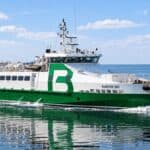
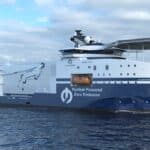





, led by Kuok Maritime Group (KMG) PaxOcean)