


Digital shipbuilder and SWITCH Maritime advance detailed design and regulatory work on 28-metre hydrogen fuel-cell fast ferry
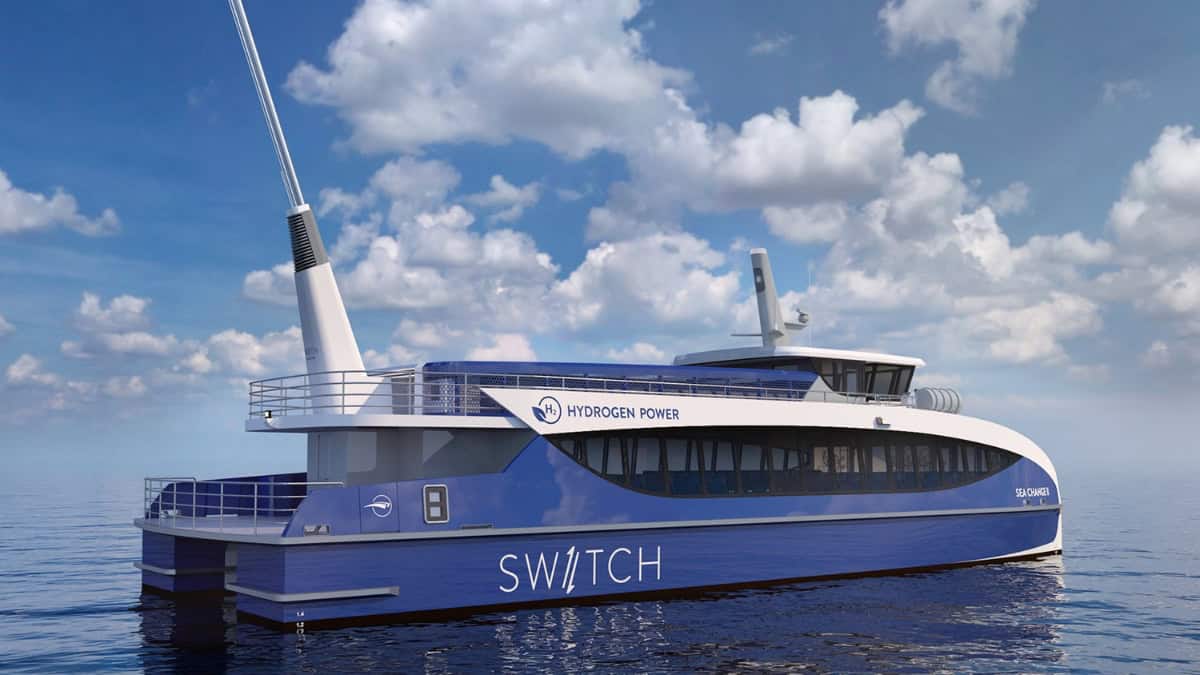
Global digital shipbuilder Incat Crowther has begun the detailed design and naval architecture phase for a next-generation hydrogen fuel-cell electric fast ferry, with first deployment planned for waters around New York City.
The new 28-metre vessel is being advanced in collaboration with zero-emission vessel developer SWITCH Maritime, as the partners progress both the design package and regulatory approvals needed to bring the project to market.
The project includes a global team with expertise spanning ferry operations, electric propulsion, and hydrogen system safety. From their office in New York City, SWITCH is actively advancing project development activities beyond vessel design. The project team is planning to deploy a ZEF-150 demonstration based at the Brooklyn Navy Yard.
The new vessel is designed to align with local operational requirements and pre-existing infrastructure. The vessel’s world-leading hydrogen fuel cell-electric propulsion and hydrogen storage systems ensure the new ferry can maintain an operational profile similar to that of a diesel vessel. This means parallel service speeds, a daily bunkering schedule, no need to increase dwell time or alter service to account for vessel charging, and no investment in costly shoreside charging infrastructure and power grid upgrades. The drop-in nature of the technology ensures the new hydrogen fuel cell-electric ferry will seamlessly integrate into current operations, rather than requiring schedule changes or a system-wide reorientation.
In this project, vessel modernisation and emission reduction will be achieved through the deployment of hydrogen fuel over other low and zero emission technologies proving there is no one-size-fits-all approach to achieving these outcomes. The use of hydrogen fuel in this case offers considerable flexibility and presents a zero emission transport solution for fleets with longer range requirements and those operating in areas where shoreside charging for battery-electric propulsion may not be technically or economically feasible.
The new 28-metre hydrogen fuel cell-electric ferry will be capable of transporting 150 passengers at a cruising speed of 25 knots. The operationally flexible vessel will have 720 kilograms of stored, compressed hydrogen capacity giving it the ability to operate on a range of routes across New York ferry networks with a full day of operational range. Although the New York market will be its first deployment, the vessel is well equipped to perform on longer, high-frequency commuter routes in both the United States and around the world.
In addition to operational flexibility, the new vessel’s design will also prioritise the passenger experience. The vessel’s spacious main deck will feature comfortable seating for 150 passengers, ample luggage storage, a kiosk, three bathrooms including a wheelchair accessible bathroom, and large windows to allow passengers to enjoy the iconic views on New York’s waterways.
The development of New York’s first hydrogen fuel cell electric ferry, which is supported by a $US2 million grant from the New York State Energy Research and Development Authority (NYSERDA), builds on the successful partnership between Incat Crowther and SWITCH. The two companies have recently partnered on the design, delivery and regulatory approval for Sea Change– the world’s first zero-emissions hydrogen fuel cell-powered electric-drive high speed passenger ferry. Sea Change, developed and managed by SWITCH, now operates in the California Bay Area.
SWITCH Maritime’s Co-founder and CEO Elias Van Sickle said: “SWITCH aims to provide operators with commercially viable vessels that future-proof ferry fleets. Our objective is to meet existing performance standards with drop-in solutions that don’t require overhauling systems or schedules. And if it can be done in New York, it can be done anywhere.”
Incat Crowther’s Technical Manager Dan Mace said: “The design of this vessel showcases a feasible solution for mass transit operators looking to begin the fleet decarbonisation process, while maintaining existing operational profiles. The vessel’s ability to drop in to existing New York fleets is a real positive step to reduce emissions, and ensures the vessel can be deployed quickly without the need for constructing additional shoreside infrastructure.”
NYSERDA’s support, through its Innovation and Research Advanced Fuels and Thermal Energy Research program, builds ecosystems for clean hydrogen and other low-carbon alternative fuels.
NYSERDA President and CEO Doreen M. Harris said, “NYSERDA’s partnership with SWITCH Maritime and Incat Crowther on the first hydrogen fuel cell-electric ferry is a catalyst for the future of zero-emission transportation in New York State. This demonstration is an impressive showcase for clean hydrogen as an emerging and innovative technology that is on the cusp of transforming how people move from place to place.”