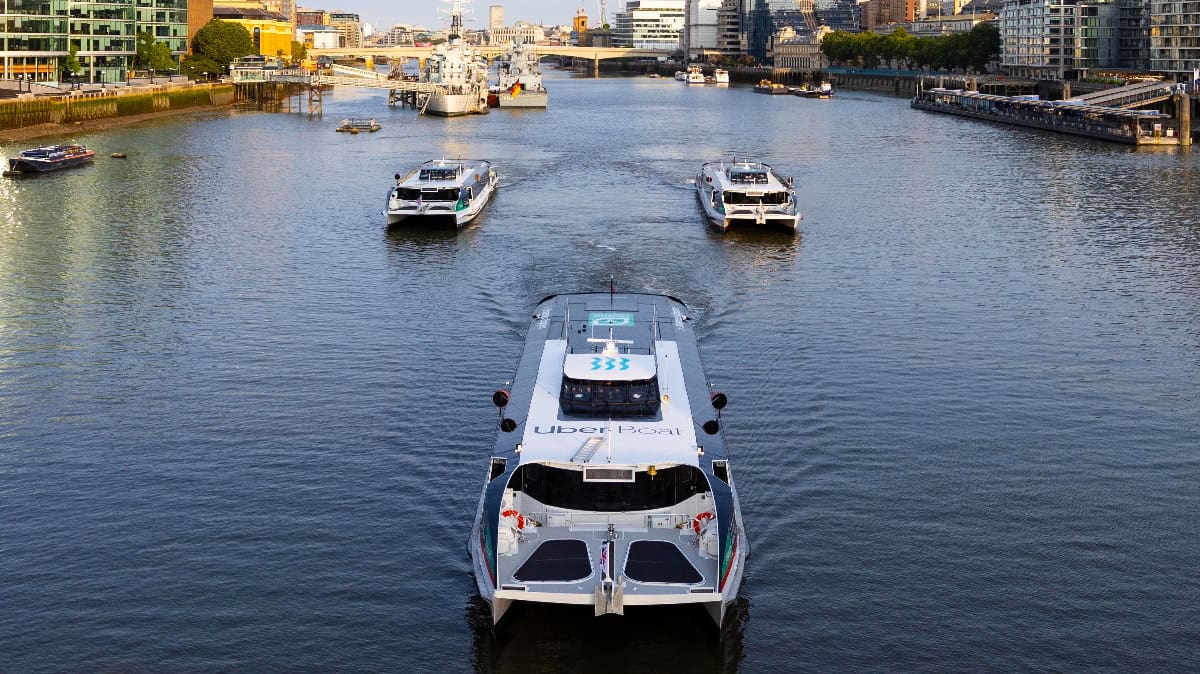
Uber Boat by Thames Clippers’ brand new hybrid passenger ferry Mars Clipper has joined its fellow hybrid vessels Earth Clipper and Celestial Clipper to form an iconic trio – bringing sustainable river transport to more commuters and leisure travellers than ever before.
The capital’s first ever hybrid passenger ferry, Earth Clipper, was launched in September 2023 and was then joined by Celestial Clipper in March 2024. Mars Clipper will be Uber Boat by Thames Clippers’ third hybrid vessel to carry passengers in Central London on journeys with zero tailpipe emissions.
Built at the Isle of Wight’s Wight Shipyard, the three vessels’ innovative design delivers an almost 90 per cent reduction in CO2e compared to journeys taken solely using conventional marine diesel. Operating only on electric power in Central London – i.e. between Tower and Battersea Power Station piers – the hybrid boats recharge while using biofuelled power on the rest of their journey. This hybrid system results in an emissions reduction of 16.5 per cent per boat when compared with running on biofuel alone throughout all parts of the route.
Mars Clipper is the 20th high-speed catamaran to join the Uber Boat by Thames Clippers fleet, and the three hybrid vessels increase the River Bus’s total capacity by just under 700 passengers. More Londoners and visitors than ever will be able to travel to work or see the sights in style – sitting comfortably in a cabin that boasts a fully licensed café-bar, offering a range of Barista crafted coffees, soft and alcoholic drinks, as well as snacks. Plentiful seating and large windows offer unique views of London’s most iconic riverside sites, while a spacious, open back deck provides an impressive panoramic vantage point. Tickets can be purchased online, on the Thames Clippers Tickets and Uber apps, and at piers.
Sean Collins, Uber Boat by Thames Clippers co-founder and CEO said: “We want to make London’s river travel the best and most sustainable transport option in the world. We are immensely proud of being able to launch our third hybrid vessel in less than 12 months. Seeing these wonderful boats sail the Thames together is a momentous day for Uber Boat by Thames Clippers and this symbolises our commitment to achieve a net zero status by 2040. Going forward, all of our new vessels will use our hybrid system and where possible, fully electrified or zero emission technology. The design of the catamaran can also be made even greener in the future, when technology allows.”
“We are currently working to introduce London’s first fully electric Zero Emission Cross River Ferry between Canary Wharf and Rotherhithe by the spring of 2025 – the first of its kind in the UK.
“It’s a real British success story – our new boats are proudly built in the UK using the latest technology to create a comfortable and environmentally friendly way to get around our fantastic capital city.”
Uber Boat by Thames Clippers is committed to using the most advanced technology to meet its ambitious climate targets of reducing carbon emissions by 50 per cent by 2030, before achieving net zero by 2040.
All the hybrid vessels were built at Wight Shipyard Co in East Cowes on the Isle of Wight. Uber Boat by Thames Clippers’ investment has continued to be significant for the local economy on the Isle of Wight, with 65 people building the boats over the past year and 14 apprentices involved.
Uber Boat by Thames Clippers offers services that run as far east as Barking Riverside and out to Putney in the west. The business is celebrating 25 years of operation in 2024, and in 2023 alone, carried just below 5 million commuters and visitors through London on the river Thames.