



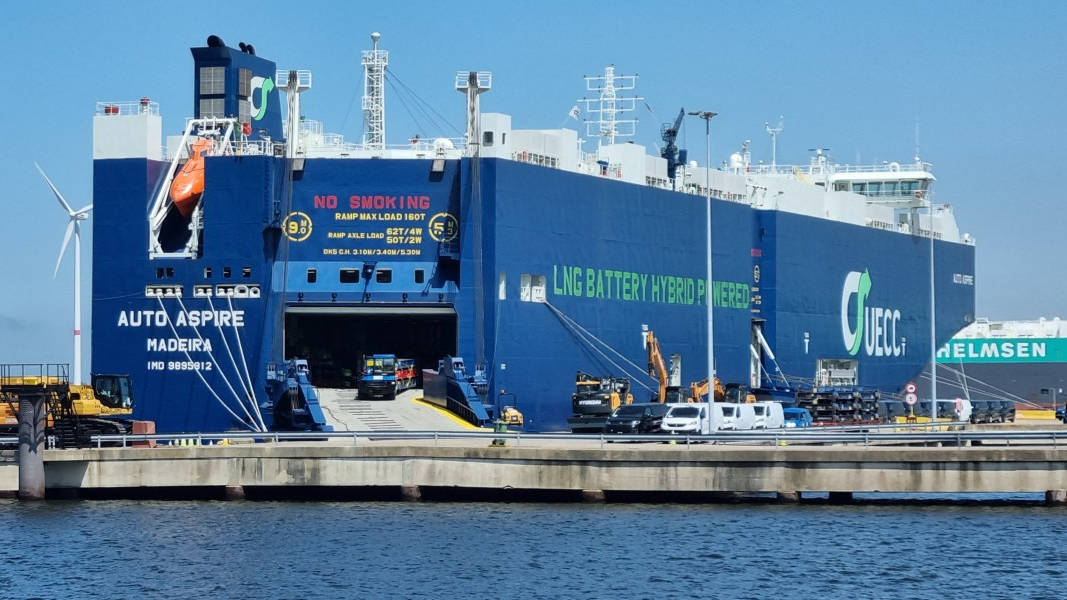
In a groundbreaking collaboration with industry giants such as maritime advisory organization Lloyd’s Register FOBAS, engine manufacturer Wartsila, and biofuel supplier ACT Group, UECC is leading the charge in critically assessing and evaluating a Cashew Nut Shell Liquid (CNSL)-based biofuel.
As part of this partnership, ACT Group created a CNSL-based biofuel known as FSI.100, demonstrating their commitment to innovation and sustainability. This was achieved through a rigorous development process, which included extensive engine testing and a meticulously controlled supply chain, earning the trust of UECC. Following thorough testing on various blend combinations FSI.100 received approval from engine manufacturers as a 30% blend component in an ISO 8217 DMA grade distillate fuel oil to carry out sea trials, representing a significant stride in the progression of sustainable marine fuels.
FSI.100 addresses concerns about the popularity and suitability of CNSL-based biofuels. It also offers compelling advantages: a certified sustainable, fully controlled supply chain that ensures traceability and accountability from the point of origin to extraction, conversion, and consumption. This approach enhances confidence in CNSL-derived marine fuels, reduces waste, and promotes resource efficiency, aligning with circular economy principles in the maritime sector. Additionally, FSI.100 utilizes sustainable land use practices and exhibits high-quality maritime fuel properties, such as ultra-low sulfur and winter spec pour points. It also delivers significant greenhouse gas savings, with well-to-wake emissions reductions of 90% (9.50gCO2eq/MJ) compared to conventional maritime fuels.
UECC recognizes the importance of this thorough evaluation and transparency in sustainable fuel procurement to ensure the reliability and safety of operations, especially in light of recent incidents in the Rotterdam area that highlight challenges posed by the blending of “unestablished” biofuel feedstocks in marine fuels. As a pioneer in sustainable Ro-Ro shipping, UECC has taken proactive steps to address these operational issues through its collaboration with LR FOBAS, Wartsila, and ACT Group in developing FSI.100.
Daniel Gent, Energy & Sustainability Manager at UECC, emphasizes the significance of this collaborative approach, stating, “In our decarbonization journey, it’s essential to leave no stone unturned. UECC is proud to lead the industry in not only implementing creative solutions but also establishing a blueprint for the critical assessment of future fuels such as CNSL-based FSI.100, which holds great potential for sustainable shipping.” The joint efforts between UECC, LR FOBAS, Wartsila, and ACT Group have resulted in structured and phased processes that include extensive engine test bench trials and analytical assessments to evaluate the suitability of CNSL-based FSI.100 blends in both residual and distillate fuel oils for marine applications. This diligent approach aligns with UECC’s commitment to sustainability and responsible business practices.
An important milestone for the maritime industry was accomplished when the collaboration resulted in the provisional acceptance of CNSL- based FSI.100 as a 30% blend component in a distillate DMA marine fuel oil, cleared by OEM, Class, and flag Administrations, for sea-trial stages. This achievement underscores the importance of transparency and rigorous evaluation in the adoption of sustainable shipping fuels.
Fabio Scaramelli is leading the biofuels supply and trading division at ACT Group, and he is encouraged and invigorated by the collaboration. He notes, “As innovators in maritime sustainability, our partnership with UECC, LR FOBAS, and Wartsila represents a significant step forward in advancing CNSL-based biofuels. The development of FSI.100 highlights our dedication to creating transformative resources for the sector’s decarbonization journey. ”
Gent further adds, “UECC’s collaboration with industry leaders demonstrates our dedication to shaping the future of sustainable shipping. By setting high standards and embracing innovative solutions, we are not only reducing emissions but also driving positive change across the maritime industry.”
As part of UECC’s commitment to transparency and best practices, the company recommends precautionary measures in bunker procurement, ensuring clarity on blend components and adherence to established bio-grade fuel standards. Where there are no ‘established’ fuel standards for the product being offered, then a structured phased approach in assessing the suitability of the product for use on board a ship needs to be taken to gain acceptance by Class, OEM and Flag for sea trials. UECC calls for industry stakeholders to prioritize collaboration, transparency, and rigorous assessment in the pursuit of sustainable shipping solutions. With concerted efforts and innovative approaches, the maritime industry can navigate towards a more sustainable future.






-based biofuel.)