


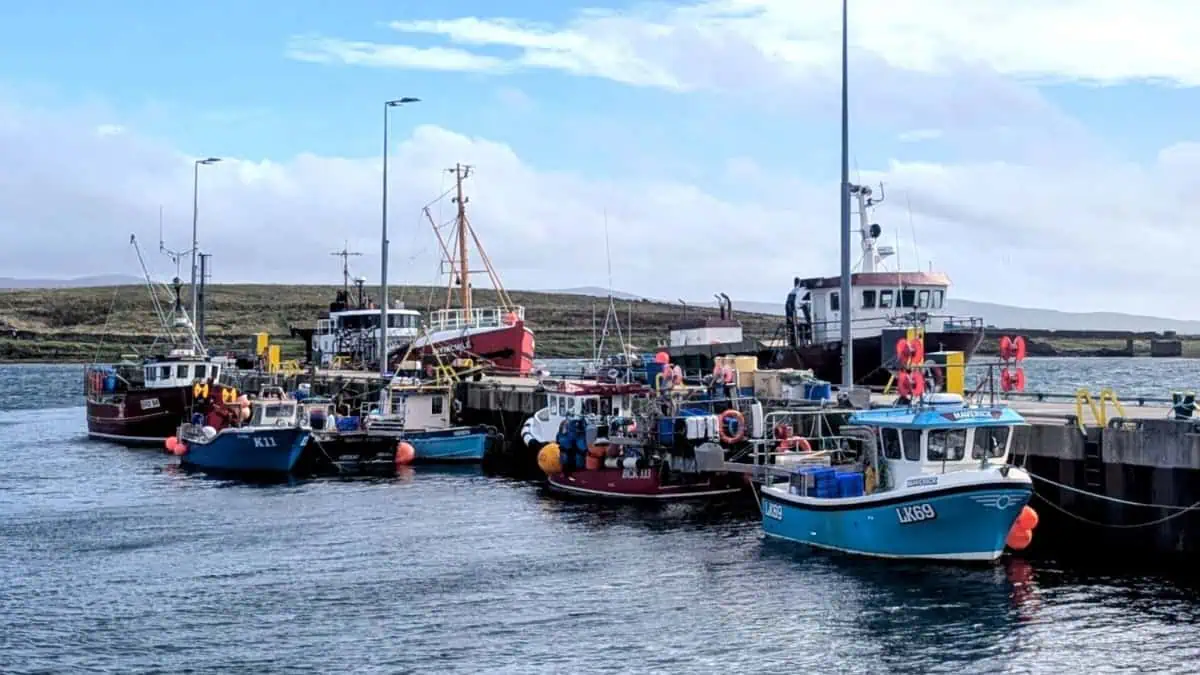
The project will explore flexible, floating charging solutions to accelerate the adoption of electric vessels.
Urban Foresight has been awarded grant funding from Innovate UK to explore the feasibility of floating electric vessel charging hubs, a concept that could play a key role in accelerating the UK’s transition to cleaner maritime infrastructure.
The adoption of electric and hybrid maritime vessels is growing rapidly as ports and operators work to decarbonise. However, the development of supporting charging infrastructure has struggled to keep pace. Many ports face limited grid capacity, while physical constraints and tidal conditions can restrict 24-hour berthing and make permanent, fixed charging installations impractical.
CoastalCoRRE offers a flexible, replicable solution: a modular network of nearshore hubs providing rapid top-up charging without the need to come into port.
The hub concept combines at-source renewable energy generation with innovative redox battery storage and advanced power conversion technology. These components will sit on a scalable floating mooring platform, designed to deliver rapid charging for electric vessels.
The study will focus on how this system could be deployed along green maritime corridors in Orkney, where fishing and marine tourism vessels often operate in areas with limited access to electrical infrastructure. Plans will be developed for a future full-scale demonstrator.
Led by Urban Foresight, CoastalCoRRe brings together experts across marine renewables, battery innovation, and port electrification, including the University of Plymouth, EMEC, Mhor Energy, Apricity, and Supply Design.
CoastalCoRRE builds on a previous Ofgem-funded feasibility study led by Urban Foresight on the original CoRRE concept, which looked at demonstrating remote electrification via a hydro turbine in a constrained rural site.
The project will also benefit from Urban Foresight’s extensive experience of working on transport decarbonisation projects in remote and rural areas. In Orkney, these have included exploring solutions for decarbonising the island’s ferries, planning the island’s shift to electric vehicles, and pioneering a public driverless travel link between Kirkwall Harbour and Airport.
The study findings will inform wider applicability across other remote and energy-constrained coastal regions in the UK.
“Smaller vessels are often overlooked in maritime decarbonisation, yet they make up the majority of fleets,” said Callum White, Head of Zero Emission Mobility at Urban Foresight. “With CoastalCoRRE, we want to demonstrate the feasibility of scalable infrastructure that gives operators the confidence to transition. Just as rapid charging networks are supporting EVs on land, this project is about creating the same opportunity on water.”
CoastalCoRRE is funded by UK Government through the UK Shipping Office for Reducing Emissions (UK SHORE) programme in the Department for Transport. UK SHORE has allocated over £230m since 2022 to develop the technologies necessary to decarbonise the UK maritime sector and capture the economic growth opportunity of the transition. Innovate UK, part of UK Research and Innovation, is the main delivery partner for UK SHORE interventions.