


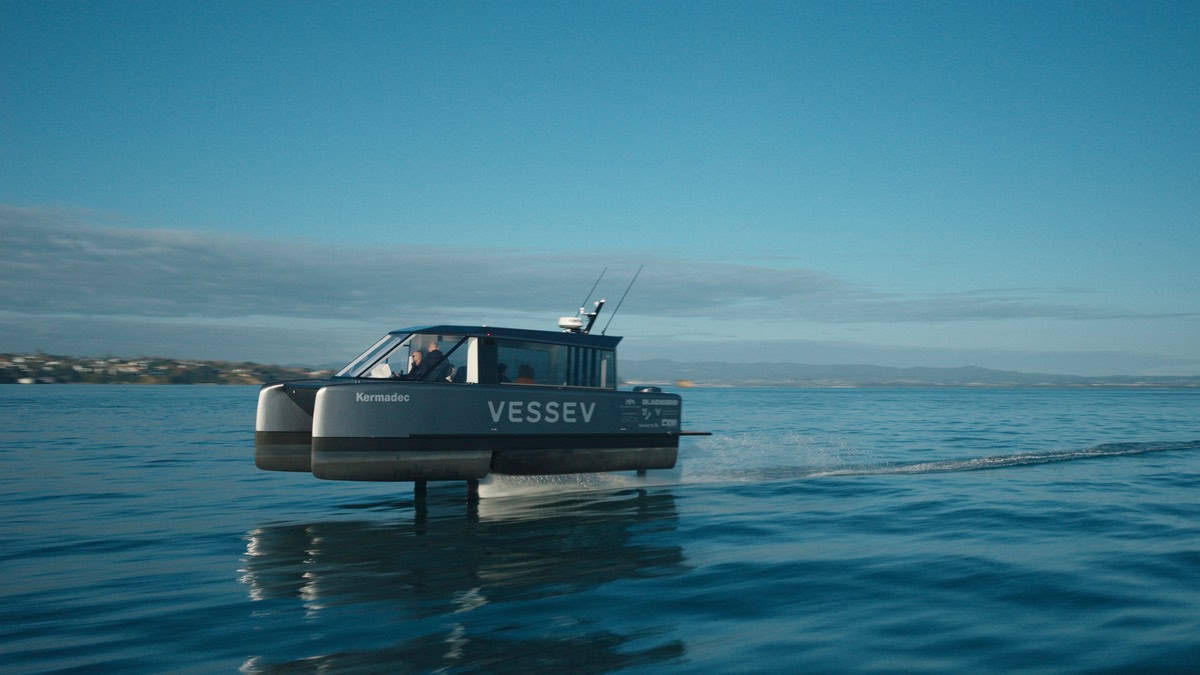
Vessev has showcased its VS—9 electric hydrofoil, complete with cabin and interior, for the first time as it enters the final phase of sea trials ahead of commercial certification. Production of VS—9s has already began with the first vessel to enter the commercial service of the largest ferry operator in New Zealand – Fullers360.
Thanks to a unique blend of stylish cabin design and unparalleled comfort, more similar to flying than power boating, the nine-meter VS—9 electric hydrofoil can transport 10 passengers at a service speed of 25 knots and is set to open-up entirely new opportunities for water transport and tourism.
While traditional commercial passenger vessels have tended toward being larger in order to be comfortable, Vessev’s vision for the VS—9 platform takes an entirely different tack.
CEO Eric Laakmann commented: “Traditionally, larger vessels are required to deliver a comfortable passenger experience as they can handle the impact of waves and wake. By flying above the waves, the VS—9 delivers a large vessel experience on an agile platform that can be berthed and charged in nearly any marina.
“One way of looking at the impact of this vessel is that our waterways today are like roadways, where the only comfortable mode of transportation are very large multi-passenger buses – i.e. ferries. These large vessels are here to stay, but they will be augmented with point-to-point services delivered by vessels such as the VS—9. It’s like introducing a limo into a world of buses.
“Through enhanced comfort and reduced operating costs, the VS—9 platform delivers an entirely new transportation experience that hasn’t truly been viable until today.”
Designed and built by Vessev with input from New Zealand’s largest ferry operator, Fullers360 and its decarbonisation team NetZero Maritime, the VS—9 electric hydrofoil delivers smooth and quiet travel on the water like never before.
Cocooned from the elements, at low speeds the VS—9 is stabilised by its foiling technology below the waterline. As the vessel accelerates the America’s Cup-derived foils cause the carbon fibre hull to rise effortlessly out of the water where it skims 50cm above, clear of turbulent waves and wake.
Inside, the new cabin is inspired by the premium automotive sector. It is both comfortable and spacious, with quality materials used throughout, along with ergonomic seats and armrests allowing passengers to relax and enjoy the stunning views afforded by the vessel’s panoramic windows. The VS—9 takes inspiration from private jet travel as well as premium automotive marques, such as Rivian.
Laakmann continued: “In designing the VS—9 transportation configuration, we knew that we wanted to create something that highlights the unique advantages of this technology. She includes stylish seating for 10 where easy conversation can flow between guests while quietly gliding to their destination. The full standing height cabin also includes wraparound glass with panoramic views of the environment around them. Our goal was to make sure the passengers of the VS—9 are connecting with only two things – those on the journey with them as well as their surroundings. We’ve accomplished exactly that.”
Vessev’s lead designer, Alain Brideson shared: “Our objective for the VS—9 was to create something that is beautifully utilitarian. Using the tools of the premium automotive segment, every surface of the VS—9 has been carefully crafted to emanate quality. The entire exterior harmoniously embeds functionality into a clean and balanced form. The interior was all about reducing to the bare essentials and ensuring the cabin is open and flowing.”
Mike Horne, CEO Fullers360 said: “Flying on the VS—9’s foils and relaxing into its stylish interior is an unmatched feeling. We are thrilled to see the vessel progress further toward taking its first commercial journey on the Waitematā. Introducing the VS—9 into the Fullers360 fleet and eventually bringing larger electric foiling vessels to life is incredibly exciting for our industry”.
While the initial VS–9 is configured for premium transportation experiences, the platform has
been designed from the start to be flexible and scalable. Being a catamaran with a flat wing-deck from bow to stern presents many different options for configuration.
Laakmann added: “We knew that the VS—9 would attract interest from several arms of the marine industry, but what we didn’t know was how quickly that would happen: from the passenger transportation space and eco-resort transfer vessels, to tenders for larger yachts, and of course water limos. In the recreational sector, we’ve already fielded many enquiries and we’re exciting to launch different variations of the VS—9 in support of boaters who also want to propel a more liveable world”.
Utilising the design of the VS—9, Vessev is already working through further enhancements to the vessel’s performance and applying their learnings to plans for larger foiling vessels with capacity for more passengers and suitable for a range of routes. The team at Vessev is now scaling its operation with multiple products in development.
The VS—9 entered the water for the first time in May of this year and was relaunched in the completed configuration in August at Auckland’s Westhaven Marina where it is undergoing robust sea trials before gaining certification by Maritime New Zealand.
Intended for premium tourism services, the first VS—9 signifies a defining moment in the global transition to genuine maritime sustainability.
“Today, very few people in the world will have been aboard an electric hydrofoil vessel. Ten years from now though, as this becomes the new way that we move on the water, that is all going to change” concluded Laakmann.