


Naval forces are engaged in massive renewal of their fleets amid escalating maritime security threats and turf wars over natural resources – and this is driving increased demand for davit systems to deploy boats for rapid military response.
Norwegian davit supplier Vestdavit saw its sales surge to a record Nkr 165 million ($19.2 million) last year – up 25% on 2019 – as global orders for its proven high-specification boat-handling systems defied a downturn in the overall maritime sector amid the Covid-19 pandemic.
Fresh orders have rolled in mainly from the US, Europe and Australia, with demand coming primarily from navies and coast guards within the public procurement sector that account for more than 75% of Vestdavit’s davit turnover, according to managing director Rolf Andreas Wigand.
He sees this as part of an “underlying market trend of global threats and uncertainty” fuelled by the proliferation of piracy, terrrorism, smuggling and the narcotics trade, as well as resource nationalism.
“More and more countries see the need to patrol their borders at sea to protect fishing grounds and other economic assets such as energy resources,” Wigand says.
In addition, there is an increasing need to tackle illegal immigration along with humanitarian crises, such as en exodus of refugees, related to natural disasters or political upheaval.
Securing trade routes
Given that about 90% of global trade is carried by shipping, navies are also required to provide security for commercial vessels and their seafarers plying risky maritime trade routes such as the Strait of Malacca and Gulf of Aden.
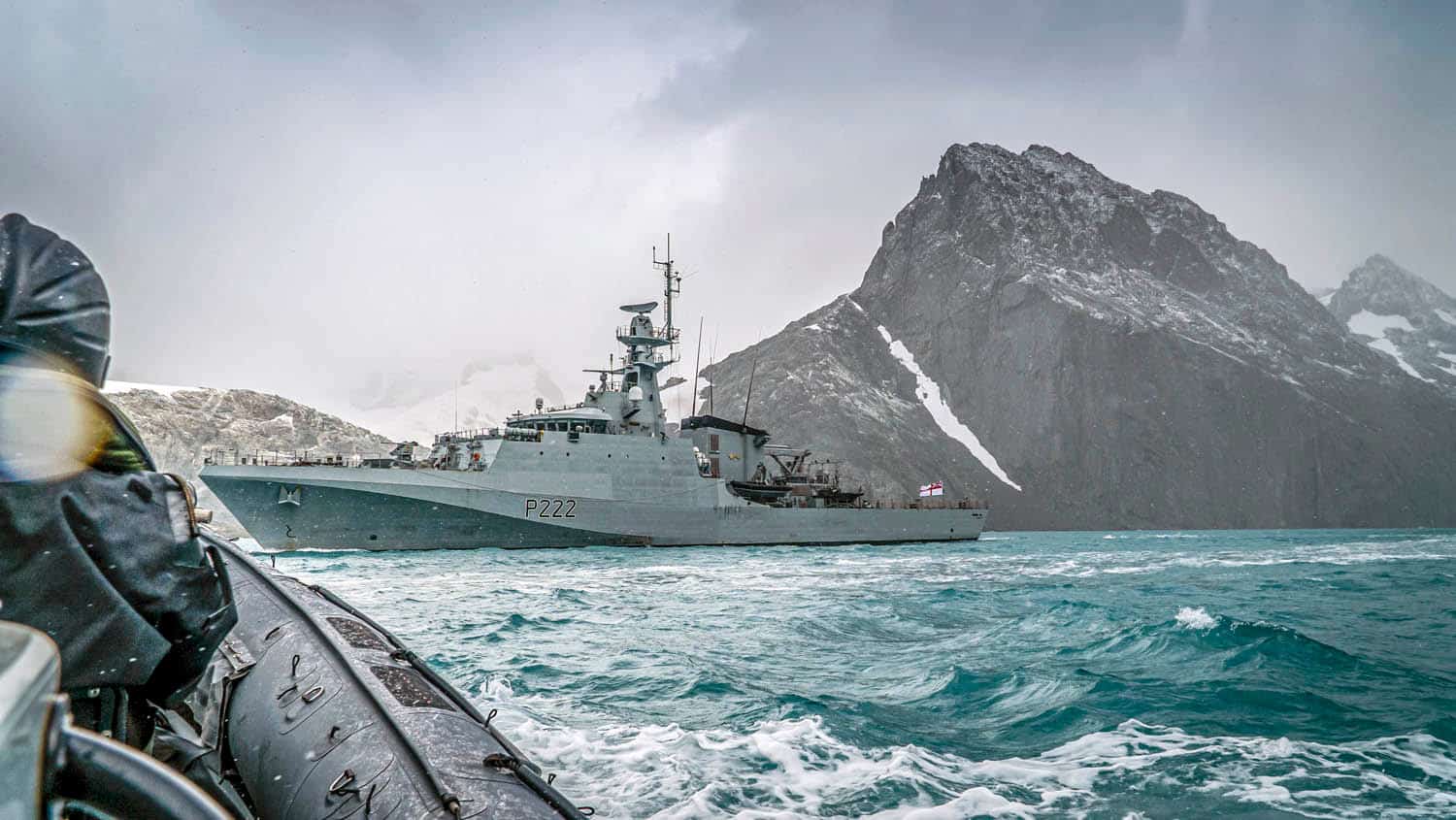
Wigand explains that such tasks necessitate davit systems able to rapidly and safely deploy smaller boats from larger naval vessels such as frigates and offshore patrol vessels, also in high sea states of five or six.
Navies are now seeking to upgrade their fleets with multi-role vessels that can tackle a diversity of tasks and have onboard boat-handling systems designed for versatility, along with regularity and efficiency.
A number of countries plan to renew their naval fleets including the US, which has embarked on a fleet expansion that will require annual spending of about $25 billion to acquire eight to 13 ships per year through 2049.
European countries – including France, Germany and the UK – are also modernising their naval fleets, with fisheries protection now a big issue off the UK following Brexit as well as off Norway, which has recently had a run-in with the EU over illegal fishing.
Davit market trends
Wigand says there is in particular strong interest from the US for computer-controlled dual-point davits, part of Vestdavit’s extensive range of robust bespoke systems supported by a global after-sales network as it moves in step with clear market trends going forward.
“There is growing interest from both the military and commercial segments in our systems able to handle unmanned surface vehicles and autonomous underwater vehicles that can carry out tasks 24/7 without risk to human life,” he says.
“There are also many new ship projects on the horizon centred on a mission bay able to handle multiple craft – such as MOB boats, workboats and USVs, as well as containers – for which our MissionEase system is well-suited.”
Wigand sees the orders surge as vindication of Vestdavit’s focus on technological innovation, with sales on a similar upward trajectory this year.
“The increase in revenue shows that our products and services are attractive to a growing number of customers, giving us proof that we have a strong strategy,” Wigand says.
“More importantly, growth comes from a portfolio of products and projects fuelled by innovation, which is key to our business. It is in our DNA to constantly challenge existing parameters to find new, stronger, better solutions, and develop safer and more capable davits.”
For more information contact: Rolf Andreas Wigand, Managing Director, Phone: +47 99 46 48 62, Mail: rwigand@vestdavit.no