Ship & Boat BuildingDry CargoWagenborg Begins Construction of Next-Generation EasyMax 2.0 Fleet

Wagenborg Begins Construction of Next-Generation EasyMax 2.0 Fleet

Royal Wagenborg has officially laid the keel for six new EasyMax 2.0 vessels at the Royal Niestern Sander shipyard in the presence of Bureau Veritas, marking a bold step forward in sustainable shipping and regional industrial innovation. This major new building milestone underscores Wagenborg’s long-term commitment to fleet renewal, energy efficiency, and environmental performance.

The EasyMax concept, first introduced in 2017, has become a benchmark in fuel-efficient multipurpose shipping. With its unique combination of size, cargo capacity, and low fuel consumption, the EasyMax has proven its value in Wagenborg’s industrial shipping services. The new EasyMax 2.0 generation builds on this success, incorporating further innovations in hull design, propulsion and emissions reduction.

By laying the keel for six vessels simultaneously, Wagenborg demonstrates confidence in the market and its customers, while reinforcing its position as a frontrunner in sustainable maritime logistics.

The construction of yard number 871 up to 876 at Royal Niestern Sander highlights the strength of Northern Dutch shipbuilding. As a family-owned company with deep roots in the region, Wagenborg continues to invest in local craftsmanship, engineering excellence and long-term partnerships. The EasyMax 2.0 project brings together regional expertise and global ambition, showcasing how innovation and tradition can go hand in hand.

The keel laying ceremony also signals a boost for employment and continuity in the Northern Netherlands. The construction of six vessels ensures stable work for hundreds of skilled professionals at Niestern Sander and its supply chain partners. It strengthens the region’s maritime cluster and supports knowledge transfer between generations of shipbuilders.

Each EasyMax 2.0 vessel is designed to significantly reduce CO₂ emissions and fuel consumption, contributing to Wagenborg’s sustainability goals and the broader energy transition in shipping. The vessels will be equipped with advanced energy-saving technologies and optimized for low-emission operations, aligning with international environmental standards and customer expectations.

This initiative is not just about building ships—it’s about building a future-proof fleet that supports responsible transport across Europe and beyond. The first EasyMax 2.0 is expected to be delivered early 2027.


Latest News

The International Institute of Marine Surveying (IIMS), working in collaboration with the International Marine Contractors Association (IMCA) and the Workboat Association, has announced the publication of the International Workboat Code of Practice, a 122-page guide providing best-practice guidance for the construction, operation and surveying of commercial workboats.

IIMS, IMCA and Workboat Association Launch International Workboat Code of Practice

IIMS, IMCA and the Workboat Association collaborate on a 122-page guide covering vessel safety, operational standards and crew competency for commercial workboats worldwide The International...
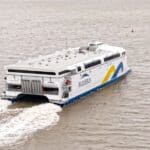
The world’s largest battery-electric ship has officially entered commercial passenger service, marking a major milestone for maritime electrification and zero-emission vessel operations. Built by Incat Tasmania for long-standing customer Buquebus, the 130-metre China Zorrilla has completed its maiden commercial voyage between Buenos Aires, Argentina, and Colonia, Uruguay, across the River Plate.

China Zorrilla Begins Electric Ferry Operations

Built for Buquebus to connect Argentina and Uruguay, the China Zorrilla, the world’s largest battery-electric ferry, marks a major milestone in large-scale marine electrification...
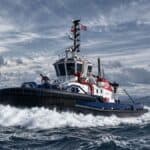
Boluda Towage has expanded its Norwegian fleet with the addition of VB NORWEGIAN FALCON, a new tug built by Sanmar Shipyards to support towing, vessel assistance and offshore operations in demanding maritime environments.

Boluda Towage Takes Delivery of VB NORWEGIAN FALCON

Sanmar-built VB NORWEGIAN FALCON features RAstar 3200 SX design, ASD propulsion and more than 6,700 hp Boluda Towage has expanded its Norwegian fleet with the...
SWITCH Maritime has secured a Design Basis Agreement (DBA) from the United States Coast Guard (USCG) for its SWITCH-150 hydrogen fuel cell-electric ferry, marking a key milestone in the development of the 150-passenger vessel. Designed by naval architecture firm Incat Crowther, the SWITCH-150 combines hydrogen fuel cell-electric propulsion with onboard hydrogen storage to support high-frequency ferry operations without compromising service schedules or requiring shoreside charging infrastructure.

SWITCH Hydrogen Ferry Clears Key US Coast Guard Milestone

The US Coast Guard agreement establishes a regulatory framework to guide construction, commissioning and future commercial operation of the hydrogen-powered ferry SWITCH Maritime has secured...

Related news