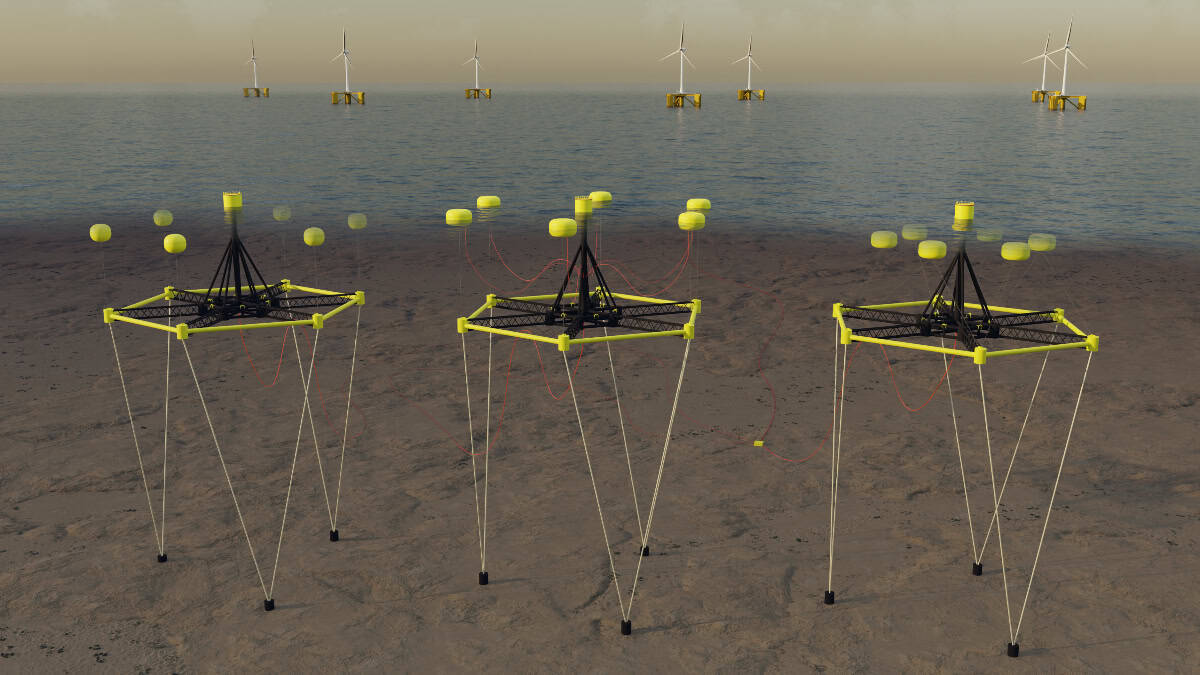
Wave Energy Scotland (WES), a global leader in wave energy innovation, has unveiled a pioneering concept design for a multi-megawatt cluster arrangement of wave energy converter devices. This innovative approach aims to harness the potential advantages of clustered wave energy converter systems over individually moored devices, paving the way for cost reductions and increased efficiency in the offshore renewable energy sector.
Floating offshore wind projects, as seen in the ScotWind leasing round, are moving towards deeper water locations with significant wave climates, such as off the north and west coasts of Scotland. Economic modelling by Offshore Wind Consultants on behalf of WES suggests that sharing space, infrastructure, services and supply chain with offshore wind developments can significantly reduce the cost of wave energy.
Research conducted by WES at the University of Edinburgh’s FloWave facility revealed no significant loss of performance is expected for wave energy converters placed relatively close together.
These findings encouraged WES to examine design options for clustering individual devices together in a way that allows them to be moored and electrically connected as a single entity. While a cluster structure will incur additional cost, WES believes there are benefits that offset this. Advantages include greater capacity density on congested seabeds, fewer moorings, shorter device tethers, reduced dynamic cable lengths, a local equipment room for shared subsystems, improved offshore operations and maintenance opportunities, and an electrical output better suited for integration with floating offshore wind.
WES worked with Blackfish Engineering Design to create and explore multiple potential designs to determine if a practical and economically viable solution for clustering wave energy converters could be identified, resulting in the proposed concept.
“The cluster concept project offered a fascinating challenge for Blackfish and it was great to work with WES to explore this topic in more detail”, enthused Tim Warren, Operations Director at Blackfish. “The creative innovation process yielded plenty of ideas and concepts so that Blackfish could use our marine engineering expertise to assess these in more detail. We were very pleased to be able to develop a viable cluster concept that considers the major topics of spacing, manufacturing, and O&M.”
Tim Hurst, Managing Director of Wave Energy Scotland, said “Clustering wave energy converters could be a key solution for wave energy array deployments, and an attractive option for co-location with floating offshore wind farms. This cluster concept offers a potential path for commercialising wave energy and will be used to engage with stakeholders across the offshore renewable energy sector.”
A report detailing the process and outcomes of the cluster concept design project is now available here and Wave Energy Scotland will present the cluster concept design in more detail at conferences throughout the Spring, including All-Energy in Glasgow in May.