


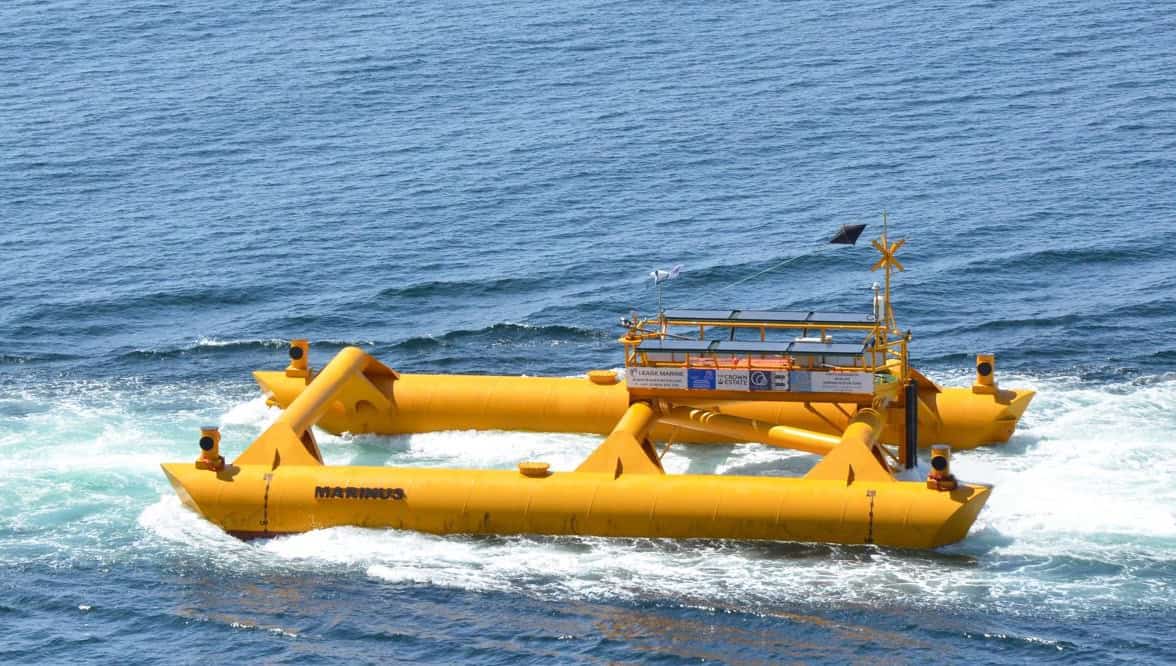
A data gathering buoy linked to north Wales tidal energy scheme, Morlais, embarks on its second mission this week as it is launched off the coast near Holyhead. The vessel also known as the Marinus LiDAR buoy, is part of a significant research exercise to ensure that marine mammals and birds are safeguarded as Morlais becomes operational from 2026.
The unmanned Marinus LiDAR buoy was first deployed at the site by the Menter Môn-led, Marine Characterisation and Research Project (MCRP) in 2023. Now, following rigorous testing and refurbishment Marinus is fully operational again, and will use the latest technologies to continue its data collection role.
As part of this, state of the art system integrated monitoring and analysis equipment has been successfully installed on the buoy which includes, sonar imaging, acoustic monitoring and video imaging. All have been specifically calibrated to local conditions and will track wildlife behaviours and patterns in the zone where Morlais tidal energy devices are set to be deployed.
Helen Roberts, MCRP Project Manager, said: “This is another important milestone for us and the tidal energy sector. The operational trial of the technology over the next 12 months is a significant step forward in our delivery of an effective and transferable monitoring and mitigation system to safeguard marine mammals and diving seabirds in developments like Morlais. We look forward to analysing the findings and sharing our learning with colleagues across the tidal energy sector.”
The Marinus LiDAR buoy has also been equipped with kit to collect environmental data at the site which will be included in future versions of the Morlais Environmental Monitoring and Management Plan (EMMP). The current mission will also help refine Artificial Intelligence (AI) monitoring devices which are being developed to ensure monitoring systems stay updated and meet the changing needs of the Morlais project itself as well as the wider tidal energy industry.
Environmental monitoring will continue throughout the lifetime of the Morlais project. The next phase of development is scheduled for 2025, when the SIMA system will be modified for use on a seabed-mounted turbine in the Morlais zone. The buoy will remain at sea for 12 months, the information gathered will be shared with Morlais turbine developers and the broader tidal energy industry to support and drive sector growth.