


Power & PropulsionDual FuelABC and Jan De Nul Successful FAT of Methanol Dual-Fuel Engine for...

ABC and Jan De Nul Successful FAT of Methanol Dual-Fuel Engine for XL Cable-Laying Vessel Fleeming Jenkin

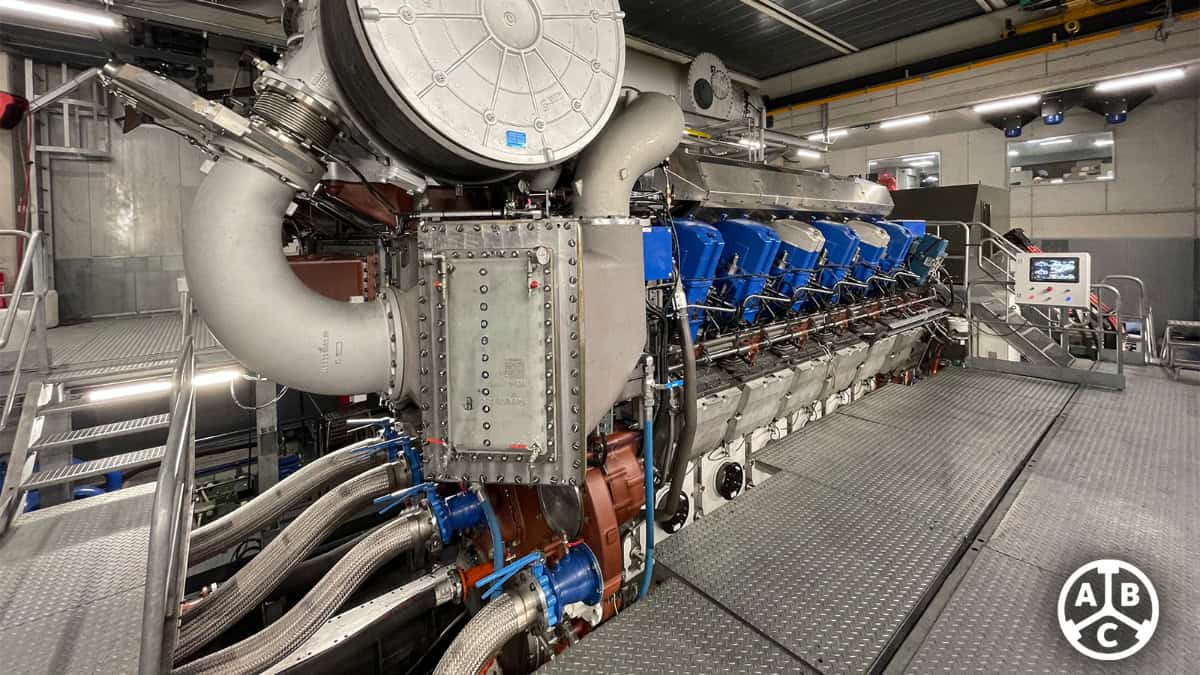
Anglo Belgian Corporation and Jan De Nul Group announce the successful completion of the Factory Acceptance Test (FAT) for the first 12DV36 methanol dual-fuel engine, marking a significant milestone in the construction of the state-of-the-art XL cable-laying vessel, Fleeming Jenkin. This achievement validates the operational reliability and performance of the innovative dual-fuel engines, paving the way for their integration into the vessel.

In October 2023, Jan De Nul and ABC signed a contract for the delivery of four 12DV36 methanol dual-fuel engines (each with a power output of 7,200 kW). These engines are designed for maximum fuel flexibility and can operate on methanol, (bio)diesel, and HVO. The new XL cable-laying vessel Fleeming Jenkin will be the first Ultra-Low Emission Vessel (ULEv EURO VI) to utilise these methanol dual-fuel engines.

The FAT took place at ABC’s factory in Ghent, under the supervision of Bureau Veritas (BV) and representatives from Jan De Nul, including the Chief Engineers of the Fleeming Jenkin. During the test, the engine demonstrated outstanding performance in both methanol and (bio)diesel modes, with stable operation across various load points. The new groundbreaking aftertreatment system now achieves NOx emissions more than 83% below the IMO Tier III standard—an important measure to reduce nitrogen deposition in nature.

Edward Belderbos, Project Engineer at Anglo Belgian Corporation, stated: “The successful completion of the FAT confirms that our methanol dual-fuel engines are not just a theoretical concept but innovative machines proven in practice. During the tests, we demonstrated that the engine maintains stable operation under various load conditions on both methanol and (bio)diesel. This result underscores ABC’s innovative strength and our commitment to the highest quality standards.”

A FAT is a comprehensive testing procedure to ensure that an engine meets all design and performance requirements. Parameters such as oil pressure, cooling water temperature, speed stability, and power output are verified under simulated operational conditions. Additionally, functional systems such as control and monitoring systems are tested to minimise risks during commissioning.

The first methanol dual-fuel engines will soon be shipped to the CMHI shipyard in Nantong, China, where they will be integrated into the new vessel.


Latest News

MED MARINE has completed the construction and delivery of two RAmparts 2500-W harbour tugs, MED İskenderun and MED Ceyhan, as part of its ongoing fleet investment programme. Built at EREGLI SHIPYARD, the sister vessels have joined the YAKAMOZ fleet, established through the partnership between MED MARINE and MARIN TUG, and have now entered operational service.

MED MARINE New Tugs for YAKAMOZ Joint Venture

MED İskenderun and MED Ceyhan strengthen YAKAMOZ fleet with additional towing and ship-handling capacity MED MARINE has completed the construction and delivery of two RAmparts...
Inmarsat Maritime, a Viasat company, has launched a new Maritime Safety Data Hub, giving the maritime industry access to data-driven insights into the risks shaping global shipping. The new platform combines three years of Global Maritime Distress and Safety System (GMDSS) data with an industry-first analysis of 106,975 maritime safety broadcasts transmitted in 2025.

Inmarsat Maritime Launches Maritime Safety Data Hub

Industry-first analysis combines three years of GMDSS distress call data with almost 107,000 maritime safety broadcasts, revealing how extreme weather, operational pressures and geopolitical...
LD Armateurs has reached another milestone in the development of its offshore wind service fleet with the launch of Wind of Ocean, the first of two next-generation Service Operation Vessels (SOVs) being built for Vattenfall. The vessel was launched on August 30 at ZPMC shipyard in China, following the keel-laying ceremony earlier this year. The launch moves Wind of Ocean into the next stage of construction, with outfitting, systems integration and sea trials now planned ahead of scheduled delivery in 2027.

LD Armateurs Launches Wind of Ocean SOV

Wind of Ocean will support operations and maintenance activities across Vattenfall’s North Sea wind farms LD Armateurs has launched Wind of Ocean, the first of...
Rolls-Royce Power Systems is expanding its mtu marine propulsion portfolio with a new exhaust gas after-treatment system for Series 2000 engines, designed to meet stringent IMO Tier III emission requirements. The new system is being certified in collaboration with exhaust gas after-treatment specialist Eminox for Series 2000 mtu engines.

Rolls-Royce unveils Tier III emissions solution for mtu Series 2000

New integrated SCR system enables mtu Series 2000-powered vessels to meet IMO Tier III emissions requirements Rolls-Royce Power Systems is expanding its mtu marine propulsion...

Related news