Latest NewsPower & PropulsionSCHOTTEL Introduces SPJ-S Submersible Thruster

SCHOTTEL Introduces SPJ-S Submersible Thruster

Based on SCHOTTEL’s proven PumpJet principle, the SPJ-S provides immediate auxiliary propulsion without the need for retractable deployment systems

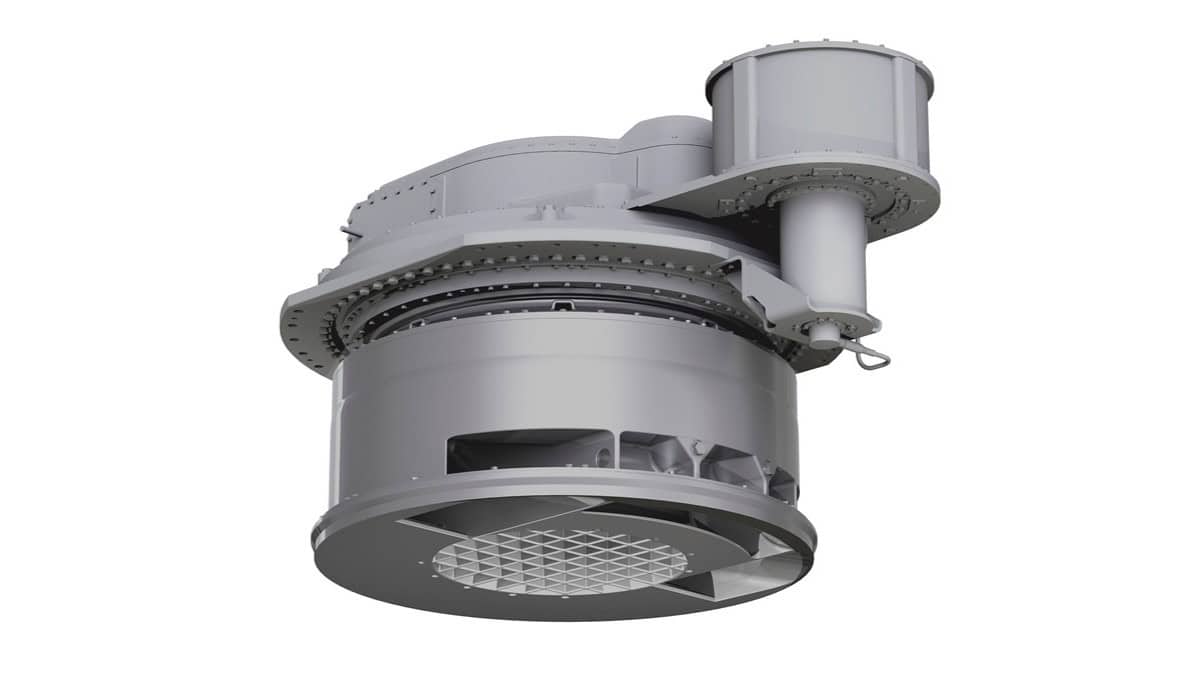
SCHOTTEL has expanded its propulsion portfolio with the launch of the SCHOTTEL PumpJet Submersible SPJ-S, a compact auxiliary thruster developed for manned and unmanned underwater vehicles. Designed for demanding civil and military subsea applications, the system provides precise manoeuvring, high operational availability and flexible installation in space-constrained underwater platforms.

Based on SCHOTTEL’s established PumpJet principle, the SPJ-S incorporates a specially developed pressure compensation system that equalises hydrostatic pressure at the seals, enabling reliable operation at significant depths. The generated thrust can be continuously adjusted through 360 degrees, providing the underwater platform with maximum manoeuvrability.

This makes the SPJ-S particularly suitable for operations in confined waters and applications requiring high positioning accuracy, both in surfaced conditions and at great depths. The electrically driven impeller eliminates the need for a gearbox and supports smooth, low-noise operation, which is particularly beneficial for sensitive underwater missions.

Unlike retractable auxiliary propulsion systems which must be deployed before use, the SPJ-S is immediately available, and delivers thrust without time-consuming deployment procedures or protruding external components. For operators, this means faster platform readiness whenever additional manoeuvring capability is required.

The SPJ-S is mounted flush with the hull, ensuring that hydrodynamic resistance remains unchanged. At the same time, the design reduces the risk of damage in the event of seabed contact in shallow or challenging waters. Moreover, its robust construction enables controlled bottoming on the seabed, further expanding operational capabilities. Thanks to its compact installation within the outer hull, the SPJ-S can be integrated into a wide range of platforms, from Extra Large Unmanned Underwater Vehicles (XLUUVs) to submarines.

In addition to its function as an auxiliary thruster, the submersible SPJ-S can also serve as a take-home propulsion system, helping to maintain manoeuvrability in the event of a main propulsion failure. It is available in three sizes, covering a power range of approximately 50 to 990 kW.


Latest News

SAAM Towage is strengthening its operations in Mexico with the addition of a new harbour tug, 'SAAM Ximbal', which is currently en route to the country ahead of joining the company's fleet at the Pacific port of Lázaro Cárdenas.

SAAM Ximbal Set for Mexico Deployment

Sanmar-built tug SAAM Ximbal is set to strengthen SAAM Towage's harbour operations at Mexico's Lázaro Cárdenas port SAAM Towage is strengthening its operations in Mexico...
Auramarine has secured a contract with Spanish shipbuilder GONDAN Shipbuilders to supply complete methanol fuel supply systems for two new hydrographic research vessels, Wega and Deneb, being built for Germany’s Federal Maritime and Hydrographic Agency (Bundesamt für Seeschifffahrt und Hydrographie – BSH).

Auramarine Secures Dual Methanol Fuel System Order

The Finnish marine fuel systems specialist will supply complete methanol fuel supply systems for two GONDAN-built hydrographic research vessels being constructed for Germany’s BSH Auramarine...
Artemis Technologies has unveiled the next-generation Artemis EF-15 Escape, a fully electric foiling passenger vessel designed to accommodate up to 50 passengers, expanding the company's offering for urban and island waterborne transport, premium passenger services and logistics operations.

Artemis unveils 50-passenger electric foiling vessel

The next-generation fully electric foiling vessel features configurable passenger layouts and capacity for up to 50 passengers Artemis Technologies has unveiled the next-generation Artemis EF-15...
Combining GMDSS call statistics with an industry-first maritime safety broadcast analysis, Inmarsat Maritime’s new safety data platform aims to support shipping in addressing its persistent and evolving operational risks. Deep-sea shipping is an inherently hazardous enterprise and the many operational risks faced by vessels, cargo, and crew will likely never be eliminated entirely. Nevertheless, data can play a significant role in minimising the frequency and severity of incidents at sea.

Inmarsat Maritime Safety Data Hub Highlights Global Shipping Risks

Combining GMDSS call statistics with an industry-first maritime safety broadcast analysis, Inmarsat Maritime’s new safety data platform aims to support shipping in addressing its...

Related news