


A recently completed research project evaluating the use of artificial intelligence (AI) in ship powertrain design has found that AI can significantly enhance and accelerate the design process. However, the study also concluded that AI cannot fully replace the expertise and decision-making of experienced naval architects.
Led by Longitude, a specialist marine engineering consultancy, the project consortium included the University of Birmingham, DNV, Steamology, and Chartwell Marine, with additional support from North Star Shipping.
This project is part of the Smart Shipping Acceleration Fund (SSAF) Competition, funded by the UK Department for Transport (DfT) and delivered by Innovate UK. SSAF is part of the Department’s UK Shipping Office for Reducing Emissions (UK SHORE) programme, a £206m initiative focused on developing the technology necessary to decarbonise the UK domestic maritime sector.
“This collaborative AI study marks a strategic leap in ship powertrain design. It shows that AI tools can assess multiple objective functions far quicker than a human with conventional design tools. However, training the AI requires a large amount of input from naval architects and equipment vendors. With a fully trained tool, removing repetitive iterative calculations will allow naval architects time for greater creativity.” Richard Featherstone, Head of Design Engineering at Longitude
The study’s starting point was acknowledging that the plethora of alternative fuel choices present risks and uncertainty to ship owners, whilst contemporary ship design methodologies struggle to assess the multiple objective functions that an owner may wish to understand.
Additionally, digital twins of in-service vessels are gathering increasing amounts of data, which contemporary design methodologies struggle to interrogate.
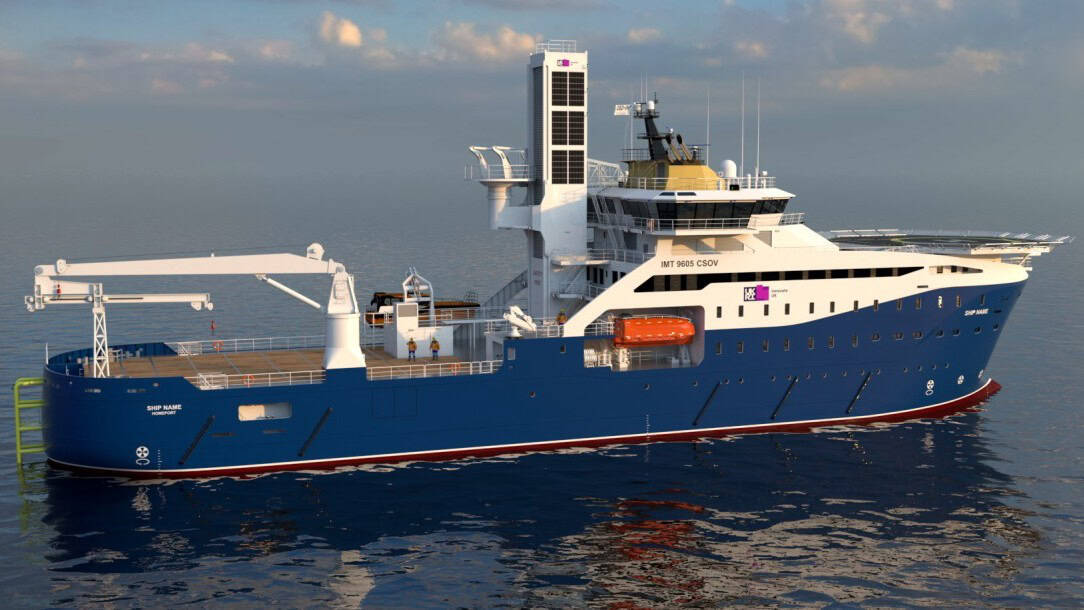
The project therefore took the operational data from one of the North Star service operation vessels (SOVs) and used AI to assess a set of different powertrain options against three objective functions: CAPEX, OPEX, and emissions (carbon intensity indicator).
Longitude assisted the University of Birmingham in training the AI tool, applying its knowledge in ship design and alternative fuels to set parameters such as weight, space, and regulatory constraints.
Four SOV variants
- The outputs of the AI tool were used to develop preliminary designs of four SOV variants;
- Methanol fuel storage – methanol to hydrogen reformer – hydrogen fuel cell (+batteries)
- Liquid hydrogen storage – hydrogen fuel cell (+ batteries)
- Diesel and hydrogen fuel storage – diesel internal combustion engines and hydrogen turbine (+ batteries)
- Methanol fuel storage – methanol internal combustion engines (+batteries)
The project showed that AI has both clear limitations and multiple benefits. To be truly successful, the AI tool needs to become an in-house piece of software that naval architects can use directly themselves. Plus, training the AI tool requires a lot of input from naval architects and equipment vendors.
“With these things in place, AI can provide shipowners with cost projections (CAPEX and OPEX) from which they can base their investment decisions and better convey their intentions to the naval architect. This capability is something we are now offering to our clients to offer them greater confidence in their investment decisions” Continues Richard Featherstone
Longitude is the design and engineering arm of Oslo-listed global consultancy ABL Group. Alongside ship design, Longitude specialises in offshore wind design, facilities and subsea, and marine operations engineering.