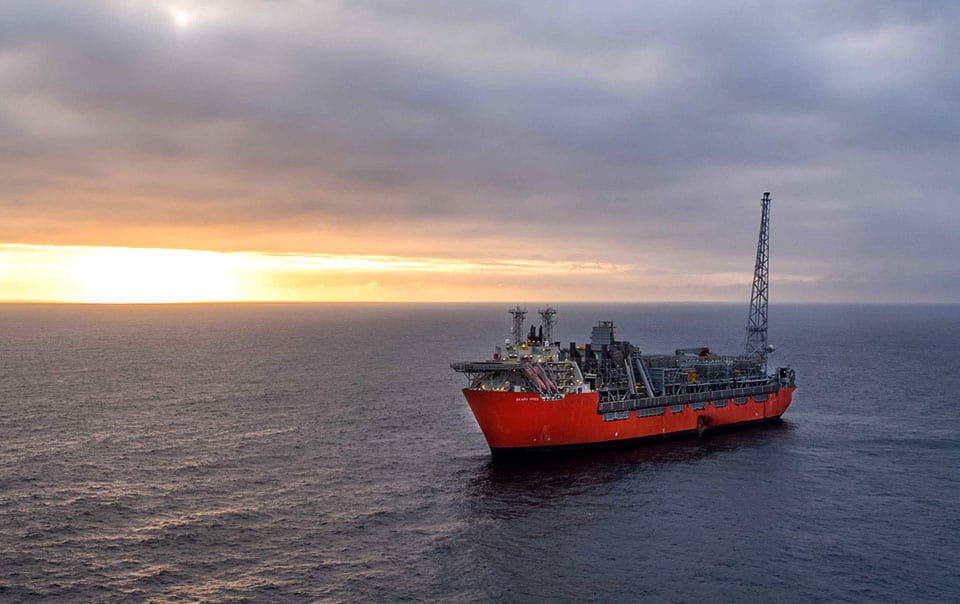
Tymor has been awarded a contract to set up its proprietary ‘stability in service’ technology, MOSIS, onboard Aker BP floating production unit at Norwegian Sea oil and gas field ‘Skarv’. MOSIS, a proven market disruptor, measures any floating unit’s stability whilst the vessel is in service.
Scottish maritime technology company Tymor Marine has been awarded a contract by Aker BP to set up its ‘stability in service’ technology, MOSIS, onboard their floating production unit at Skarv, a Norwegian Sea oil and gas field. Measured in production, Aker BP is one of the largest independent oil companies in Europe.
MOSIS (Measurement of Stability in Service) is Tymor’s unique onboard system, which measures any floating unit’s stability (VCG) while the vessel is in service.
The technology works by inclining the vessel approximately one degree to both port and starboard using embedded statistical processes to analyse data and generate insights while the vessel continues its operations. Data is captured under real and changeable conditions to track weight additions and stability more accurately. This ‘real time’ data capture increases operational safety and resilience, using the unlocked data to optimise the vessel’s operating parameters.
With a history of acceptance by the UK Health and Safety Executive in the UK sector and approval from the US Coast Guard in lieu of a traditional inclining for energy assets in the American continental shelf, Skarv is a significant milestone for MOSIS as the technology’s first entry in the Norwegian sector.
Aker BP’s Floating Production Storage and Offloading vessel (FPSO) on the Norwegian continental shelf is an important piece of energy infrastructure. The Skarv field began production in 2013 and currently produces 170.61 thousand barrels of oil equivalent per day (gross 2023 figures). Aker BP will be able to assess the stability and weight distribution of the FPSO without needing to move it from its location.
Kevin Moran, managing director of Tymor Marine, said: “By showing confidence in our disruptive technology, Aker BP has allowed us to unlock stability data that is not available via the onboard loading computer. A regular and accurate measurement of a ship’s stability has huge advantages both in terms of safety and economic benefits. A significant market disruptor, MOSIS is now a proven and accepted technology we believe could add considerable value to every vessel’s operations and performance, now and in the future.”
MOSIS also delivers significant time and economic gains for future vessel modifications, ensuring that all parties work from the most up-to-date information.
Signe Berit Ravnås, VP Asset Operations – Skarv in Aker BP said:“In Aker BP, we make decisions based on data. Proposed as a potential tool for future-proofing stability management of Aker BP’s floating systems, we are excited to work with Tymor Marine on Asset Skarv, and plan to use lessons learned from this MOSIS Pilot campaign as input to our Always Improve agenda, assessing amongst others the strategic fit with our well known and cutting-edge Digitalisation and Future Operations initiatives. Long-term, we see a potential for implementing the system as an additional barrier to the main safety function Stability.”