


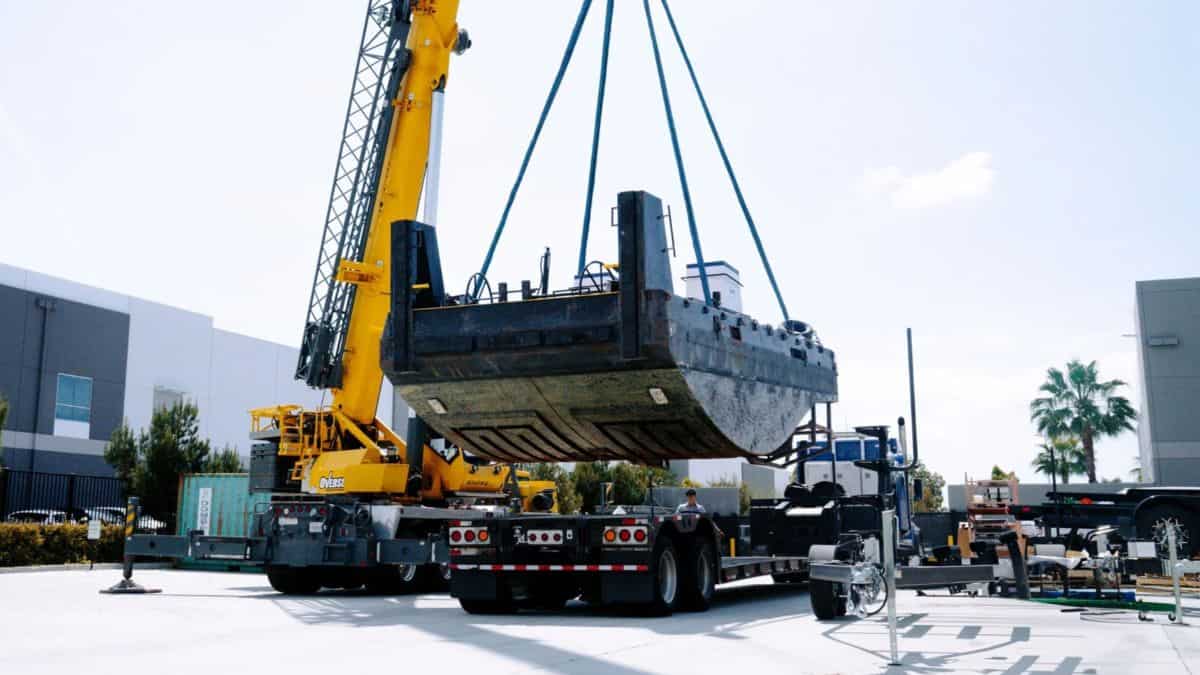
Arc has partnered with Portland-based Diversified Marine Inc. to introduce the first fully electric, truckable tug to the Port of Los Angeles – the busiest container port in the Western Hemisphere. The 26-foot retrofitted vessel combines high-performance capabilities with zero-emission operation, marking a transformative step in port decarbonization.
“At Arc, our mission has always been to electrify the entire marine industry. Workboats are a big step towards that end,” says Arc, CEO and co-founder Mitch Lee. “We’re excited to enter the commercial market with the most advanced maritime technology available. And this project sets the stage for our future efforts.”
Why tugs?
Tugboats are the backbone of ports — moving barges, repositioning cranes, and guiding larger vessels. Most are decades old and outdated, staring down retirement, and run on diesel. Fuel and maintenance drive more than half of a tugboat’s substantial operating costs.
Tugs run short, repetitive missions requiring high torque, and start and end at the same home base. Not only does that make them well-suited to going electric, but doing so drastically reduces operating expenses. Reliability and uptime, critical measurements for commercial operators, also improve.
“It just makes sense,” says Robert Binkowski, Arc’s research and development lead. “This is the future of every port in the world.”
This tug is powered by Arc’s electric powertrain and software, based on the same high-voltage architecture we designed for the Arc Sport. The vessel features:
- 600-horsepower dual-motor drivetrain
- Large lithium-ion battery packs
- Modernized captain’s helm
- Real-time performance monitoring
- Split assembly construction for land transport
- Minimal maintenance
Because of our vertical integration across both hardware and software, we’re able to deliver unrivaled performance and capabilities. And our existing supply chain and production process allow us to build more affordably. This first tug is a prototype ready to scale.
“We’re not starting from scratch,” Binkowski says. “We’re leveraging our substantial engineering resources and IP from our consumer platform. We want to make anything that lives full-time in the harbor zero-emission.”
The Los Angeles and Long Beach port complex handles more trade than any other container port in the Western Hemisphere — around 76% of all waterborne goods that move in and out of the West Coast, and 31% nationally.
With that comes environmental challenges, says Kofi Asante, Arc’s vice president of business development. His wife works as a pediatrician in Long Beach, where high levels of air pollutants have been linked to negative health risks. “We have the technology and team to make a real impact,” Asante says.
Electrifying workboats helps ports advance toward their own clean air goals. Los Angeles and Long Beach aim to transition to zero-emission equipment by 2030 and zero-emission trucks by 2035, with harbor craft to follow. Replacing the roughly 2,000 tugs in the U.S. could save over 1.6 million cars worth of greenhouse gas emissions annually.
“This is important and critical to our economy,” Asante says. “Tugboats allow us to scale our technology in a logical way that addresses a range of needs. Our retrofit is the beginning of a major workboat transition.”
The next wave
Arc’s retrofitted tugboat will launch its new mission in the Port of Los Angeles as early as this summer. Meanwhile, lessons from its integration are already informing designs for larger tugs.