The next-generation fully electric foiling vessel features configurable passenger layouts and capacity for up to 50 passengers
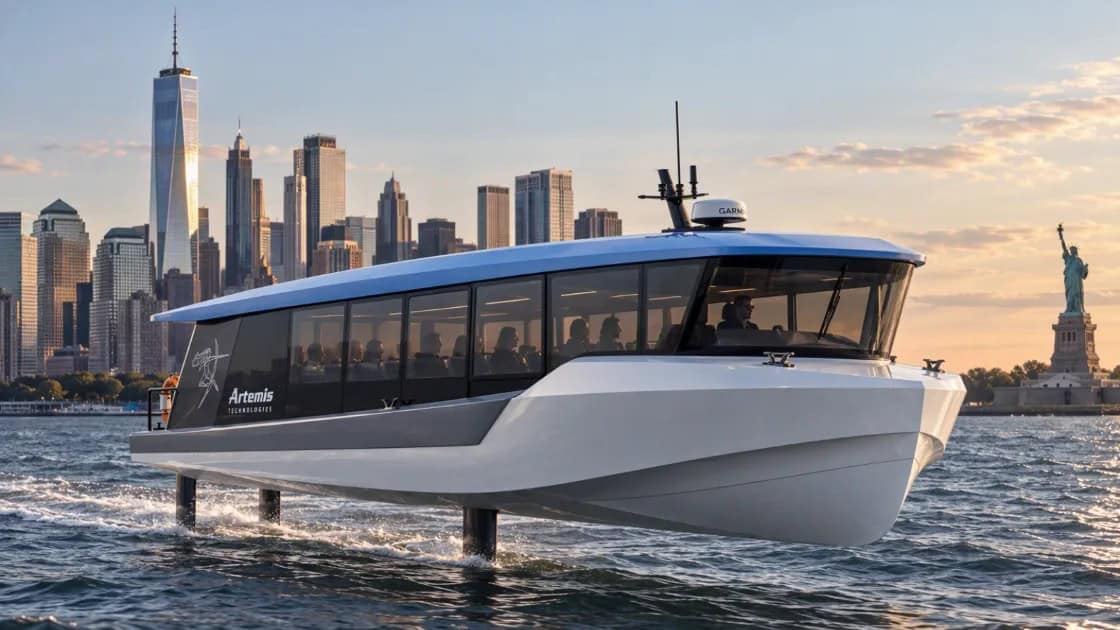
Artemis Technologies has unveiled the next-generation Artemis EF-15 Escape, a fully electric foiling passenger vessel designed to accommodate up to 50 passengers, expanding the company’s offering for urban and island waterborne transport, premium passenger services and logistics operations.
Building on the established 12-passenger Artemis EF-12 Escape, the new EF-15 platform combines increased passenger capacity with the efficiency, low-wake performance and ride comfort of Artemis Technologies’ proprietary Artemis eFoiler® system. The vessel also delivers zero operational emissions, supporting operators seeking to decarbonise passenger transport.
In its high-capacity configuration, the Artemis EF-15 Escape gives operators a practical way to expand waterborne transit. By lifting the hull above the water, the hydrofoil system significantly reduces wake, helping to minimise shoreline impact and opening opportunities for operation in sensitive and high-traffic urban waterways. This opens up new route possibilities across urban environments, helping shift passenger demand from roads to waterways.
Passengers benefit from a quieter and smoother journey. Reduced noise and vibration improve comfort onboard, while the stability of foiling minimises motion even at speed and in variable conditions. Configurable interiors allow operators to tailor the onboard experience to specific market requirements, from high-throughput commuter services to premium passenger environments.
Commenting on the vessel, Dr Iain Percy OBE, CEO of Artemis Technologies, said: “The next-generation Artemis EF-15 Escape is about making electric foiling relevant to many more operators and many more passengers. By increasing capacity to as many as 50 passengers and creating a configurable platform, we can address everything from high-frequency urban transit to premium passenger and logistics applications.”
“The principle remains the same: move people and goods across the water more efficiently, with zero operational emissions, significantly reduced wake and a passenger experience that conventional vessels struggle to match.”
This latest development comes amid accelerating global momentum for electric maritime transport. The Artemis EF-15 Escape is designed to meet both U.S. Coast Guard Subchapter T requirements and the International Code of Safety for High-Speed Craft (HSC Code), and its common platform supports future fleet expansion across multiple service models within the same operating network.
For operators, the advantages extend beyond zero operational emissions. Fully electric propulsion reduces energy consumption and maintenance requirements compared with conventional diesel vessels, lowering operating costs and improving fleet reliability. Combined with increased passenger capacity, this can improve route economics, fleet utilisation and the viability of higher-frequency services. Deploying different configurations from a common platform also gives operators long-term fleet flexibility.
The Artemis EF-15 Escape also marks a shift in Artemis Technologies’ approach, from individual vessel products toward a scalable family of configurable platforms designed to make high-performance electric waterborne transport a practical part of modern mobility.