


Candela’s milestone crossing signals new commercial opportunities for electric foiling vessels
Electric passenger vessels have taken a major step beyond short, fixed routes. The Candela P-12 electric foiling vessel, completed a record-setting voyage from Sweden’s west coast to Oslo, Norway, demonstrating that long-range electric transit can be achieved without dedicated charging infrastructure.
Electric ferries are gaining momentum globally. However, high energy consumption and limited range have so far restricted most electric vessels to short, predefined routes, even in Norway, where over hundred operate.
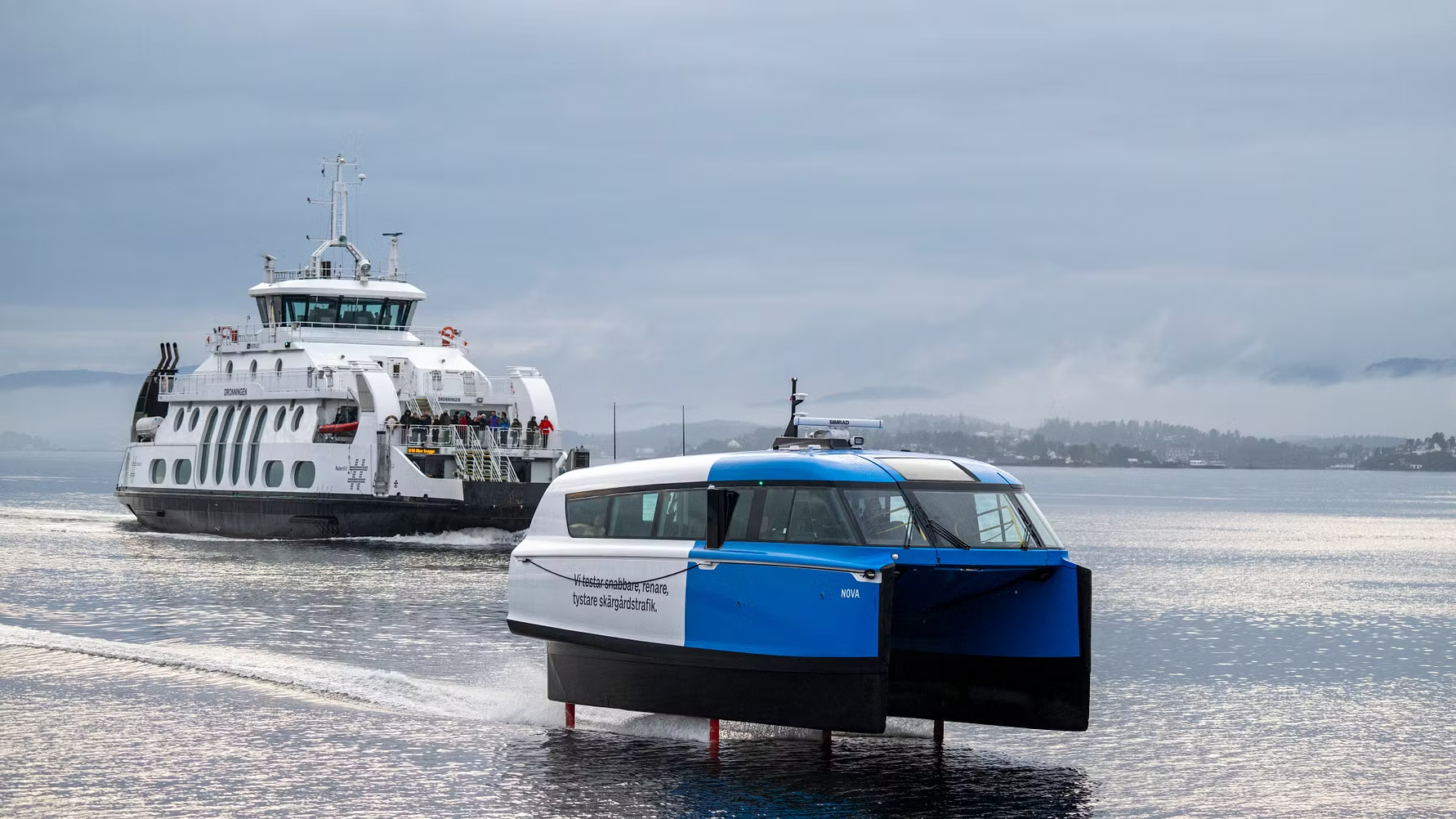
To demonstrate how hydrofoil technology overcomes these limitations, Candela P-12 set out on a 160-nautical-mile journey – the longest ever by an electric passenger ship – from Gothenburg, Sweden, to Oslo, Norway. The P-12 is the world’s first serial-production electric hydrofoil ferry. Beneath its hull, computer-controlled submerged wings lift the vessel above the water at speeds exceeding 20 knots, reducing energy consumption by around 80 percent compared to conventional vessels and enabling long-distance travel at high speed.
Already proven in Stockholm’s public transport system, Candela P-12 holds the record as the fastest electric foiling passenger vessel in operation, with a service speed of 25 knots, and has exceeded 30 knots during trials, with a range of up to 40 nautical miles at cruising speed on a single charge.
The mission was to reach Oslo, where several electric high-speed ferries are already in service. The contrast between these conventional electric vessels and Candela P-12 is striking. Oslo’s fastest electric passenger ferry, m/s Baronen, operates a fixed 10-nautical-mile route and relies on swapping a deck-mounted battery container with several megawatt-hours of capacity at the end of each trip. The automated battery-swapping system alone has cost hundreds of millions of Norwegian kroner. While several swap stations have been completed, the system has faced delays and cost overruns, and deployment of additional stations has been delayed—limiting route flexibility.
By contrast, Candela P-12’s efficiency allows it to charge from standard, easily deployable automotive DC fast chargers. During the journey to Oslo, the vessel charged using a portable 360 kW Skagerak Energi Move DC charger connected to a mobile battery system, towed behind a Ford F-150 Lightning electric pickup.
“Charging infrastructure is the hidden cost of electrifying conventional vessels,” said Gabriele De Mattia, project engineer at Candela and lead engineer for the record-setting voyage. “In many cases, building megawatt-scale chargers—especially where the grid is weak or undeveloped—can cost as much as the vessels themselves. The breakthrough with P-12 is that it is fast to charge and extremely flexible in where it can operate.”
The 160-nautical-mile journey was completed over three days, with demonstration and charging stops along the route. The Candela crew charged along Sweden’s existing DC fast-charging network using Aqua SuperPower stations, and where fixed chargers were unavailable, relied on the towable battery system provided by Skagerak Energi.
Upon arrival in Oslo, the P-12 and its crew were welcomed by officials and media. Norway’s ambition to electrify its waterways has faced growing resistance as costs for both vessels and infrastructure have escalated, with battery-swapping systems alone accumulating expenses in the hundreds of millions. With Candela P-12, observers were presented with a clear comparison: the total electricity cost for the world’s longest electric sea journey amounted to just over €200.