



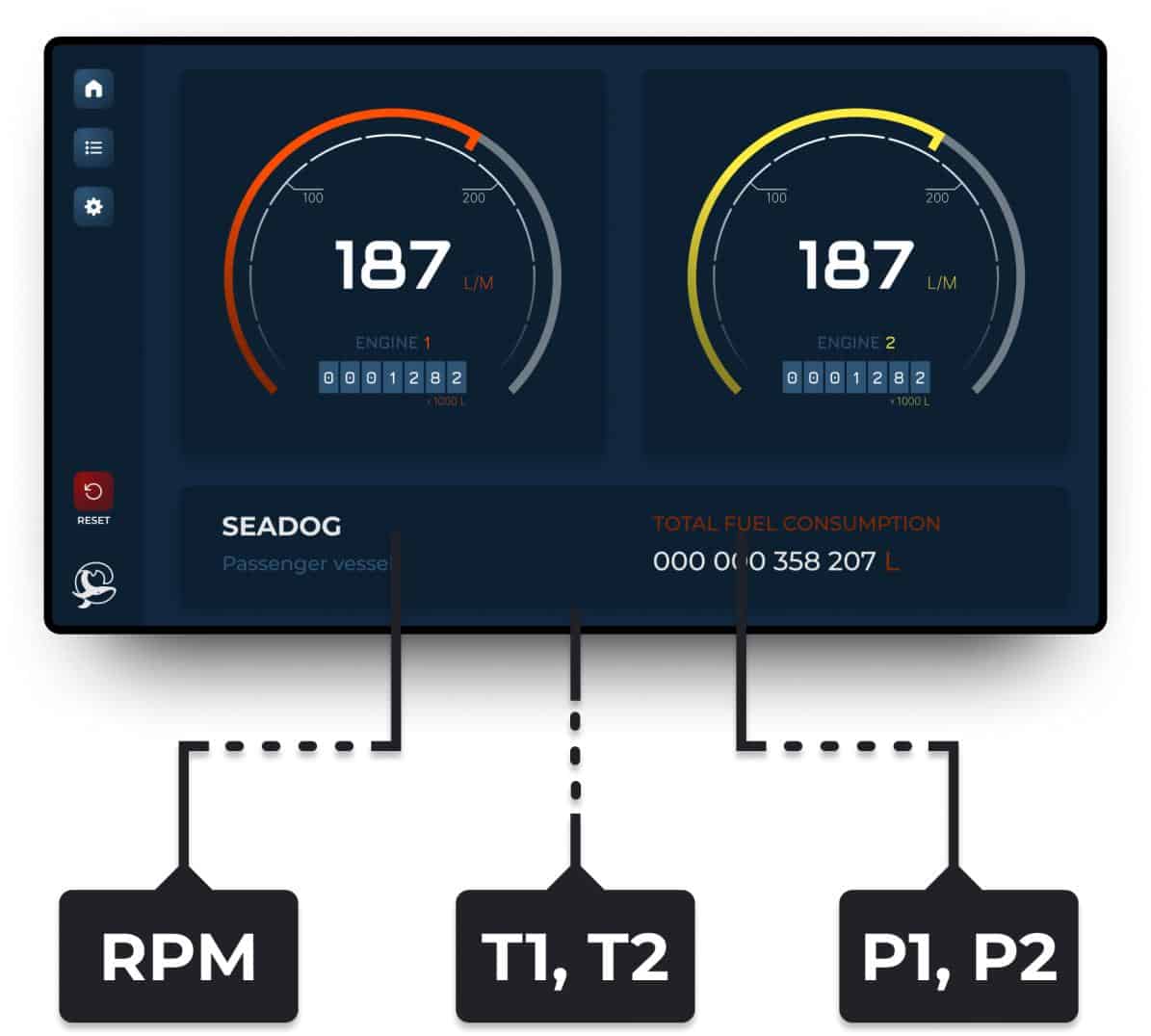
Cetasol, a company focused on marine sustainability, has developed a reliable virtual sensor for fuel flow measurement, called CetaFuel. CetaFuel can accurately measure properties without requiring physical sensors. This innovative technology can replace traditional and expensive fuel flow meters, making fuel monitoring more accessible and affordable, especially for older vessels with mechanical engines that do not have access to reliable fuel reading technology.
Measuring the fuel consumption of a vessel is an important first step to improving the operation, reducing costs, and moving toward sustainability. It has been estimated that 25% of total marine engines do not have built-in fuel sensors by manufacturers. These engines, also known as mechanical engines, need external flow meters (usually two per engine for inlet and outlet fuel flow) to measure the fuel consumption of the engines. The flow meters need to be certified and are usually costly with ongoing concern about blocking the fuel flow.
CetaFuel is a virtual sensor for fuel reading without requiring extensive and expensive installations. That makes the solution very affordable compared to other flowmeters which can be very expensive and challenging to install. CetaFuel offers a sustainable solution that maintains accuracy and removes installation complexities and concerns about after installation maintenance. CetaFuel requires minimal maintenance and calibration and is not prone to drift over time.
To demonstrate the effectiveness of CetaFuel, Cetasol has tested the CetaFuel virtual sensor on three vessels located in the Nordic region: two passenger ferries and one high-speed craft. The vessels varied in size, engine, and routes. The largest vessel is 110m, 10 500 GT in size, and with an engine of 36000kw in power.
Implementing CetaFuel can accurately monitor fuel consumption and contribute to both reducing carbon footprint and achieving the International Maritime Organization’s ambitious emissions reduction goals. The marine industry is responsible for a significant portion of global emissions, and reducing CO2 emissions is a vital goal for the industry.
Cetasol created a pool of reference engines to develop the CetaFuel virtual sensor and modeled the fuel according to the available parameters. With the Cetasol library, they can select the best match or corresponding fuel models. The virtual sensor’s fuel consumption is predicted and then corrected with the measurements from the customer and provides fuel reading with high (96-99%) accuracy. Cetafuel uses other available measurements from the engine to create a digital twin of the engine, and the digital twin model will be used for energy predictions.
Cetasol’s CetaFuel virtual sensor is a promising solution for the marine industry’s emissions reduction goals. Accurately monitoring fuel consumption can help vessels reduce their carbon footprint, become more cost-effective, and contribute towards a sustainable future.











 to measure the fuel consumption of the engines. The flow meters need to be certified and are usually costly with ongoing concern about blocking the fuel flow. CetaFuel is a virtual sensor for fuel reading without requiring extensive and expensive installations. That makes the solution very affordable compared to other flowmeters which can be very expensive and challenging to install. CetaFuel offers a sustainable solution that maintains accuracy and removes installation complexities and concerns about after installation maintenance. CetaFuel requires minimal maintenance and calibration and is not prone to drift over time. To demonstrate the effectiveness of CetaFuel, Cetasol has tested the CetaFuel virtual sensor on three vessels located in the Nordic region: two passenger ferries and one high-speed craft. The vessels varied in size, engine, and routes. The largest vessel is 110m, 10 500 GT in size, and with an engine of 36000kw in power. Implementing CetaFuel can accurately monitor fuel consumption and contribute to both reducing carbon footprint and achieving the International Maritime Organization's ambitious emissions reduction goals. The marine industry is responsible for a significant portion of global emissions, and reducing CO2 emissions is a vital goal for the industry.)