



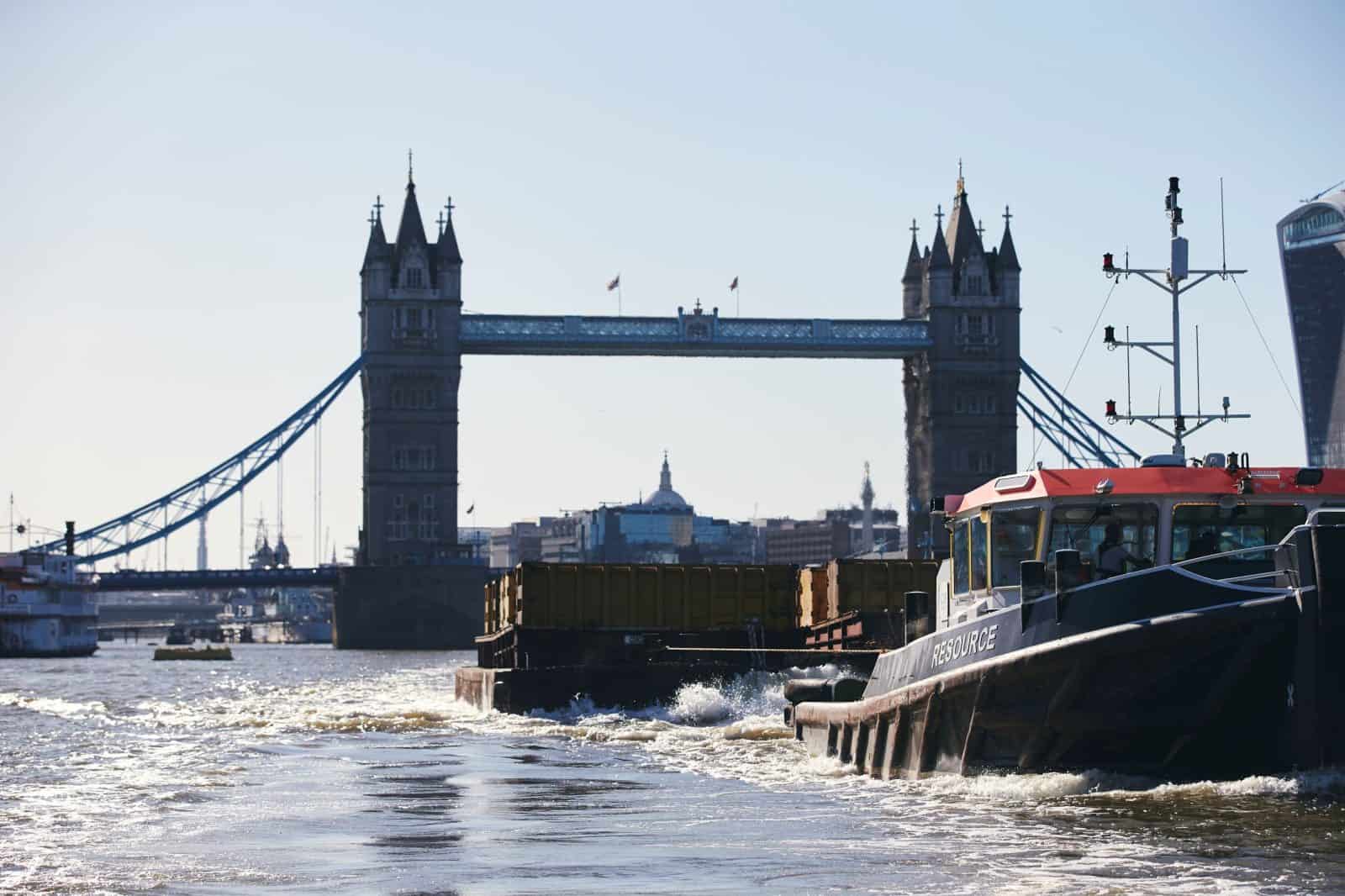
Cory has today announced that its fleet of tugs will run on biofuel. The move follows successful trials that have resulted in a reduction of net carbon dioxide emissions by 90% – a major step in decarbonising the company’s river operations and transport on the Thames as the UK targets net zero greenhouse gas emissions by 2050.
The biofuel, hydrotreated vegetable oil (HVO) will bring additional air quality benefits – reducing nitrous oxide (NOx) and particulate matter emissions by 19% and 21% respectively. HVO is produced from waste materials such as used cooking oil and waste fats, which do not release any new carbon dioxide into the atmosphere. The effective use of waste is consistent with Cory’s broader business approach.
Cory has been operating on the River Thames since the company’s incorporation 125 years ago in 1896. The current fleet of tugs are responsible for transporting more than 1 million tonnes of recyclable and non-recyclable waste per year. Cory’s use of the river to transport waste is unique in the UK and saves 100,000 truck movements annually, helping to keep roads safer, cleaner, and less congested.
Dougie Sutherland, CEO of Cory said:
“The switch to using HVO to fuel our tugs is another important moment in our 125-year history. As a business, we are proud of our stewardship of the Thames and the river’s role in reducing the environmental impact of our operations. For people who live and work in London, our fleet of tugs and barges are a familiar sight and have gained something of an iconic status as a result. As well as being recognisable, we want them to also be contributing to reducing emissions on the Thames. While we know this is a great step forward, we also recognise that using HVO is a temporary measure on the road to net zero, and that is why we are also exploring opportunities for zero carbon marine vessels.”
He continued:
“As we look to the future, which includes plans to invest £800 million into new projects in London and the South East, the river will continue to play a pivotal role in our operations. It’s therefore vital that we ensure that we invest in the sustainability of our tugs – and in doing so, help the UK to address the decarbonisation of shipping, another key aspect of the country’s net zero target, while improving air quality.
“An added benefit of using HVO as fuel in our tugs is that it is fundamentally a waste product – and this fits perfectly with our wider approach of ensuring that no waste is wasted.”
Robin Mortimer, Chief Executive of Port of London Authority, said:
“This is exactly the sort of step required to make a difference on the journey to net zero and a cleaner environment.”
In its 2020 operational performance, Cory diverted 731,000 tonnes of residual waste from landfill at its energy from waste EfW facility in Belvedere. This saved around 150,000 tonnes of CO2e from being released into the atmosphere, while producing 501 GWh of electricity, enough to power the equivalent of 155,000 homes. 170,000 tonnes of ash were turned into aggregate for construction, reducing the need to quarry virgin materials.




 will bring additional air quality benefits – reducing nitrous oxide (NOx) and particulate matter emissions by 19% and 21% respectively. HVO is produced from waste materials such as used cooking oil and waste fats, which do not release any new carbon dioxide into the atmosphere. The effective use of waste is consistent with Cory’s broader business approach.)