Ship & Boat Buildingrock installation vesselCSL OWL SRI Launches MV Rock Star for Subsea Rock Installation

CSL OWL SRI Launches MV Rock Star for Subsea Rock Installation

MV Rock Star is designed for scour protection, cable burial and subsea rock installation in water depths of up to 100 metres

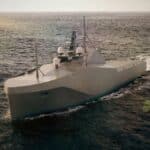
CSL OWL SRI, a partnership between The CSL Group and Offshore Wind Logistics, has launched MV Rock Star, the first of two purpose-built subsea rock installation vessels developed to support the growing offshore renewable energy sector.

The new vessel has been designed specifically to transport and accurately place rock on the seabed for offshore wind construction and maintenance activities.

With a rock carrying capacity of 17,500 metric tonnes and DP2 dynamic positioning, MV Rock Star will deliver cost-effective, high-precision rock installation in water depths of up to 100 metres. The vessel can operate on marine gas oil (MGO) and methanol, providing a pathway toward zero-emission operations.

Purpose-built for operational flexibility, the subsea rock installation vessel features a tremie pipe with active motion compensation for precise rock placement and transport belts capable of handling 60-300 kg grading (with the heaviest rock weighing 450 kg), along with additional capabilities for installing larger armour rock.

“The launch of MV Rock Star is an exciting moment for CSL OWL SRI and brings us one step closer to putting this new purpose-built capacity to work for the offshore renewable energy sector,” said Maarten van der Giessen, CEO of CSL OWL SRI. “Our vessels are designed to bring greater flexibility and cost efficiency to subsea rock installation in and around bottom-fixed wind farms and associated cables. By optimizing offshore renewable energy logistics, we aim to help make green energy more affordable.”

MV Rock Star and her sister vessel will support a range of offshore wind applications, including scour protection, cable burial and protection, and other subsea rock installation work.


Latest News

Combining GMDSS call statistics with an industry-first maritime safety broadcast analysis, Inmarsat Maritime’s new safety data platform aims to support shipping in addressing its persistent and evolving operational risks. Deep-sea shipping is an inherently hazardous enterprise and the many operational risks faced by vessels, cargo, and crew will likely never be eliminated entirely. Nevertheless, data can play a significant role in minimising the frequency and severity of incidents at sea.

Inmarsat Maritime Safety Data Hub Highlights Global Shipping Risks

Combining GMDSS call statistics with an industry-first maritime safety broadcast analysis, Inmarsat Maritime’s new safety data platform aims to support shipping in addressing its...
Bureau Veritas Marine & Offshore has awarded an Approval in Principle (AiP) to OceanAlpha for the design of its L42B uncrewed surface vessel (USV), developed for offshore hydrographic and geophysical survey operations.

OceanAlpha Secures BV AiP for L42B Offshore Survey USV

OceanAlpha's L42B combines a modular survey payload with remote operation capabilities to support extended offshore data-gathering missions Bureau Veritas Marine & Offshore (BV) has awarded...

Damen Delivers Two Electric Patrol Vessels to Amsterdam

The latest delivery brings to six the number of Damen Patrol Vessels 1304 Electric supplied to Amsterdam since 2021 https://vimeo.com/1243208175?fl=pl&fe=sh Damen Shipyards Group has delivered two...
Kongsberg Maritime has unveiled the Arctic Hunter USV, a new class of uncrewed surface vessel designed to accelerate the deployment of hybrid naval fleets combining crewed and uncrewed assets.

Kongsberg Maritime Unveils Arctic Hunter USV

Kongsberg Maritime combines commercial shipbuilding expertise and autonomous vessel technology to support next-generation naval operations in Arctic waters Kongsberg Maritime has unveiled the Arctic Hunter...

Related news