


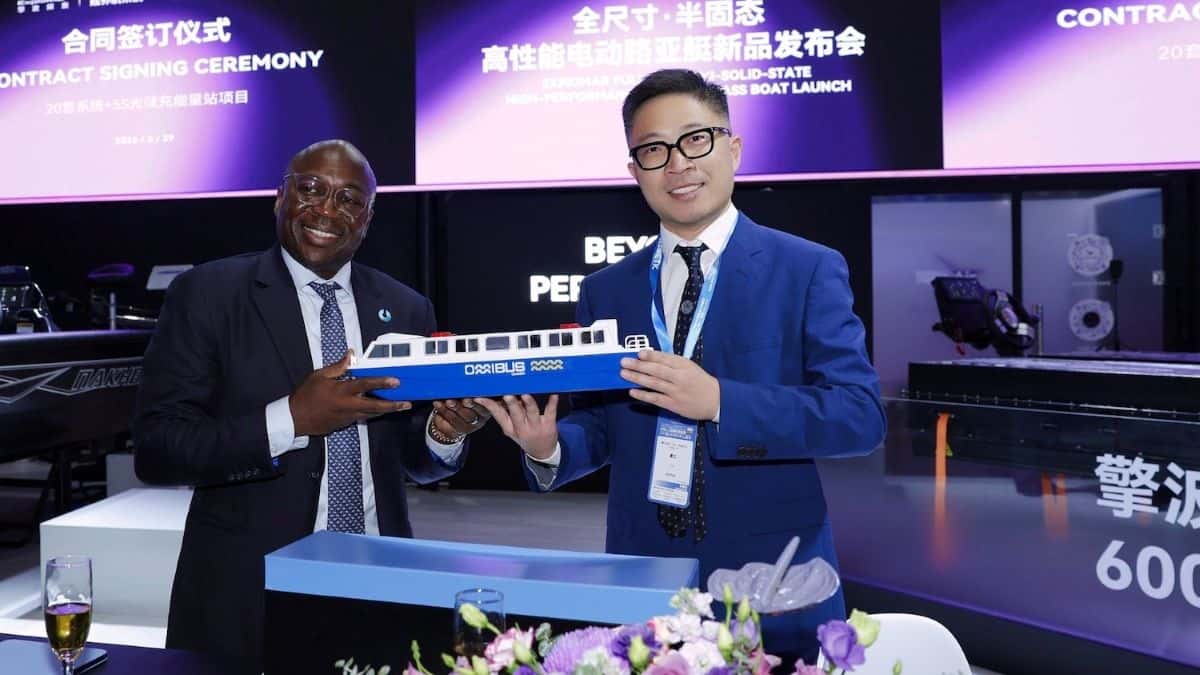
Deal signed at CIBS 2026 supports large-scale deployment of electric ferries in Nigeria
ExploMar, a specialist manufacturer of high-performance electric outboard propulsion systems, has signed an agreement with Nigeria-based Caverton Offshore Support Group for the supply of 20 electric propulsion units and a 5S energy station, marking a significant step forward in the adoption of electric ferry technology.
The contract was announced at CIBS 2026 and establishes the foundation for a longer-term collaboration between the two companies. The partnership will focus on deploying electric ferry operations in Lagos, Nigeria, a high-demand and operationally complex environment that provides a strong test case for scalable electrification.
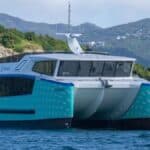
At the centre of the project is the OMIBUS EV 2.0, a fully electric ferry powered by twin 300hp propulsion systems, delivering 600hp in total. Built for commercial use, it’s designed to cut operating costs while improving efficiency and performance compared to traditional petrol or diesel vessels.
ExploMar and Caverton have spent the past two years developing and testing the technology together. A prototype ferry is already in the water in Lagos, currently moving passengers as part of an ongoing pilot. Early results are promising, particularly when it comes to running costs – one of the key drivers behind the shift to electric.
Mr. Olabode Makanjuola, Chief Executive Officer of Caverton Offshore Support Group and the visionary behind the OMIBUS programme, describes the collaboration as a defining moment for regional transportation. The partnership centres on the co-development of a standardised, scalable electric ferry platform purpose-built to meet the operational realities of African and emerging-market waterways.
Makanjuola also highlights China’s leadership in manufacturing scale and systems integration as central to the partnership’s ability to deliver solutions fit for emerging markets. “The future of Nigeria’s waterways is electric,” says Makanjuola. “Cities like Lagos are defined by water, yet millions of residents remain trapped in road congestion while vast waterway networks lie underutilised. Conventional petrol and diesel-powered ferries are costly to operate and increasingly difficult to justify in dense urban environments.
“This partnership sets out to validate an entirely new operating model under real-world conditions, beginning with pilot operations in Lagos, one of Africa’s most demanding and complex environments.”
With fuel costs continuing to rise, electric ferries are already proving cheaper to run, while offering a more reliable long-term solution. Caverton has been building ferries in Lagos for the past five years and is now looking to scale up production, with further vessels already planned in partnership with the state government.
Mr. Alex Dong, CEO of ExploMar, comments: “Securing this order with Caverton is a meaningful step forward in bringing high-performance electric propulsion into large-scale, real-world operation. Africa represents one of the most important growth markets for sustainable water transport, where performance, cost efficiency and system reliability must come together. This partnership reflects our focus on delivering not just products, but fully integrated solutions that can be deployed, replicated and scaled.”
Alongside ferries, both companies are already looking at how the same technology could be applied to other vessel types, including security and fishing boats – opening up wider opportunities for electrification across the marine sector.
For UK and European operators watching the shift to low-emission transport, this project is another clear signal that electric boating is moving beyond trials and into scalable, commercial reality.