


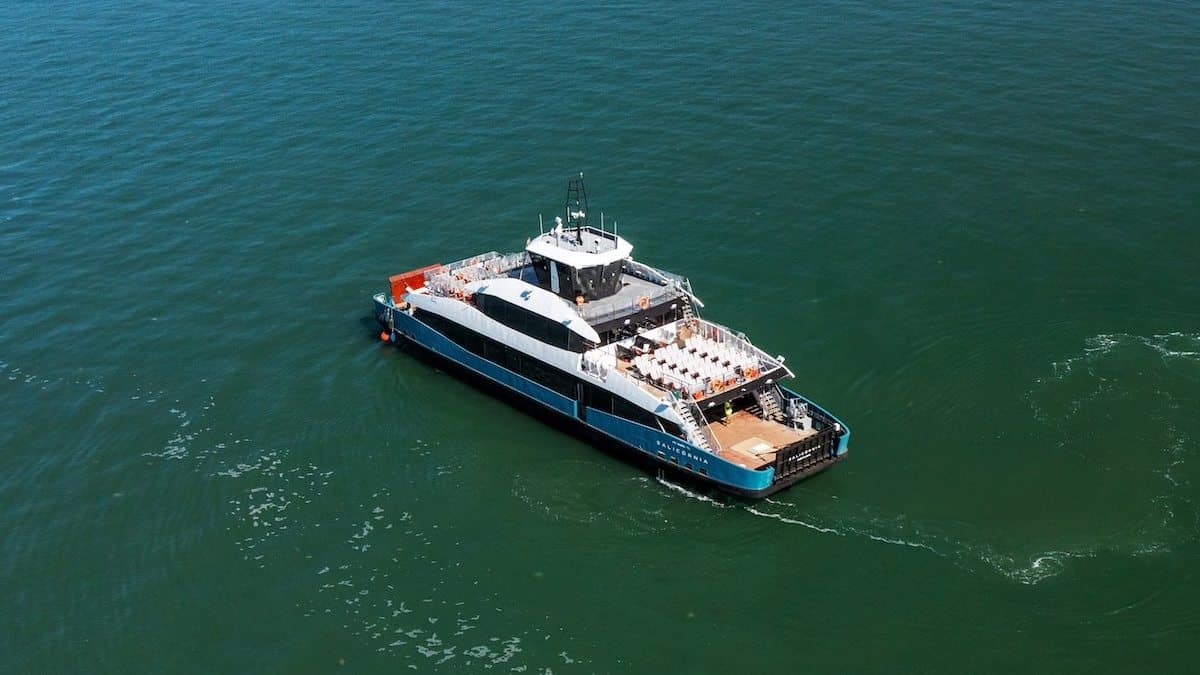
Portugal’s first electric ferryboat has been delivered by Grupo ETE following a christening ceremony at Navaltagus Shipyard in Seixal, south of Lisbon.
“Salicornia” – which has been developed entirely in Portugal, by national companies, to serve a Portuguese region – represents a maritime milestone as the first electric ferry on the Iberian Peninsula.
The €7.3million vessel will shortly proceed to Aveiro to undergo navigation and loading tests before its official inauguration when it will replace an existing ferry service which currently connects São Jacinto and the Fort of Barra, in Ílhavo.
The zero-emissions ferry will slash CO2 by 300 tons while reducing energy consumption by around 30%. Transporting 260 passengers and 19 vehicles, it also offers a 30% and 90% increase in capacity respectively, compared the current vessel in action. Low noise levels and a 360º panoramic view on the top floor will further improve the passenger experience.
Navaltagus Shipyard, responsible for the ferry construction, is managed by Grupo ETE, which was founded in 1936 and regarded as Portugal’s largest maritime and logistics entity.
Grupo ETE’s shareholder and Board Member, Luís Figueiredo said the Salicornia newbuild project affirms the shipyard’s world-class skill, engineering know-how, innovation and technology, which have in the past contributed to the development of the national Naval Industry. In addition, it reinforces the Grupo ETE’s commitment to sustainability and creating value for the public service.
“From the first moment at Grupo ETE we said yes to innovation, yes to sustainability, yes to mobility and public service and we did so with dedication. Salicórnia is a project which Grupo ETE is proud to be part of and which is also a symbol of responsible conduct assumed by everyone involved. It translates its commitment to reducing the carbon footprint and energy efficiency, as well as involvement with the community and providing a service to its customers, based on quality and excellence.”
Aveiro Mayor, José Ribau Esteves, said new electric ferryboat is an example of how local authorities should carry out their public investment, focusing on citizens and giving priority to environmental sustainability and the fight against climate change.
“This is a significant moment in terms of policies and public investment in Portugal. Environmental sustainability is a commitment and a priority for Aveiro City Council and the new Electric Ferryboat is the result of our investment in the environment and people. We are applying our resources not only in the Ria de Aveiro, a place that needs our care, but also in the concrete lives of Aveirenses and in particular, in our town of São Jacinto, which needs this means of transport to go to work and to carry out their social, sporting and leisure activities.”
The Electric Ferryboat project is co-financed by POSEUR, Portugal 2020 and the European Union through the Cohesion Fund, to the value of 2.25 million euros, for a total investment by Aveiro City Council (Ferryboat and Charging System) of around 9 million euros.
The official christening ceremony of the new Aveiro Electric Ferryboat was attended by the Mayor of Aveiro Ribau Esteves, Grupo ETE´s Chairman Luís Nagy, Grupo ETE´s Shareholder and Board Member Luís Figueiredo and the Mayor of Seixal Paulo Silva.