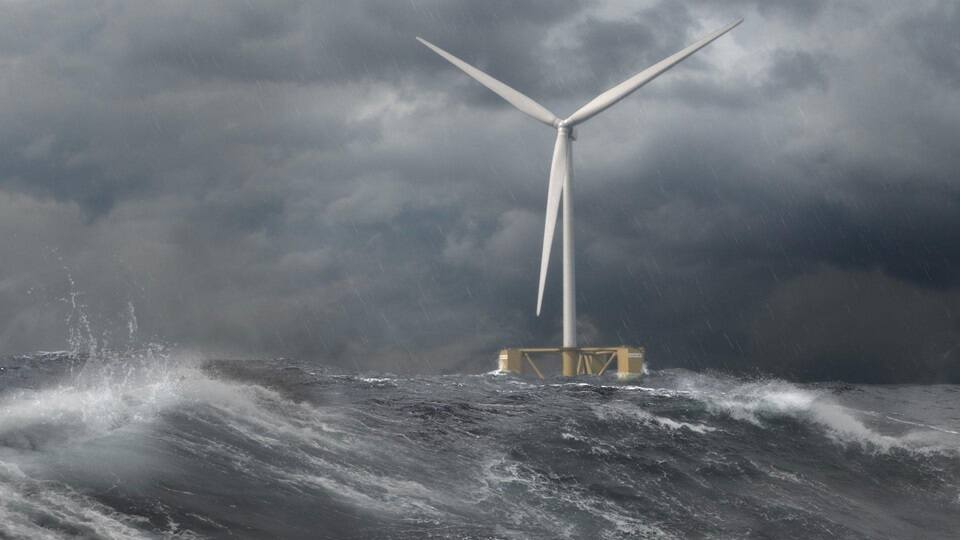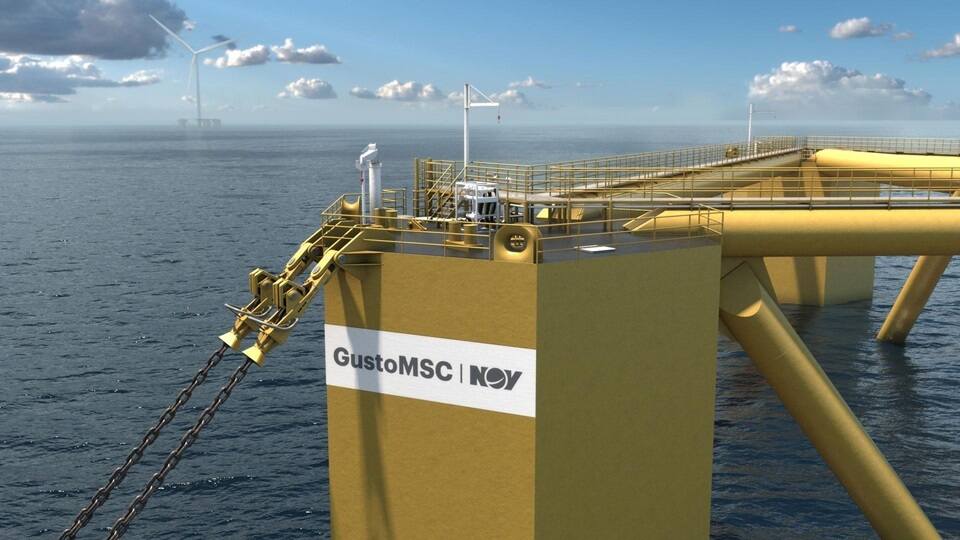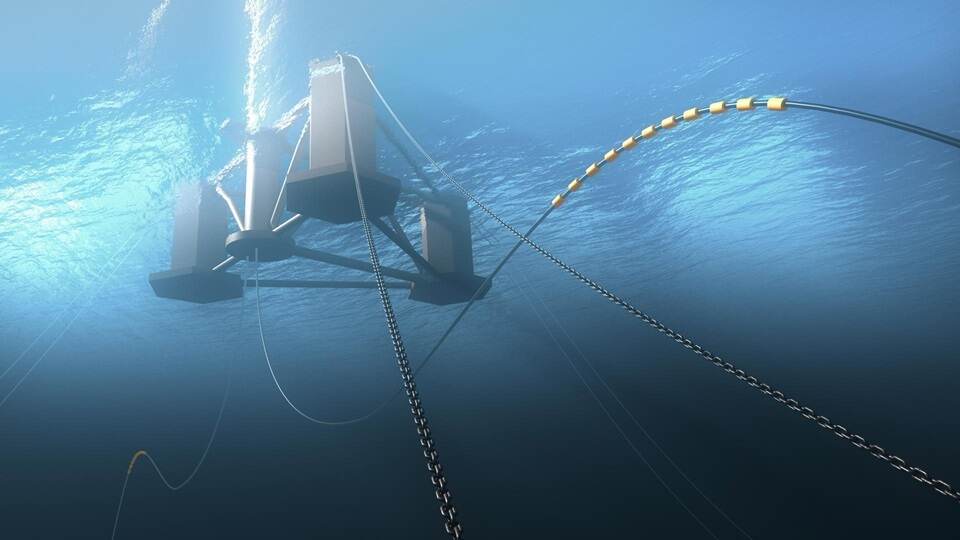



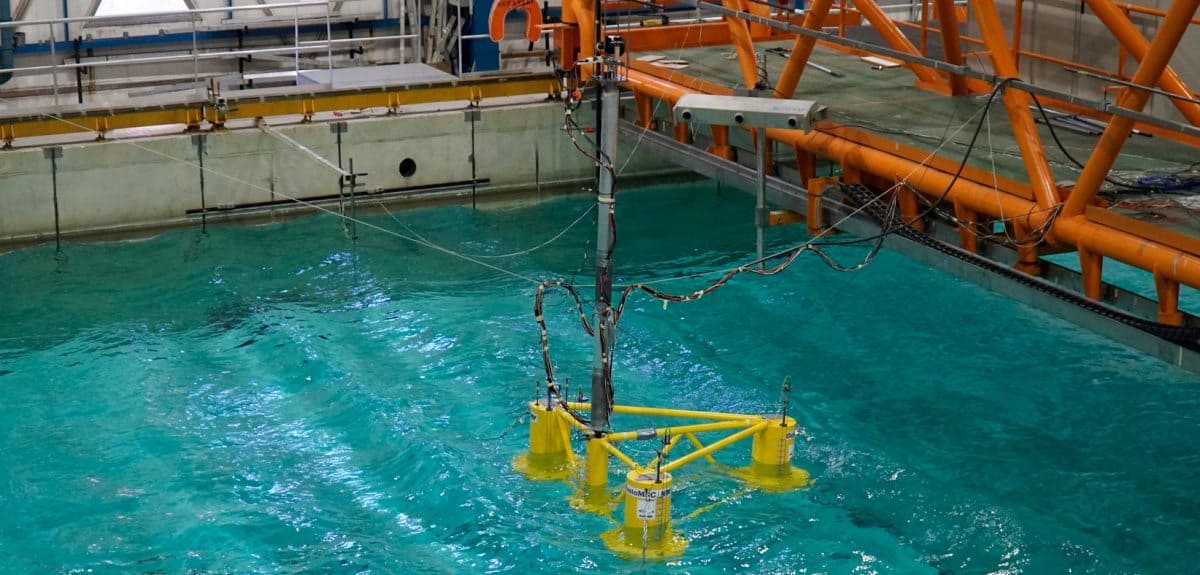
GustoMSC has recently completed model tests on its proprietary Tri-Floater, a semi-submersible floater capable of hosting very large wind turbines. The tests were performed at the Océanide wave basin in South East France on a 1:50 scale model of the Tri-Floater hosting the 15 MW NREL reference wind turbine. The floater was subjected to simultaneous wind, wave and current loading in the wave basin.
Due to the optimized geometry of the submerged structure, the Tri-Floater design exhibited low accelerations at the wind turbine nacelle during the model tests, in good agreement with numerical predictions. Lower accelerations are particularly beneficial since these translate to lower load levels and ultimately lower steel weight of the structure which is one of the most important cost drivers in floating wind.
The Tri-Floater model was subjected to a wide range of environmental conditions to demonstrate the suitability of the design for most of the floating wind sites currently being considered. These included operational conditions which the wind turbine would normally see during its lifetime as well as extreme conditions which it would have to endure during storms. An extreme sea state with a significant wave height of 13.5 m and wind speed at hub height of 190 km/h was tested. The Tri-floater successfully ‘passed’ this test and the results confirm the performance of the Tri-floater in harsh environments.
Besides representing actual site conditions in the basin, a large set of more fundamental tests were performed, investigating various hydrodynamic properties of the floater in greater detail. The numerical models of the Tri-Floater have been calibrated based on these results, further improving the quality of numerical simulations performed by GustoMSC.
With the model test campaign completed and numerical models validated, the Tri-Floater design has reached Technology Readiness Level 4: “technology validated in lab”. Achieving this milestone strengthens the position of the Tri-Floater as contender for commercial tenders in the floating wind space in 2022 and beyond.
To learn more about the Tri-Floater, click here.