



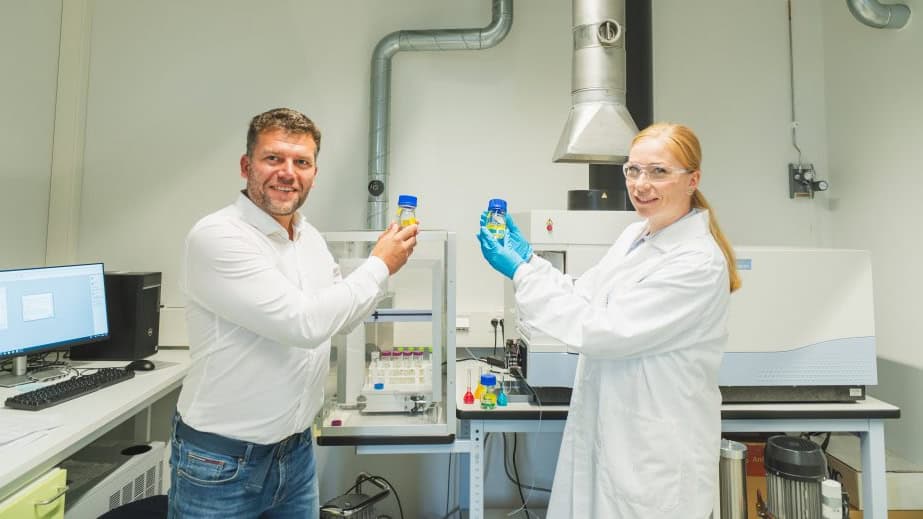
The Flexible Clean Propulsion Technologies (Flex-CPT) project consortium, led by the University of Vaasa, aims to develop innovative, clean, and flexible solutions for maritime transport and off-road machinery. The goal is to reduce dependency on single fuel types, develop flexible hardware design, smart combustion control, efficient thermal management, and adaptive emission and hybrid energy management. These solutions will make it possible to use zero- and low-carbon fuels in the best way, reducing greenhouse gas emissions by up to 100%.
With the broad consortium of partners and budget of 18 million euros, this project will establish a realistic path for the Finnish powertrain industry towards carbon neutrality and shape the future of the marine and off-road sectors for decades to come.
– We acknowledge that effective decarbonisation means embracing all new zero-carbon fuel options, like hydrogen and ammonia, alongside more mature low-carbon choices such as methane, methanol and bio- and renewable diesels. This level of multi-fuel integration is an unparalleled technological challenge for powertrain development, says Professor Maciej Mikulski from the University of Vaasa. Mikulski acts as the responsible leader of the Flex-CPT project.
To tackle this challenge the Flex-CPT consortium comprises a number of research organisations and companies: University of Vaasa, Tampere University, Aalto University, Åbo Akademi University, Lappeenranta-Lahti University of Technology LUT, VTT Technical Research Centre of Finland, University of Turku, University of Oulu, Wärtsilä Finland Oy, AGCO Power Oy, Meyer Turku Oy, Proventia Oy, Bosch Rexroth Oy, Hycamite TCD Technologies Oy, Lumikko Oy, and Meriaura Oy. The project involves intensive international cooperation with 12 international partners from 12 countries. The project is part of the Wärtsilä led Zero Emission Marine programme and Meyer Turku led NEcOLEAP programme.
– By partnering with Flexible Clean Propulsion Technologies project, Wärtsilä is taking a significant step towards realizing our Zero Emission Marine vision. The consortium’s expertise in flexible, clean propulsion technologies will support the industry in meeting its 2030 and 2050 emission reduction goals, ensuring a greener future for the maritime sector, says Jonas Åkerman, Director, Research & Technology Development from Wärtsilä.
The Flex-CPT consortium brings together key players within the ecosystem in Finland and offers a great opportunity to strengthen cooperation.
– This project is significant in many ways for the development of a new generation of carbon-neutral and low-carbon machines and thereby in reducing carbon dioxide emissions from global maritime, land transport and agriculture. Also, research-oriented cooperation with numerous companies and universities has significant benefits in addition to the development of new solutions in the sharing of knowledge and the development of expertise, says product development director Kari Aaltonen from AGCO Power.
The Flex-CPT project is primarily funded by Business Finland, with the remaining funds provided by companies and research The Flex-CPT project is primarily funded by Business Finland, with the remaining funds provided by companies and research organizations.
– This project strengthens the forerunner position for Finland’s maritime and off-road expertise in terms of combustion engine development towards emission free and flexible operation. The cooperation between research institutes and companies creates a strong basis towards the commercial breakthroughs in global markets, say Kari Kuokkanen, Chief Funding Advisor, and Tero Ijäs, Ecosystem Manager from Business Finland
The Flex-CPT consortium aims to demonstrate robust powertrains achieving up to 100% reduction in tailpipe greenhouse gas emissions, optimising individual fuel streams according to availability, pricing, combustion efficiency and emissions.
– We will use fuel-agnostic combustion and aftertreatment. They are supported by complementary electrification to accommodate five enabling fuel categories within just two versatile engine platforms. These platforms will handle a wide range of power demands for off-road and maritime transport, with minimal hardware adjustments. Fuel-quality adaptive control functions and self-learning capabilities will help address multi-fuel calibration complexity, says Professor Mikulski.
The Flex-CPT research plan includes 33 innovations, including fuel reforming-based reactivity on demand, adaptive aftertreatment deposit formation control, through to thermal management of hybrid systems exploiting the synergy of fuel storage technology with electrification.
Source: The Flexible Clean Propulsion Technologies media release







 project consortium aims to develop innovative, clean solutions for maritime transport)