Power & PropulsionElectricOffshore Charging Working Group Pushes Electrification of SOVs and CTVs

Offshore Charging Working Group Pushes Electrification of SOVs and CTVs

Cross-industry coalition aims to remove the final barriers to electrifying SOVs and CTVs in the UK

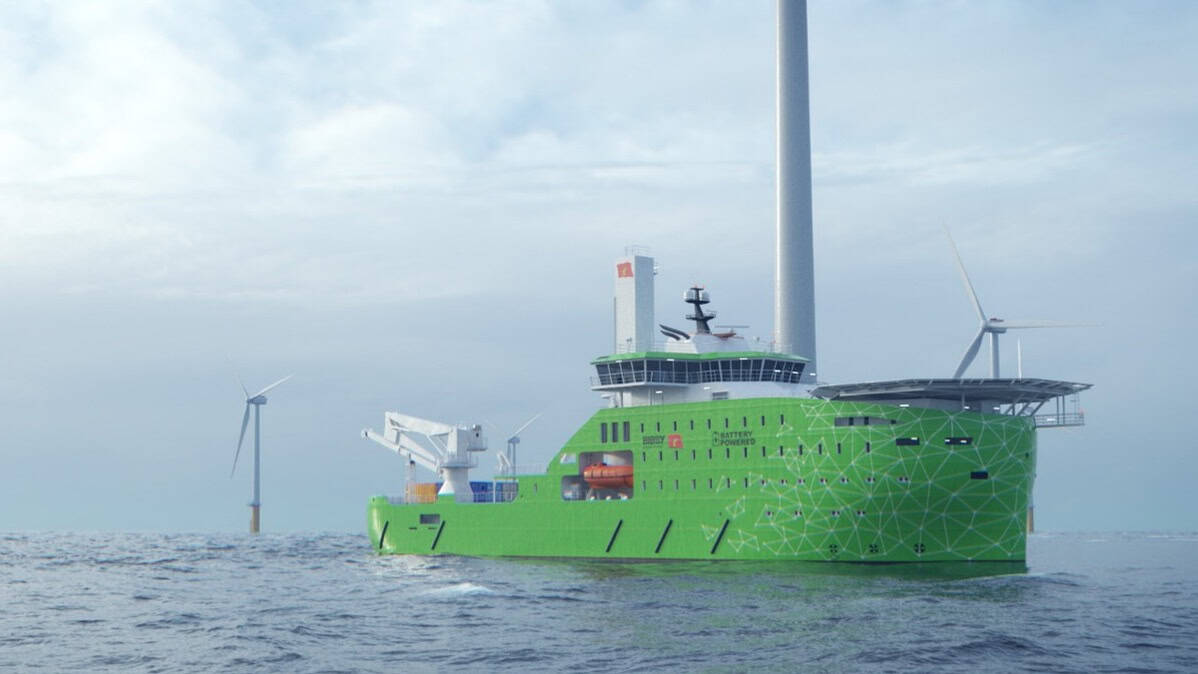
The Offshore Charging Working Group, a cross-sector coalition spanning the offshore wind and maritime industries, is tackling the remaining hurdles to decarbonising offshore service operations. Its focus: accelerating the electrification of service operation vessels (SOVs) and crew transfer vessels (CTVs).

The group has concluded that early design consideration and commercial clarity on access to offshore power for charging are the key outstanding challenges.

The Offshore Charging Working Group brings together vessel owners, technology providers,  industry organisations and is supported by tier 1 wind farm developers, reflecting a shared ambition to enable electric CTV and SOV operations within offshore wind farms. Industry readiness to deploy zero-emission vessels is growing, provided a clear and workable policy framework is in place.

The group has engaged with The Crown Estate, the UK Department for Energy Security and Net Zero (DESNZ), and Low Carbon Contracts Company (LCCC), highlighting the need for design allowance during early FEED phases, clarity on offshore power access, pricing treatment under the Contracts for Difference (CfD) scheme, and physical access to offshore charging infrastructure.

“Technology is no longer the limiting factor. What industry needs now is clear, practical guidance from authorities to enable offshore charging to move from concept to delivery,” says Øystein Huglen, representing Maritime CleanTech in the working group.

A detailed proposition paper outlining practical policy enablers for offshore charging will be published shortly.

Members of the Offshore Charging Working Group, include ORE Catapult, NOF, Norwegian Offshore Wind, Seaonics, MJR Power & Automation, Stillstrom by Maersk, Maritime Cleantech, Bibby Marine and Tidal Transit.


Latest News

French Customs is operating two Sillinger 820 ALURAID rigid-hulled inflatable boats (RHIBs), powered by twin OXE300 diesel outboard engines supplied by KENT Marine Equipment, the French distributor for OXE Marine.

Case Study – OXE300 Engines Power French Customs RHIBs

The Sillinger 820 ALURAID combines a robust aluminium hull with diesel propulsion, fuel flexibility and high electrical output for French Customs operations French Customs is...
Ocergy has achieved two major milestones, confirming the commercial readiness of its OCG-Wind 3MW floating wind platform and OCG-Data environmental monitoring buoy as the company prepares to scale its offshore solutions.

Ocergy Marks Major Milestone for Floating Wind Platform

Ocergy confirms commercial readiness for two offshore technologies following the successful deployment of its floating wind platform and the continued operation of its environmental...
Siem Industries has placed an order with China’s Fujian Mawei Shipbuilding for two Offshore Subsea Construction Vessels (OSCVs), strengthening its presence in the offshore subsea sector.

Siem Orders Two Offshore Subsea Construction Vessels

Fujian Mawei Shipbuilding will construct the two specialised Offshore Subsea Construction Vessels to a design developed in collaboration with Sirius Design & Integration and...
CBED has expanded its offshore wind support fleet with the acquisition of the Commissioning Service Operation Vessel (CSOV) Wind Dedication, formerly Seaway Moxie, from international offshore wind contractor Seaway7.

CBED Acquires CSOV from Seaway7

The newly acquired CSOV becomes the fourth vessel in CBED’s fleet, strengthening its offshore wind support capabilities CBED has expanded its offshore wind support fleet...

Related news