


Carsten Haagensen, President of Data Services, Ocean Infinity
We need to ask a more fundamental question about offshore operations: why are people there at all?
For decades, the industry has improved safety, efficiency and cost through better tools and oversight, but within an operating model that has barely changed. That approach is now reaching its limits.
I’ve sat in countless conversations with customers, partners and industry stakeholders discussing how technology should transform offshore operations. Yet these conversations rarely translate into real change, at least not at the pace we’d like. The barriers are not technical, they lie in the rigid frameworks that define our industry: regulatory, contractual and commercial, all of which consistently favour what is familiar over what is possible.
Now, rising complexity, tighter margins and higher expectations on safety and sustainability are exposing limits of that approach. Optimising a legacy model will only ever deliver marginal gains.
At the heart of that model is a single assumption: that people must be at sea for work to get done. Everything flows from that: crewing, vessel design, logistics and safety systems.
Other high-risk industries have already used technology to redesign work and remove people from harm’s way. Maritime has moved more slowly. The question is no longer whether change is possible, but why offshore operations are still organised this way.
Technology has improved visibility and control, but managing risk is not the same as removing it. While the industry calls for innovation, procurement and tendering processes continue to reinforce established approaches, making meaningful change inherently difficult to introduce.
Incremental improvement optimises how we organise people offshore. Redesign asks the harder question: do they need to be there at all?
Challenging that assumption has always meant pushing beyond what feels proven. Early on, we were told that deploying multiple autonomous underwater vehicles at scale would not work. We did it anyway, and it worked. We proved that offshore work could be delivered differently, at scale, and with better outcomes.
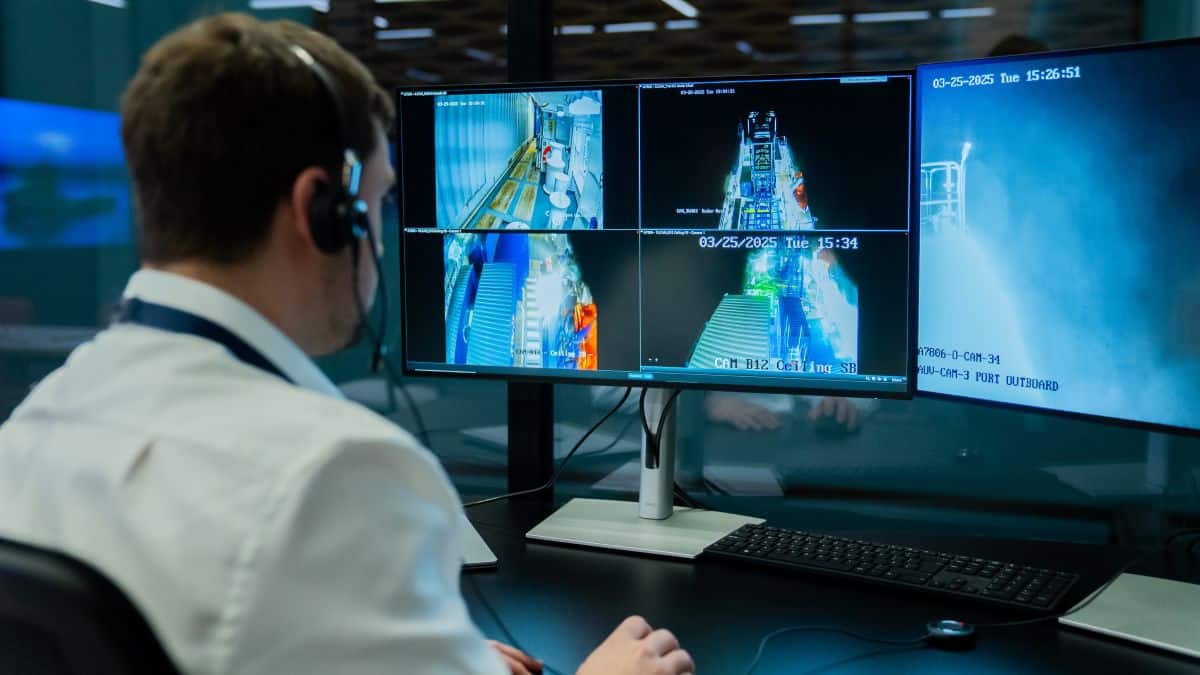
Much of the industry still frames progress around the vessel: size and capability. But the more meaningful shift is where work is planned, controlled and executed. Real change happens when execution moves onshore and offshore activity is managed as a connected system. That’s where the operating model truly shifts.
One of the clearest signs of genuine change is when long-held assumptions quietly fall away. In recent operations, our work has been delivered with real-time data streamed directly to clients onshore, removing the historic expectation that a client representative must be physically present at sea to make decisions. Oversight and trust remained intact, but offshore exposure was reduced, challenging one of the industry’s most deeply embedded norms.
In some cases, this logic has gone further. Where persistence and risk reduction matter most, our uncrewed vessels now deliver 24/7, year-round surveillance and security operations without people at sea at all. Faced with higher complexity, the answer has not been to optimise crewed operations further, but to remove routine exposure and redesign the operational model around that choice.
It’s important to say that uncrewed does not equate to eliminating people; it relocates expertise.
When planning, monitoring and decision-making are centred onshore, supported by robotics, data and remote operations, consistency improves, unnecessary exposure is reduced and expertise can be applied across more operations with less dependence on offshore conditions. In this model, vessels become platforms for execution rather than floating workplaces. That distinction is fundamental.
This shift also changes the trade-offs. Operations designed around automation, robotics and remote execution are lower-carbon, as well as safer, by definition.
The technology needed to transform offshore operations already exists and is operating offshore today. What limits progress is the willingness to move away from people-heavy, asset-intensive models that still feel familiar. In this context, familiarity is the real risk.
Redesign is harder because it requires rethinking responsibility, trust and assurance when people are no longer routinely exposed. Operating models and mindsets move more slowly than technology and today, they are the primary constraint.
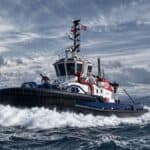
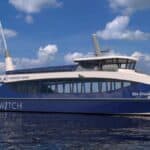
In December 2025, we completed our vessel line-up, built around transformation from the outset. But this was not the endpoint; it was the starting point. The vessels are not the transformation – they are the enablers: forcing leaner crewing today and allowing execution to move onshore over time.
The next phase of offshore transformation will not come from further optimisation of legacy systems. It will come from organisations willing to remain open-minded, to question long-held assumptions and engage seriously with a fundamentally different way of working.
What is striking is that shift is already underway. The organisations under the greatest operational, safety and sustainability pressure are beginning to define what good looks like next: raising the bar for safety, improving consistency of delivery and materially reducing the environmental impact of offshore operations.
The opportunity is clear – but only if we are prepared to redesign, not just improve.